
Dead letters
Maurice Baring
THE CLASSIC COLLECTION · 1914
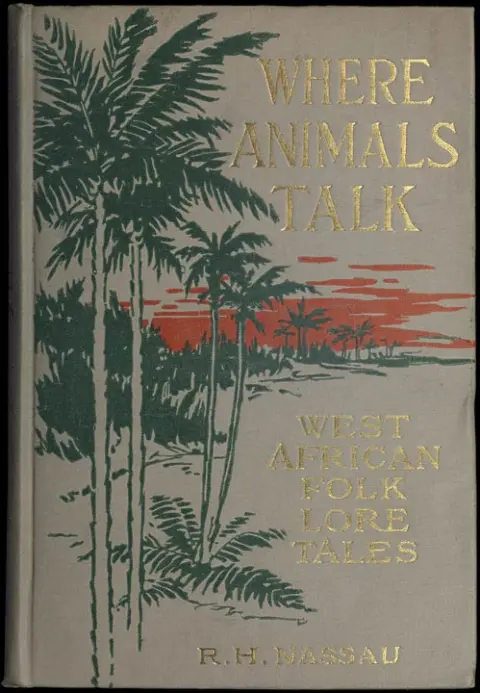
"Where Animals Talk: West African Folk Lore Tales" by Robert Hamill Nassau is a collection of folk tales written in the late 19th century. This compilation introduces readers to a rich tradition of West African storytelling, recounting tales that feature anthropomorphic animals—mainly Leopard and Rat—as they navigate themes of cunning, betrayal, and the complexities of friendship and social relations in their vibrant communities. The opening of the collection emphasizes the oral tradition of these tales, presenting the reader with a preface that outlines the storytelling style characteristic of West African Ekano. It highlights how narrators often adapt stories to suit their audience, injecting personal flair that enhances engagement. Nassau introduces the first tale, "Do Not Trust Your Friend," which revolves around the treachery of Rat and the naive attempts of Leopard to forge friendship, ultimately leading to cautionary lessons about trust and deceit in animal society. This clever interplay sets the stage for captivating narratives that beckon readers into a world where animals converse and display human-like behaviors, shedding light on human nature along with underlying cultural beliefs and values.
Introduction adapted from the source catalogue; source summaries may be automatically generated.
Free to read · English · 85,077 words · No account needed
MAKE TIME FOR A GOOD BOOK
On by default. Untick to stop anonymous reading totals. Each page counts after 10 seconds in view. How this works.
Anonymous counting is on unless you have switched it off.
Then he went back, and found Lemur faithfully watching with his eyes standing very wide open. Shrew asked him, "What has made your eyes so big?" In return, Lemur asked him, "What has so lengthened your mouth to a snout?"
Persons
Njâku (Elephant)
Koho (Parrot)
Iwedo (Death)
In former times, in the days of Witchcraft, it was the custom not to bury a corpse until the question was settled who or what had caused the death. This investigation sometimes occupied several days; during which time decomposition was hindered by the application of salt, and even by drying the remains in the smoke of a fire.
Elephant built his own town; and Parrot built also his.
Then the children of Parrot went a-hunting every day; and when they came back, the town had wild meat in abundance, hida! hida!
One day Elephant announced, "I must go on an excursion to the town of Chum Koho." He arrived there and found him, with that fashion of his, of standing with one leg bent up under his feathers hidden. His friend Elephant asked him, "Chum! what have you done to your leg?" He answered him (falsely), "My children have gone with it a-hunting." Elephant being astonished said, "On your oath?" He replied, "Truly!"
Then Elephant said, "I came to see you, only to see. I'm going back." The other said, "Yes; very good."
Elephant returned to his town, and said to his children, "Arrange the nets today; tomorrow for a hunt!"
The next day, the children made ready. And he, ashamed that a small Bird should do a greater act than himself said, "Take ye a saw, and cut off my leg." His children did not hesitate at his command, as they were accustomed to implicit obedience. So, they cut it off; and they carried with them, as he directed, the leg, on their hunt.
When they were gone, to their father Elephant came Death, saying, "I have arrived!" People of the town cried for help, "Come ye! Njâku is not well!" But, the children were beyond hearing, being still away at the hunt. During their absence, Elephant died. When they arrived, they found their father a corpse.
People wondered, saying, "What is this? Since we were born, we have not heard this, that hunting is carried on with the legs of one who remains behind in the town." When others, coming to the funeral, from other towns, asked the children, "Who was the person who counseled you such advice as that?" they said, "Himself it was who told us; he said to us 'Cut.' So we cut."
Your reading position is saved on this browser. Take it to another device with a library code. Reading pages adapt to text, rather than matching a printed edition.
BEHIND THE BOOK
This eBook is for the use of anyone anywhere in the United States and most other parts of the world at no cost and with almost no restrictions whatsoever. You may copy it, give it away or re-use it under the terms of the Project Gutenberg License included with this eBook or online at www.gutenberg.org. If you are not located in the United States, you will have to check the laws of the country where you are located before using this eBook. Read the source licence.
The original source file, including credits and licence, is retained by this library. Request an original-format copy at no charge. Please include the book title and Project Gutenberg identifier #58900.
KEEP YOUR CURIOSITY GOING
Maurice Baring
Francis Greenleaf Allinson & Anne C. E. (Anne Crosby Emery) Allinson
Stuart Dodgson Collingwood
Percy Keese Fitzhugh
Mary Macleod & Edmund Spenser

Cooke Don-Carlos