
Dead letters
Maurice Baring
THE CLASSIC COLLECTION · 1914
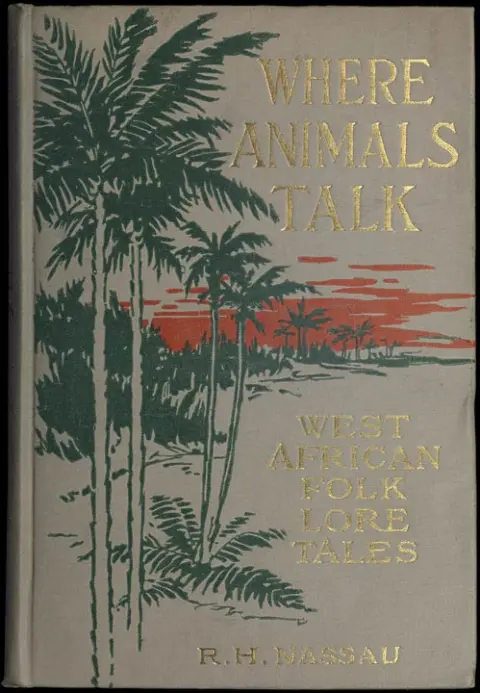
"Where Animals Talk: West African Folk Lore Tales" by Robert Hamill Nassau is a collection of folk tales written in the late 19th century. This compilation introduces readers to a rich tradition of West African storytelling, recounting tales that feature anthropomorphic animals—mainly Leopard and Rat—as they navigate themes of cunning, betrayal, and the complexities of friendship and social relations in their vibrant communities. The opening of the collection emphasizes the oral tradition of these tales, presenting the reader with a preface that outlines the storytelling style characteristic of West African Ekano. It highlights how narrators often adapt stories to suit their audience, injecting personal flair that enhances engagement. Nassau introduces the first tale, "Do Not Trust Your Friend," which revolves around the treachery of Rat and the naive attempts of Leopard to forge friendship, ultimately leading to cautionary lessons about trust and deceit in animal society. This clever interplay sets the stage for captivating narratives that beckon readers into a world where animals converse and display human-like behaviors, shedding light on human nature along with underlying cultural beliefs and values.
Introduction adapted from the source catalogue; source summaries may be automatically generated.
Free to read · English · 85,077 words · No account needed
MAKE TIME FOR A GOOD BOOK
On by default. Untick to stop anonymous reading totals. Each page counts after 10 seconds in view. How this works.
Anonymous counting is on unless you have switched it off.
The people began to call out anxiously, "We-e! we-e! O! They are overcome! They are overcome! O! Some one must go hastily, and call Ekwamekwa, and tell him that people are being destroyed in the town, and he must come quickly."
Some one got up, and ran to call Ekwamekwa, wailing as he went, "Iyâ! Iyâ! Iyâ! Ekwamekwa, iyâ-O! Come! People are exterminated in the town!"
He heard with one ear (i.e. at once). He snatched up his machete and axe, saying, "What is it?" The messenger repeated, "Come! a being from above has destroyed many a one in the town!"
The man Ekwamekwa, full of boasting, said, "Is it possible there is no man in the town?" He came, already shaking the muscles of his chest, pwâ! pwâ (a custom with native wrestlers, as a lion his mane). His muscles were quivering with rage, nyâ! nyâ! nyâ!
The drums, both the elimbi-telegraph and the common, were being beaten, and were sounding without intermission. The singers were shouting; the wrestlers' bodies had perspiration flowing from them. The noise of the people, of the telegraph drums and other drums, and sticks (sticks beating time) were rattling kwa! kwa! kwa!
As Ekwamekwa appeared, the women and children raised their shrill voices. The shouters yelled, "A! lâ! lâ! lâ! â!"
Mbuma-tyetye advanced at once. He and Ekwamekwa laid hold of one another, and alternately pressed each other backward and forward. The one tried tricks to trip the other, and the other tried the same. Ekwamekwa held him, and was about to throw him on the ground. The other jumped to one side, and stood, his muscles quivering, po! po! po! tensely. Ekwamekwa seized him about the waist and loins. The people all were saying, "Let no one shout!" (lest Ekwamekwa be confused). They said, "Make no noise! He is soon going to be eaten!" And it was a woman who said, "Get ready the kettle!"
Ekwamekwa still held him by the loins. So, they called out, "Down with him! Down with him!" But Mbuma-tyetye shouted, "I'm here!" He put his foot behind Ekwamekwa's leg, and lifted him, and threw him into the pit, kodom!
Then there was a shout of distress by the people, "A! â! â! â!" and Ekwamekwa called out, "Catch him! catch him!" Mbuma-tyetye, lifting his feet, ran to his father-in-law's end of the town, and all the men came after him. His father-in-law protected him, and said to them, "You can do nothing with this stranger!"
At night, the Chief said to him, "Sir, you may go away tomorrow."
Your reading position is saved on this browser. Take it to another device with a library code. Reading pages adapt to text, rather than matching a printed edition.
BEHIND THE BOOK
This eBook is for the use of anyone anywhere in the United States and most other parts of the world at no cost and with almost no restrictions whatsoever. You may copy it, give it away or re-use it under the terms of the Project Gutenberg License included with this eBook or online at www.gutenberg.org. If you are not located in the United States, you will have to check the laws of the country where you are located before using this eBook. Read the source licence.
The original source file, including credits and licence, is retained by this library. Request an original-format copy at no charge. Please include the book title and Project Gutenberg identifier #58900.
KEEP YOUR CURIOSITY GOING
Maurice Baring
Francis Greenleaf Allinson & Anne C. E. (Anne Crosby Emery) Allinson
Stuart Dodgson Collingwood
Percy Keese Fitzhugh
Mary Macleod & Edmund Spenser

Cooke Don-Carlos