
Dead letters
Maurice Baring
THE CLASSIC COLLECTION · 1914
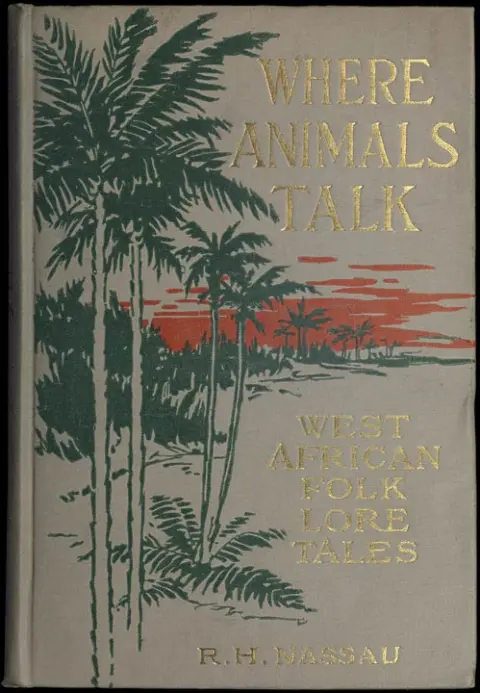
"Where Animals Talk: West African Folk Lore Tales" by Robert Hamill Nassau is a collection of folk tales written in the late 19th century. This compilation introduces readers to a rich tradition of West African storytelling, recounting tales that feature anthropomorphic animals—mainly Leopard and Rat—as they navigate themes of cunning, betrayal, and the complexities of friendship and social relations in their vibrant communities. The opening of the collection emphasizes the oral tradition of these tales, presenting the reader with a preface that outlines the storytelling style characteristic of West African Ekano. It highlights how narrators often adapt stories to suit their audience, injecting personal flair that enhances engagement. Nassau introduces the first tale, "Do Not Trust Your Friend," which revolves around the treachery of Rat and the naive attempts of Leopard to forge friendship, ultimately leading to cautionary lessons about trust and deceit in animal society. This clever interplay sets the stage for captivating narratives that beckon readers into a world where animals converse and display human-like behaviors, shedding light on human nature along with underlying cultural beliefs and values.
Introduction adapted from the source catalogue; source summaries may be automatically generated.
Free to read · English · 85,077 words · No account needed
MAKE TIME FOR A GOOD BOOK
On by default. Untick to stop anonymous reading totals. Each page counts after 10 seconds in view. How this works.
Anonymous counting is on unless you have switched it off.
On another day, Leopard said to Jackal, "My friend! let us arrange some plan, by which we can kill some animal. For, I've wandered into the forest again and again, and have found nothing." Leopard made these remarks to his friend in the dark of the evening. So they sat that night and planned and, after their conversation, they went to lie down in their houses. And they slept their sleep.
Then soon, the daylight broke. And Leopard, carrying out their plan, said to Jackal, "Take up your bedding, and put it out in the open air of the street." Jackal did so. Leopard laid down on that mattress, in accordance with their plan, and stretched out like a corpse lying still, as if he could not move a muscle. He said to Jackal, "Call Ngomba, and let him come to me." So Jackal shouted, "Come! Ngomba, come! That Beast that kills animals is dead! Come!"
So Porcupine came to the mourning, weeping, and wailing, as if he was really sorry for the death of his enemy. He approached near the supposed corpse. And he jeered at it. "This was the person who wasted us people; and this is his body!" Leopard heard this derision. Suddenly he leaped up. And Porcupine went down under his paw, dead. Then Leopard said to his friend Jackal, "Well! cut it up! and let us eat it." And they finished eating it.
On another day, Leopard, again in the street, stretched himself on the bedding. At his direction, Jackal called for Antelope. Antelope came; and Leopard killed him, as he had done to Porcupine.
On another day, Ox was called. And Leopard did to Ox the same as he
had done to the others.
On another day, Elephant was called in the same way; and he died in
the same way.
In the same way, Leopard killed some of almost all the other beasts one after another, until there were left only two.
Then Jackal said, "Njegâ! my friend! there are left, of all the beasts, only two, Iheli and Ekaga. But, what can you do with Iheli? for, he has many artifices. What, also, can you do against Ekaga? for, he too, has many devices." Leopard replied, "I will do as I usually have done; so, tomorrow, I will lie down again, as if I were a corpse."
That day darkened into night.
And another daylight broke.
And Leopard went out of the house to lie down on the bedding in the street. Each limb was extended out as if dead; and his mouth open, with lower jaw fallen, like that of a dead person.
Your reading position is saved on this browser. Take it to another device with a library code. Reading pages adapt to text, rather than matching a printed edition.
BEHIND THE BOOK
This eBook is for the use of anyone anywhere in the United States and most other parts of the world at no cost and with almost no restrictions whatsoever. You may copy it, give it away or re-use it under the terms of the Project Gutenberg License included with this eBook or online at www.gutenberg.org. If you are not located in the United States, you will have to check the laws of the country where you are located before using this eBook. Read the source licence.
The original source file, including credits and licence, is retained by this library. Request an original-format copy at no charge. Please include the book title and Project Gutenberg identifier #58900.
KEEP YOUR CURIOSITY GOING
Maurice Baring
Francis Greenleaf Allinson & Anne C. E. (Anne Crosby Emery) Allinson
Stuart Dodgson Collingwood
Percy Keese Fitzhugh
Mary Macleod & Edmund Spenser

Cooke Don-Carlos