THE CLASSIC COLLECTION✦Building the pacific railwayCLASSIC FREE BOOKS
Building the pacific railway
Edwin L. (Edwin Legrand) Sabin
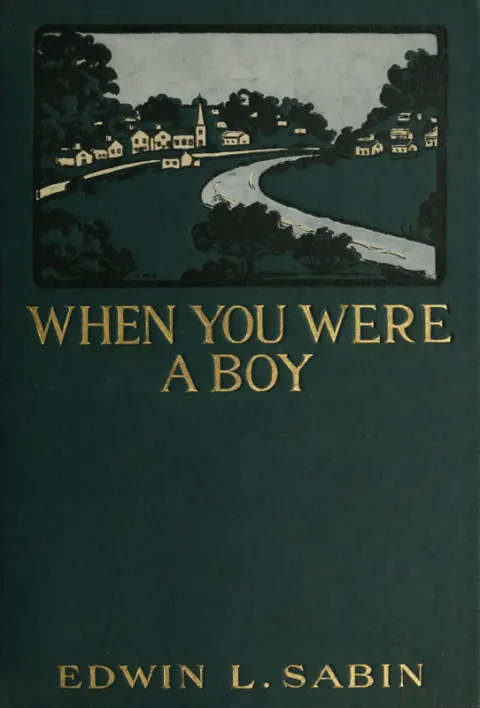
THE CLASSIC COLLECTION · 1905
"When You Were a Boy" by Edwin L. Sabin is a nostalgic children's narrative written in the early 20th century. The text is likely a novel or a collection of intertwined stories centered around the experiences of boys during childhood, exploring themes of innocence, adventure, and the simplicity of pastimes like baseball and the circus. The main character, addressed as "you," engages with a cast of friends, including relatable figures such as Fat Day, Hen Schmidt, and Billy Lunt, who embody the essence of youthful camaraderie and imaginative play. The opening portion of the work introduces the reader to a lively scene where the main character joins friends in forming a baseball team, the North Stars. The camaraderie is palpable as they organize their lineup, discuss their uniforms, and anticipate an upcoming match against the Second-street kids. The sense of competition, childhood rivalry, and the spirit of playfulness is highlighted as the boys navigate the trials of their baseball game, culminating in moments filled with excitement and disappointment. The narrative captures the essence of boyhood adventures, from the thrill of playing sports to the simplicity of the friendships formed during these formative years.
Introduction adapted from the source catalogue; source summaries may be automatically generated.
Free to read · English · 42,358 words · No account needed
MAKE TIME FOR A GOOD BOOK
On by default. Untick to stop anonymous reading totals. Each page counts after 10 seconds in view. How this works.
Anonymous counting is on unless you have switched it off.
“Pooh! Who cares!” you sniff, with a curl of the lip.
Thus lapses behind you the Sixth Love; and although you have a faint vision of her parading, to meet your eyes, your most despised enemy, whom, in bravado, she had immediately adopted, memory indicates that you were unaffected by the sight, save to sneer, and that already the Seventh Love was engrossing your attention.
For there was a Seventh Love, and an Eighth, and more besides, to constitute a long train of wee, innocent heart-troubles as evanescent as a dream, but at their time just as real; until from this series of shallow, dancing ripples of Boy’s Love, lo! one day you suddenly emerged upon the deep ocean of Man’s Love, and anchored in the quiet haven where She awaited—She, the gracious embodiment of the best in these her girlish predecessors.
AFTER all, it is no fun posing at being a man. It is not, as you would inform the other boys, the pleasant sinecure that it is currently presumed to be, amongst your kind. The picture has more depth than appears at the distance. As you approach, you note only the surface tints; but when you have arrived, then begin to unfold aspects previously quite unsuspected.
So now, having had experience, you fain would turn back, and doffing for all time those starchy, heavy, strait-jacket garments which you have mistakenly donned, you would resume the free-and-easy blouse and knickerbockers and tattered brim, and would rejoin your gay brethren of school and vacation. You have learned your lesson, and you will leave them no more.
So be it. But alas, unavailingly you stop on your way down-town, beside the vacant lot where the other boys are playing ball, and look wistfully in upon them. None yells:
“Come on, Jocko. You’re tenth fielder.”
Once the ball rolls your way. You toss it back—toss it awkwardly, somehow, proving that you are out of practice. However, you can limber up right speedily. You have been away, they should know.
“Aw, you’re out! You’re out! You are too! Ask that man. He’s out, ain’t
he, Mister?”
You wait for “that man,” wherever he may be, to reply. But you yourself are the sole spectator, and you gaze right and left, puzzled.
“He’s out—ain’t he!”
You! It is you to whom they are appealing! You nod, confusedly.
“Ya-a-a! The man says you’re out!”
Your reading position is saved on this browser. Take it to another device with a library code. Reading pages adapt to text, rather than matching a printed edition.
Edwin L. (Edwin Legrand) Sabin

Edwin L. (Edwin Legrand) Sabin

Edwin L. (Edwin Legrand) Sabin

Edwin L. (Edwin Legrand) Sabin
BEHIND THE BOOK
This eBook is for the use of anyone anywhere in the United States and most other parts of the world at no cost and with almost no restrictions whatsoever. You may copy it, give it away or re-use it under the terms of the Project Gutenberg License included with this eBook or online at www.gutenberg.org. If you are not located in the United States, you will have to check the laws of the country where you are located before using this eBook. Read the source licence.
The original source file, including credits and licence, is retained by this library. Request an original-format copy at no charge. Please include the book title and Project Gutenberg identifier #58165.
KEEP YOUR CURIOSITY GOING
Coulson Kernahan

Maurice Baring
Frances Wright
Cécile Tormay

Frederic Jesup Stimson

W. H. P. (William Henry Pope) Jarvis