THE CLASSIC COLLECTION✦Building the pacific railwayCLASSIC FREE BOOKS
Building the pacific railway
Edwin L. (Edwin Legrand) Sabin
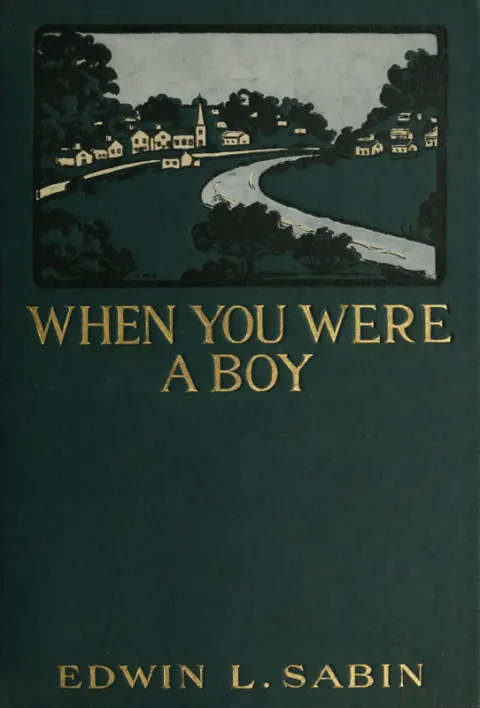
THE CLASSIC COLLECTION · 1905
"When You Were a Boy" by Edwin L. Sabin is a nostalgic children's narrative written in the early 20th century. The text is likely a novel or a collection of intertwined stories centered around the experiences of boys during childhood, exploring themes of innocence, adventure, and the simplicity of pastimes like baseball and the circus. The main character, addressed as "you," engages with a cast of friends, including relatable figures such as Fat Day, Hen Schmidt, and Billy Lunt, who embody the essence of youthful camaraderie and imaginative play. The opening portion of the work introduces the reader to a lively scene where the main character joins friends in forming a baseball team, the North Stars. The camaraderie is palpable as they organize their lineup, discuss their uniforms, and anticipate an upcoming match against the Second-street kids. The sense of competition, childhood rivalry, and the spirit of playfulness is highlighted as the boys navigate the trials of their baseball game, culminating in moments filled with excitement and disappointment. The narrative captures the essence of boyhood adventures, from the thrill of playing sports to the simplicity of the friendships formed during these formative years.
Introduction adapted from the source catalogue; source summaries may be automatically generated.
Free to read · English · 42,358 words · No account needed
MAKE TIME FOR A GOOD BOOK
On by default. Untick to stop anonymous reading totals. Each page counts after 10 seconds in view. How this works.
Anonymous counting is on unless you have switched it off.
Her eyes are black—large and black. You are desperately smitten. You live, move, and have your being in a very ecstasy of fervor.
Her name is Lillian. Somewhere, somehow, you have run upon the lines of
Tennyson:
“Airy, fairy Lilian,
Flitting, fairy Lilian,
When I ask her if she love me,
Clasps her tiny hands above me;
· · · · · · · · · ·
She’ll not tell me if she love me,
Cruel little Lilian.”
They appeal to you. They touch a spot which seems not to be reached by even Oliver Optic or “The Gorilla Hunters.” You must have poetry, and you memorize them, and repeat them over and over to yourself, regardless of the fact that she, your inspiration, is neither airy, fairy, nor flitting, but of substantial, buxom proportions.
The Third Love, with her bold black eyes and her generous plumpness, is not so submissive as was that gentle Second Love. She flouts you. When the mood is upon her, she makes faces at you. At a party, when you stammer:
“The stars are shining bright;
May I see you home to-night?”
as like as not she turns up her nose, or else she tosses her head and snaps ungraciously: “Oh, I s’pose so!”
You never are sure of her; yet always you find yourself meekly at her
apron-strings.
You willingly go to church (you conceive that your family does not know why, but in this you are much mistaken), because she sits in front of you. What a blissful, comfortable feeling you have, with her safely installed near at hand, twitching her short braids not more than three feet before your happy nose!
When the pew is filled to overflowing, then, sometimes, you are crowded out into her pew. Embarrassed of mien, you decorously slide into your new location, she receiving your presence with a shrug and a sniff, and you growing redder and redder as you imagine that all the congregation must be reading your secret.
In a moment she darts at you a sly glance (the coquette! How vastly superior she is to you in the wiles of love!), and you swell and swell, until it seems to you that you are towering into the raftered heights above.
And at the conspicuousness thus entailed you blush yet deeper.
Ah, her folks are about to leave town; she is to move away! The news comes with sickening directness, and on top of the announcement she pitilessly asserts that she is glad. You muster courage to declare that you are “going to write.” She flirts her bangs, and retorts grudgingly: “I don’t care.”
Which is all the good-by that you get.
Your reading position is saved on this browser. Take it to another device with a library code. Reading pages adapt to text, rather than matching a printed edition.
Edwin L. (Edwin Legrand) Sabin

Edwin L. (Edwin Legrand) Sabin

Edwin L. (Edwin Legrand) Sabin

Edwin L. (Edwin Legrand) Sabin
BEHIND THE BOOK
This eBook is for the use of anyone anywhere in the United States and most other parts of the world at no cost and with almost no restrictions whatsoever. You may copy it, give it away or re-use it under the terms of the Project Gutenberg License included with this eBook or online at www.gutenberg.org. If you are not located in the United States, you will have to check the laws of the country where you are located before using this eBook. Read the source licence.
The original source file, including credits and licence, is retained by this library. Request an original-format copy at no charge. Please include the book title and Project Gutenberg identifier #58165.
KEEP YOUR CURIOSITY GOING
Coulson Kernahan

Maurice Baring
Frances Wright
Cécile Tormay

Frederic Jesup Stimson

W. H. P. (William Henry Pope) Jarvis