THE CLASSIC COLLECTION✦Building the pacific railwayCLASSIC FREE BOOKS
Building the pacific railway
Edwin L. (Edwin Legrand) Sabin
THE CLASSIC COLLECTION · 1905
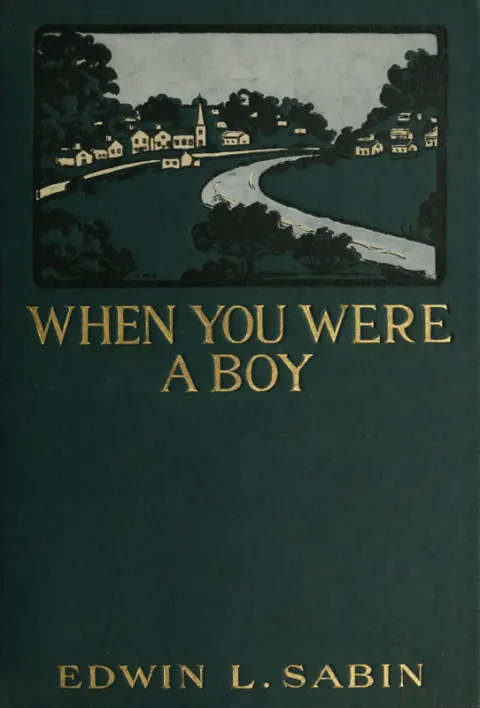
"When You Were a Boy" by Edwin L. Sabin is a nostalgic children's narrative written in the early 20th century. The text is likely a novel or a collection of intertwined stories centered around the experiences of boys during childhood, exploring themes of innocence, adventure, and the simplicity of pastimes like baseball and the circus. The main character, addressed as "you," engages with a cast of friends, including relatable figures such as Fat Day, Hen Schmidt, and Billy Lunt, who embody the essence of youthful camaraderie and imaginative play. The opening portion of the work introduces the reader to a lively scene where the main character joins friends in forming a baseball team, the North Stars. The camaraderie is palpable as they organize their lineup, discuss their uniforms, and anticipate an upcoming match against the Second-street kids. The sense of competition, childhood rivalry, and the spirit of playfulness is highlighted as the boys navigate the trials of their baseball game, culminating in moments filled with excitement and disappointment. The narrative captures the essence of boyhood adventures, from the thrill of playing sports to the simplicity of the friendships formed during these formative years.
Introduction adapted from the source catalogue; source summaries may be automatically generated.
Free to read · English · 42,358 words · No account needed
MAKE TIME FOR A GOOD BOOK
On by default. Untick to stop anonymous reading totals. Each page counts after 10 seconds in view. How this works.
Anonymous counting is on unless you have switched it off.
The little girls politely tripped off, wiping their mouths with their best handkerchiefs. You and Hen et al. lingered. Eventually the tubs were left unguarded. The moment seemed propitious for new diversion.
“Let’s see who can drink the most!” proposed Hen.
The idea was brilliant. To hear was to act.
It was plunge in your cup and gulp; and plunge it in and gulp; and fail not to throw the residue in your neighbor’s face. Fast and furious waxed the play, with Snoopie appearing to be sure winner.
“Aw, you ain’t drinkin’ it all! That ain’t fair!” you accused, and the other boys joined in.
“Shut up! I am, too!” replied Snoopie, angrily; and proceeded with his count: “Fourteen.”
Distanced, his competitors paused, and jealously, but half admiringly,
watched.
“Bo-oys! Bo-oys!”
The gentle soprano voice with the reproachful, shocked inflection made you drop tin cups, the batch of you, and hastily look.
’Twas the minister’s wife. In power she stood above the superintendent, even, and only slightly below the minister himself.
“Why, why! You mustn’t do that!” she objected, bearing down.
Mustn’t you? Well, all right; there was lots else to do, and, soaked without and within, reeking of lemonade, you withdrew to do it.
“Gee—I drunk fifteen!” boasted Snoopie, patting his stomach.
He proved to be high man. Yourself had to your score only the modest
aggregate of ten.
Behind, at the scene of the late contest, arose sounds of lamentation and dismay over the state of the tubs.
Stately, mute, impenetrable, with baffling rag-carpet covering their tops, in the shade stand the two ice-cream freezers, and on all sides of them the feet of you and your cronies, and of the little girls as well, have well-nigh worn bare the woodland sod. But now, torn away by less exalted emotions, you and Hen revolve around Mrs. Schmidt’s tablecloth spread on the ground and weighted down with dishes.
Here is to be your station at dinner. Other cloths there are, spread about, but Hen recommends his mother’s. There will be a family feeling, and less chance of neglect.
Drag slower and slower the minutes. Hen goes foraging, and returns gleefully with a cooky apiece. The delicious smell of sliced tongue and ham and boiling coffee permeates the air.
“Henry, if you and John don’t keep out from under foot, I’ll take you right straight home!” threatens Mrs. Schmidt, exasperated.
Other women, too, lower at you.
“Yes, boys,” chimes in the superintendent; “run away and play, and don’t bother the people getting dinner. When we’re ready we’ll call you.”
Your reading position is saved on this browser. Take it to another device with a library code. Reading pages adapt to text, rather than matching a printed edition.
Edwin L. (Edwin Legrand) Sabin

Edwin L. (Edwin Legrand) Sabin

Edwin L. (Edwin Legrand) Sabin

Edwin L. (Edwin Legrand) Sabin
BEHIND THE BOOK
This eBook is for the use of anyone anywhere in the United States and most other parts of the world at no cost and with almost no restrictions whatsoever. You may copy it, give it away or re-use it under the terms of the Project Gutenberg License included with this eBook or online at www.gutenberg.org. If you are not located in the United States, you will have to check the laws of the country where you are located before using this eBook. Read the source licence.
The original source file, including credits and licence, is retained by this library. Request an original-format copy at no charge. Please include the book title and Project Gutenberg identifier #58165.
KEEP YOUR CURIOSITY GOING
Coulson Kernahan

Maurice Baring
Frances Wright
Cécile Tormay

Frederic Jesup Stimson

W. H. P. (William Henry Pope) Jarvis