THE CLASSIC COLLECTION✦Building the pacific railwayCLASSIC FREE BOOKS
Building the pacific railway
Edwin L. (Edwin Legrand) Sabin
THE CLASSIC COLLECTION · 1905
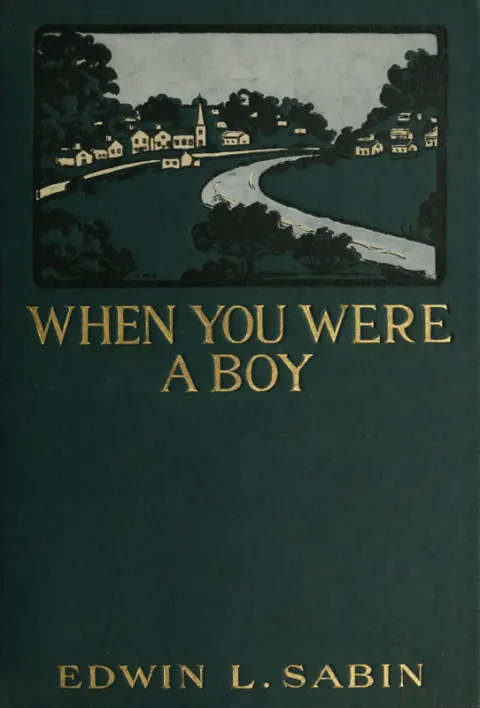
"When You Were a Boy" by Edwin L. Sabin is a nostalgic children's narrative written in the early 20th century. The text is likely a novel or a collection of intertwined stories centered around the experiences of boys during childhood, exploring themes of innocence, adventure, and the simplicity of pastimes like baseball and the circus. The main character, addressed as "you," engages with a cast of friends, including relatable figures such as Fat Day, Hen Schmidt, and Billy Lunt, who embody the essence of youthful camaraderie and imaginative play. The opening portion of the work introduces the reader to a lively scene where the main character joins friends in forming a baseball team, the North Stars. The camaraderie is palpable as they organize their lineup, discuss their uniforms, and anticipate an upcoming match against the Second-street kids. The sense of competition, childhood rivalry, and the spirit of playfulness is highlighted as the boys navigate the trials of their baseball game, culminating in moments filled with excitement and disappointment. The narrative captures the essence of boyhood adventures, from the thrill of playing sports to the simplicity of the friendships formed during these formative years.
Introduction adapted from the source catalogue; source summaries may be automatically generated.
Free to read · English · 42,358 words · No account needed
MAKE TIME FOR A GOOD BOOK
On by default. Untick to stop anonymous reading totals. Each page counts after 10 seconds in view. How this works.
Anonymous counting is on unless you have switched it off.
Resolutely he put one foot in. Involuntarily he flinched—but he followed it with the other. Witnessing his actions, reading that his toes were curling, you and Hen jeered and whooped. As you jeered, you continued to huddle, and to shrink within yourself. Gee, but it was cold! Somehow, the sun did not warm, and a little breeze, heretofore unnoted, enveloped you with an icy breath. You humped your shoulders, and your teeth chattered. Hen’s teeth, also, were chattering. You could hear them.
“Go on! Duck over!” you told Billy, derisively.
Billy was game. Suddenly, with water up to his quaking knees, he ducked. In an instant he was upright again—staggering, gasping, sputtering, but triumphant.
“Come on in!” he implored, wildly solicitous that you and Hen, hooting your glee, should participate more actively. “’Tain’t cold. What’s the matter with you?”
Followed by Hen you diffidently moved forward. Shivering, gingerly you teetered down, twigs and little stones hurting your yet tender soles.
Billy ducked again, apparently with the utmost relish, and floundered and splashed, his energy very marked.
You experimented with a foot—and hastily jerked it out.
“Gee!” you exclaimed. “I ain’t goin’ in! It’s too cold.”
“I ain’t, neither,” decreed Hen.
“Aw, ’tain’t cold a bit when you’ve wet over,” assured Billy eagerly—but suspiciously blue. “Take a dare—aw, I wouldn’t take a dare! You’re stumped! Yah-ah! I’ve stumped you!”
Diabolically did Billy flounder and gibe. He paused, expectantly, for you planted a foot, and gasped, and followed with the other; so did Hen.
Billy playfully splashed you.
“Come on!” he cried. “Come on!”
“Ouch! Quit that, will you?” you snarled, as the poignant drops stung your thin skin. “I’m comin’, ain’t I?”
Deeper, a little deeper, you went, with your piteously pleading flesh trying to recede from that repellant glacial line creeping up, inch by inch.
Billy shrieked with joy. What is misery when it has company!
“Duck!” he cackled. “Duck! ’Twon’t be cold after you’ve ducked.”
Must you? Oh, must you? Yes. You drew a long breath, shut your eyes, and desperately butted under. So, you dimly were conscious, did Hen.
Ugh! You choked; your stomach clove flat against your backbone, and in you was not space for air. Blindly you recovered, and lurched and clawed and fought for breath, while Billy rioted with wicked exultation.
“’Tain’t c-c-cold, is it?” you gasped defiantly.
“No; ’tain’t c-c-cold a bit,” chattered Hen.
“I told you ’twasn’t cold,” sniggered Billy.
Your reading position is saved on this browser. Take it to another device with a library code. Reading pages adapt to text, rather than matching a printed edition.
Edwin L. (Edwin Legrand) Sabin

Edwin L. (Edwin Legrand) Sabin

Edwin L. (Edwin Legrand) Sabin

Edwin L. (Edwin Legrand) Sabin
BEHIND THE BOOK
This eBook is for the use of anyone anywhere in the United States and most other parts of the world at no cost and with almost no restrictions whatsoever. You may copy it, give it away or re-use it under the terms of the Project Gutenberg License included with this eBook or online at www.gutenberg.org. If you are not located in the United States, you will have to check the laws of the country where you are located before using this eBook. Read the source licence.
The original source file, including credits and licence, is retained by this library. Request an original-format copy at no charge. Please include the book title and Project Gutenberg identifier #58165.
KEEP YOUR CURIOSITY GOING
Coulson Kernahan

Maurice Baring
Frances Wright
Cécile Tormay

Frederic Jesup Stimson

W. H. P. (William Henry Pope) Jarvis