THE CLASSIC COLLECTION✦Building the pacific railwayCLASSIC FREE BOOKS
Building the pacific railway
Edwin L. (Edwin Legrand) Sabin
THE CLASSIC COLLECTION · 1905
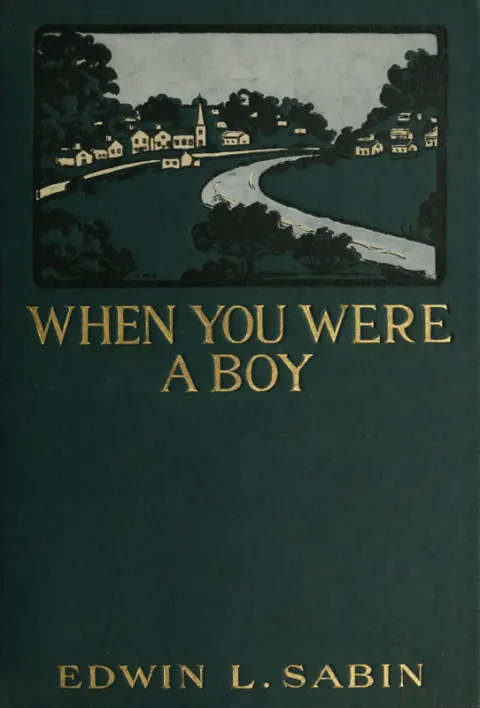
"When You Were a Boy" by Edwin L. Sabin is a nostalgic children's narrative written in the early 20th century. The text is likely a novel or a collection of intertwined stories centered around the experiences of boys during childhood, exploring themes of innocence, adventure, and the simplicity of pastimes like baseball and the circus. The main character, addressed as "you," engages with a cast of friends, including relatable figures such as Fat Day, Hen Schmidt, and Billy Lunt, who embody the essence of youthful camaraderie and imaginative play. The opening portion of the work introduces the reader to a lively scene where the main character joins friends in forming a baseball team, the North Stars. The camaraderie is palpable as they organize their lineup, discuss their uniforms, and anticipate an upcoming match against the Second-street kids. The sense of competition, childhood rivalry, and the spirit of playfulness is highlighted as the boys navigate the trials of their baseball game, culminating in moments filled with excitement and disappointment. The narrative captures the essence of boyhood adventures, from the thrill of playing sports to the simplicity of the friendships formed during these formative years.
Introduction adapted from the source catalogue; source summaries may be automatically generated.
Free to read · English · 42,358 words · No account needed
MAKE TIME FOR A GOOD BOOK
On by default. Untick to stop anonymous reading totals. Each page counts after 10 seconds in view. How this works.
Anonymous counting is on unless you have switched it off.
However, the bob was a very good bob, and when cleverly shoved off and expertly steered gallantly maintained itself against all comers; even against Fat Day’s more aristocratic “boughten” bob, which, with its gay paint and varnish and rail “hand-holts,” was the pride of Fat’s heart and the apple of his stingy eye.
Hen steers (for steering is a science) and you shove off (for shoving off is an art). Between you two, pilot and captain of the craft, it packed, on occasion, an inconceivable number of passengers, with always room for one more.
“Gimme a ride. Lemme ride!” beseech friends.
“Aw, you can’t! There ain’t any room!”
“There is, too! I can get on, all right.”
“G’wan! Don’t you let him, John! Don’t you let him, Hen! We’re all
squashed now!”
This from the jealous load already booked.
“Shove up, can’t you! Aw, shove up! What’s the matter with you! There’s
lots of room!”
And the pestiferous intruder squeezes in. The bob looks like a gigantic caterpillar upside down, so thick are the heads and shoulders in a series of ridges. The board creaks. The load also complains, grunting uneasily as each boy, fitting like a bootjack into the boy before, his legs stretched horizontally along either flank, tries to “shove up closer.” Hen, his feet braced against the stick nailed across the points of the guiding sled, is the only unit of the mass that enjoys any elbow-space. But then, the pilot of a vessel is ex officio the favored personage.
“Darn it, lift up your feet, there!”
“Then somebody hold ’em! Grab my feet, somebody!”
“Whose feet I got, anyway?”
“Aw, quit your shovin’ so!”
“G’wan an’ push off. We don’t want any more.”
“Gimme some room!” you plead. “I only got about an inch!”
They hitch along, and cede you another inch.
“Clea-ear the track!”
You bend and push. The bob starts. It gathers way. One concluding effort, and you land aboard just as it is outstripping you; and kneeling upon your scant two inches, hanging for dear life to the shoulders of the boy in front of you, are embarked for your rapturous yet excruciating flight.
With lurch and leap, with whoop and cheer, down zips the bob, every lad clutching his neighbor as he may, each cemented to each—but you, out in the cold, clutching most desperately of all.
“I’m fallin’ off!” you announce wildly.
The two inches are only one and a half.
“Jocko’s fallin’ off!”
How delightful—for the others! The news of your lingering predicament is received with hoots of wicked glee.
Your reading position is saved on this browser. Take it to another device with a library code. Reading pages adapt to text, rather than matching a printed edition.
Edwin L. (Edwin Legrand) Sabin

Edwin L. (Edwin Legrand) Sabin

Edwin L. (Edwin Legrand) Sabin

Edwin L. (Edwin Legrand) Sabin
BEHIND THE BOOK
This eBook is for the use of anyone anywhere in the United States and most other parts of the world at no cost and with almost no restrictions whatsoever. You may copy it, give it away or re-use it under the terms of the Project Gutenberg License included with this eBook or online at www.gutenberg.org. If you are not located in the United States, you will have to check the laws of the country where you are located before using this eBook. Read the source licence.
The original source file, including credits and licence, is retained by this library. Request an original-format copy at no charge. Please include the book title and Project Gutenberg identifier #58165.
KEEP YOUR CURIOSITY GOING
Coulson Kernahan

Maurice Baring
Frances Wright
Cécile Tormay

Frederic Jesup Stimson

W. H. P. (William Henry Pope) Jarvis