THE CLASSIC COLLECTION✦Building the pacific railwayCLASSIC FREE BOOKS
Building the pacific railway
Edwin L. (Edwin Legrand) Sabin
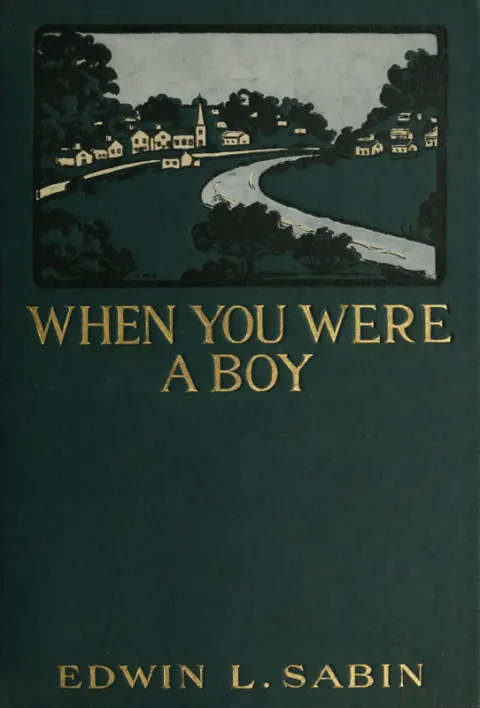
THE CLASSIC COLLECTION · 1905
"When You Were a Boy" by Edwin L. Sabin is a nostalgic children's narrative written in the early 20th century. The text is likely a novel or a collection of intertwined stories centered around the experiences of boys during childhood, exploring themes of innocence, adventure, and the simplicity of pastimes like baseball and the circus. The main character, addressed as "you," engages with a cast of friends, including relatable figures such as Fat Day, Hen Schmidt, and Billy Lunt, who embody the essence of youthful camaraderie and imaginative play. The opening portion of the work introduces the reader to a lively scene where the main character joins friends in forming a baseball team, the North Stars. The camaraderie is palpable as they organize their lineup, discuss their uniforms, and anticipate an upcoming match against the Second-street kids. The sense of competition, childhood rivalry, and the spirit of playfulness is highlighted as the boys navigate the trials of their baseball game, culminating in moments filled with excitement and disappointment. The narrative captures the essence of boyhood adventures, from the thrill of playing sports to the simplicity of the friendships formed during these formative years.
Introduction adapted from the source catalogue; source summaries may be automatically generated.
Free to read · English · 42,358 words · No account needed
MAKE TIME FOR A GOOD BOOK
On by default. Untick to stop anonymous reading totals. Each page counts after 10 seconds in view. How this works.
Anonymous counting is on unless you have switched it off.
For a girl to essay the big hill appears to be “no end of” an undertaking. First she—or, probably they, inasmuch as girls usually adventure in pairs, to encourage each other; first they, then, squat on their flimsy sled, girl fashion (another reproach this: “girl fashion”), and titter and shriek; and the one on behind urges by “hitching” with her feet in the peculiar girl way, and the one on before holds back with her feet and says:
“Wait!”
They wait for bob and sled to precede, until with frantic unanimity of action they seize upon a favorable interim betwixt coasters, and with trepidation are off.
But you overtake them.
“Look out!” you yell, as on your bounding courser you eat up the trail.
“Look out!”
You try to retard your speed by dragging your copper toes. Anticipating the shock of collision you lift the forward part of you, like a worm reconnoitering.
“Look ou-out!”
One last agonizing appeal. And now the pesky girls, glancing behind with sudden apprehension in utmost haste and terror-stricken confusion, amidst wild cries, by dint of laboring feet veer ditchward, stop on the brink, and as you shoot past rise flustrated and gaze after.
Well, they have spoiled your slide. You had a grand start, and goodness knows where you might have gone to. Darn it, why can’t girls stay on their own track!
Yes, indeed. Nevertheless, budding chivalry grafted upon natural superiority prompts you to take Somebody down on a real ride. You would like this Somebody, if the other boys would only let you; but most of the time you cannot afford to.
A sparkling little figure in white hood, fur-trimmed jacket, white mittens strung about her neck, and plaid skirt well wadded out over long leggins, with her ridiculously high sled (girl-sled) she stands by looking on.
“Want to go down, once? I’ll take you,” you offer bluffly.
From amidst the giggling society of her sex she bravely advances, and obediently seats herself on your sled.
“Oh, Lucy! I’d be ’shamed! Sliding with a boy! Oh, Lucy!”
Lucy wriggles disdainfully.
“Don’t you wish you could!” she retorts.
“Aw, John! Takin’ a girl! ’Fore I’d be seen takin’ a girl!” joins in the gibing chorus of your mates.
You hurriedly shove off.
“You got room enough?” asks your solicitous passenger.
“Lots,” you affirm huskily; and crouched to steer you leave the derisive
crest behind you.
Down you spin—you and Lucy, both gripping hard the sled; your shoulder pressing against her soft back, and her hair-ribbon whipping across your mouth as you peer vigilantly ahead.
Here is the culvert.
“Hold on tight!” you warn.
“Whisk—slam!”
Your reading position is saved on this browser. Take it to another device with a library code. Reading pages adapt to text, rather than matching a printed edition.
Edwin L. (Edwin Legrand) Sabin

Edwin L. (Edwin Legrand) Sabin

Edwin L. (Edwin Legrand) Sabin

Edwin L. (Edwin Legrand) Sabin
BEHIND THE BOOK
This eBook is for the use of anyone anywhere in the United States and most other parts of the world at no cost and with almost no restrictions whatsoever. You may copy it, give it away or re-use it under the terms of the Project Gutenberg License included with this eBook or online at www.gutenberg.org. If you are not located in the United States, you will have to check the laws of the country where you are located before using this eBook. Read the source licence.
The original source file, including credits and licence, is retained by this library. Request an original-format copy at no charge. Please include the book title and Project Gutenberg identifier #58165.
KEEP YOUR CURIOSITY GOING
Coulson Kernahan

Maurice Baring
Frances Wright
Cécile Tormay

Frederic Jesup Stimson

W. H. P. (William Henry Pope) Jarvis