THE CLASSIC COLLECTION✦Building the pacific railwayCLASSIC FREE BOOKS
Building the pacific railway
Edwin L. (Edwin Legrand) Sabin
THE CLASSIC COLLECTION · 1905
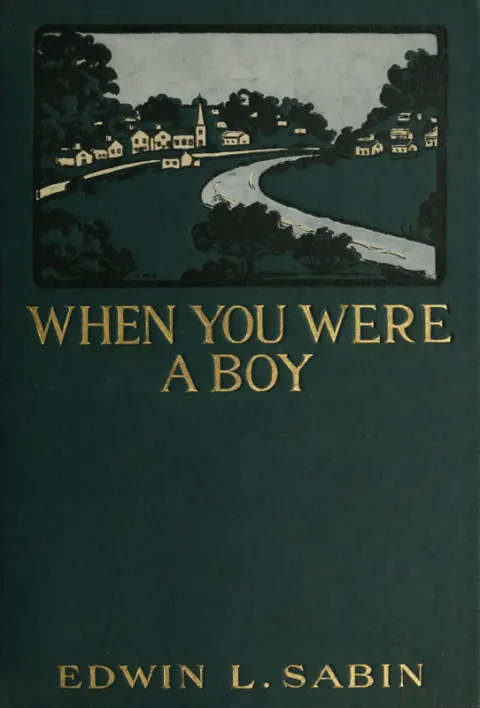
"When You Were a Boy" by Edwin L. Sabin is a nostalgic children's narrative written in the early 20th century. The text is likely a novel or a collection of intertwined stories centered around the experiences of boys during childhood, exploring themes of innocence, adventure, and the simplicity of pastimes like baseball and the circus. The main character, addressed as "you," engages with a cast of friends, including relatable figures such as Fat Day, Hen Schmidt, and Billy Lunt, who embody the essence of youthful camaraderie and imaginative play. The opening portion of the work introduces the reader to a lively scene where the main character joins friends in forming a baseball team, the North Stars. The camaraderie is palpable as they organize their lineup, discuss their uniforms, and anticipate an upcoming match against the Second-street kids. The sense of competition, childhood rivalry, and the spirit of playfulness is highlighted as the boys navigate the trials of their baseball game, culminating in moments filled with excitement and disappointment. The narrative captures the essence of boyhood adventures, from the thrill of playing sports to the simplicity of the friendships formed during these formative years.
Introduction adapted from the source catalogue; source summaries may be automatically generated.
Free to read · English · 42,358 words · No account needed
MAKE TIME FOR A GOOD BOOK
On by default. Untick to stop anonymous reading totals. Each page counts after 10 seconds in view. How this works.
Anonymous counting is on unless you have switched it off.
To be sure, occasionally some rebellious citizen attempted to adapt it to his own selfish ends by sprinkling ashes, in a spasmodic fashion, athwart it; but a little snow or water soon nullified the feeble essay. To be sure, occasionally a stubborn driver, his discretion less than his valor, tilted at the glistening, glassy acclivity; and while his horses, zigzagging and slipping, toiled upward, you and yours hailed him as a special gift of Providence and gleefully hitched on behind.
Yes, it was a paragon of a hill, with a record of pleasure to which here and there a broken bone (soon mended) lent but additional zest.
The hill is ready. The track, at first traced by the accommodating sleds and feet of a pioneer few, gradually has been packed and polished until now it lies smooth, straight-away, inviting.
The hill is ready. So are you. Your round turban-like cap is pulled firmly upon your head and over your ears, your red tippet (mother knit it) twice encircles your neck, crosses your breast, and is tied (by mother) behind in a double knot, your red double mittens (mother knit them and constantly darns them) are on your hands, and your legs and feet are in your stout copper-toed, red-topped boots. And your cheeks (mother kissed them) are red, too.
Twitched by its leading-rope, follows you, like a loyal dog, your sled—a very fine sled, than which none is finer.
“Say, but she’s slick, ain’t she!” glories Hen, as you and he hurriedly draw in sight of your goal. From all quarters other boys, and girls as well, are converging, with gay chatter, upon this Mecca of winter sport. Far and wide has gone forth the word that Middleton’s hill is “bully.”
“Ain’t she!” you reply enthusiastically.
With swoop and swerve and shrill cheer down scud the sleds and bobs of the earlier arrivals, and the spectacle spurs you to the crest.
Panting, you reach it.
“You go first,” you say, to Hen.
“Naw; you,” says he.
“All right. I’d just as lief,” you respond.
Breast-high you raise your sled, its rope securely gathered in your
hands.
“Clea-ear the track!” you shriek.
“Clea-ear the track!” echoes down the hill, from the mouths of
solicitous friends.
You give a little run, and down you slam, sled and all, but you uppermost; a masterly exposition of “belly-bust.” Over the crest you dart. The slope is beneath you, and now you are off, willy-nilly.
“Clea-ear the track!” again you shriek, with your last gasp.
Your reading position is saved on this browser. Take it to another device with a library code. Reading pages adapt to text, rather than matching a printed edition.
Edwin L. (Edwin Legrand) Sabin

Edwin L. (Edwin Legrand) Sabin

Edwin L. (Edwin Legrand) Sabin

Edwin L. (Edwin Legrand) Sabin
BEHIND THE BOOK
This eBook is for the use of anyone anywhere in the United States and most other parts of the world at no cost and with almost no restrictions whatsoever. You may copy it, give it away or re-use it under the terms of the Project Gutenberg License included with this eBook or online at www.gutenberg.org. If you are not located in the United States, you will have to check the laws of the country where you are located before using this eBook. Read the source licence.
The original source file, including credits and licence, is retained by this library. Request an original-format copy at no charge. Please include the book title and Project Gutenberg identifier #58165.
KEEP YOUR CURIOSITY GOING
Coulson Kernahan

Maurice Baring
Frances Wright
Cécile Tormay

Frederic Jesup Stimson

W. H. P. (William Henry Pope) Jarvis