THE CLASSIC COLLECTION✦Building the pacific railwayCLASSIC FREE BOOKS
Building the pacific railway
Edwin L. (Edwin Legrand) Sabin
THE CLASSIC COLLECTION · 1905
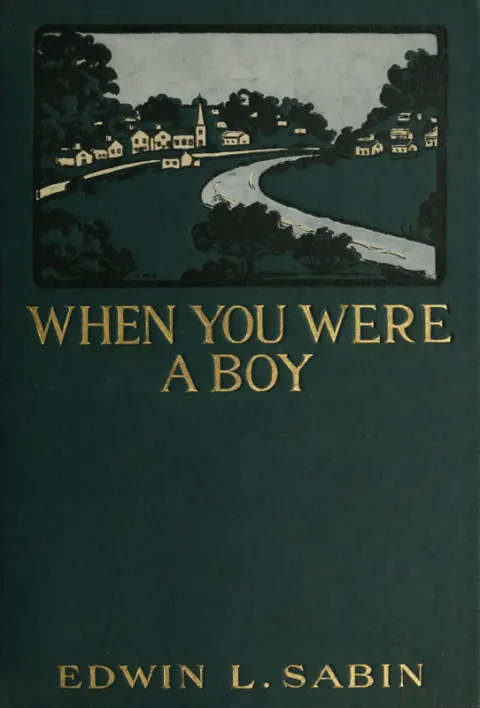
"When You Were a Boy" by Edwin L. Sabin is a nostalgic children's narrative written in the early 20th century. The text is likely a novel or a collection of intertwined stories centered around the experiences of boys during childhood, exploring themes of innocence, adventure, and the simplicity of pastimes like baseball and the circus. The main character, addressed as "you," engages with a cast of friends, including relatable figures such as Fat Day, Hen Schmidt, and Billy Lunt, who embody the essence of youthful camaraderie and imaginative play. The opening portion of the work introduces the reader to a lively scene where the main character joins friends in forming a baseball team, the North Stars. The camaraderie is palpable as they organize their lineup, discuss their uniforms, and anticipate an upcoming match against the Second-street kids. The sense of competition, childhood rivalry, and the spirit of playfulness is highlighted as the boys navigate the trials of their baseball game, culminating in moments filled with excitement and disappointment. The narrative captures the essence of boyhood adventures, from the thrill of playing sports to the simplicity of the friendships formed during these formative years.
Introduction adapted from the source catalogue; source summaries may be automatically generated.
Free to read · English · 42,358 words · No account needed
MAKE TIME FOR A GOOD BOOK
On by default. Untick to stop anonymous reading totals. Each page counts after 10 seconds in view. How this works.
Anonymous counting is on unless you have switched it off.
With your face shining like a red apple, with your hair slickly brushed—by mother, and your fresh waist neatly adjusted—by mother, and your Sunday jacket and knickerbockers faithfully brushed—by mother, and your shoes blacked and harmoniously buttoned—by mother again, there you stood between mother’s knees while she coaxed into an expansive knot your blue polka-dotted tie.
Then she turned you about for inspection.
“Well, well!” commented father, in acknowledgment of your effect.
Mother settled your hat delicately upon your smooth crown.
“Now, be a good boy,” she cautioned. “Be polite, and don’t be rough in your play, and remember to say good-night to Helen and her mama, and don’t act greedy when the things to eat are passed.”
She kissed you, and father kissed you, and escorted to the front door
out you strutted.
“Be a good boy!” called mother after you.
You decorously yodeled for Hen; Hen, arrayed, like you, in purple and fine linen, decorously made exit and joined you; and decorously the two of you walked side by side up the street, bound for the “Daner party.”
Along the way, restrained by your feeling of spick-and-spanness from customary gambolings, you and Hen sought relief in a preliminary review of the prospective menu.
“I bet you we have ice cream—I seen Mr. Daner orderin’ it!” avowed Hen, by his abundance of enthusiasm atoning for his lack of grammar.
“Gee! I hope it’s chocolate!” you exclaimed.
“Or strawberry an’ vaniller mixed!” supplemented Hen, with a smack of
anticipation.
You “geed” again, and offered an unvoiced prayer that, whatever the flavor or flavors, the dishes be large.
On ahead was disclosed the house of the party. It was lighted from top to bottom, and at the impressive sight your courage, buoyed in vain by ice-cream, chocolate, or strawberry and vanilla mixed, began to sink.
“You go in first,” you suggested to Hen.
“Naw, sir! You!” objected Hen. “You know ’em better’n I do.”
“But I’ll keep right close behind. Honest, I will,” you promised.
“You wouldn’t, either. You’d run off and leave me alone!” accused Hen, suspicious and diffident.
With the question of precedence still unsettled, slowly and more slowly you and he approached. Hanging to the palings of the fence, in front, were the luckless (and invidious) uninvited; among them Snoopie Mitchell, of course. Snoopie never missed anything, if within his reach, and he wore the same clothes wherever he went, be it fishing or into the crème de la crème of civilization.
Your reading position is saved on this browser. Take it to another device with a library code. Reading pages adapt to text, rather than matching a printed edition.
Edwin L. (Edwin Legrand) Sabin

Edwin L. (Edwin Legrand) Sabin

Edwin L. (Edwin Legrand) Sabin

Edwin L. (Edwin Legrand) Sabin
BEHIND THE BOOK
This eBook is for the use of anyone anywhere in the United States and most other parts of the world at no cost and with almost no restrictions whatsoever. You may copy it, give it away or re-use it under the terms of the Project Gutenberg License included with this eBook or online at www.gutenberg.org. If you are not located in the United States, you will have to check the laws of the country where you are located before using this eBook. Read the source licence.
The original source file, including credits and licence, is retained by this library. Request an original-format copy at no charge. Please include the book title and Project Gutenberg identifier #58165.
KEEP YOUR CURIOSITY GOING
Coulson Kernahan

Maurice Baring
Frances Wright
Cécile Tormay

Frederic Jesup Stimson

W. H. P. (William Henry Pope) Jarvis