THE CLASSIC COLLECTION✦Building the pacific railwayCLASSIC FREE BOOKS
Building the pacific railway
Edwin L. (Edwin Legrand) Sabin
THE CLASSIC COLLECTION · 1905
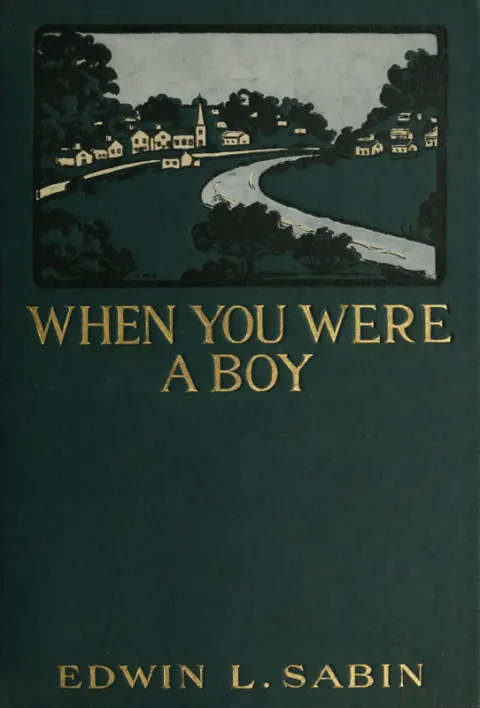
"When You Were a Boy" by Edwin L. Sabin is a nostalgic children's narrative written in the early 20th century. The text is likely a novel or a collection of intertwined stories centered around the experiences of boys during childhood, exploring themes of innocence, adventure, and the simplicity of pastimes like baseball and the circus. The main character, addressed as "you," engages with a cast of friends, including relatable figures such as Fat Day, Hen Schmidt, and Billy Lunt, who embody the essence of youthful camaraderie and imaginative play. The opening portion of the work introduces the reader to a lively scene where the main character joins friends in forming a baseball team, the North Stars. The camaraderie is palpable as they organize their lineup, discuss their uniforms, and anticipate an upcoming match against the Second-street kids. The sense of competition, childhood rivalry, and the spirit of playfulness is highlighted as the boys navigate the trials of their baseball game, culminating in moments filled with excitement and disappointment. The narrative captures the essence of boyhood adventures, from the thrill of playing sports to the simplicity of the friendships formed during these formative years.
Introduction adapted from the source catalogue; source summaries may be automatically generated.
Free to read · English · 42,358 words · No account needed
MAKE TIME FOR A GOOD BOOK
On by default. Untick to stop anonymous reading totals. Each page counts after 10 seconds in view. How this works.
Anonymous counting is on unless you have switched it off.
“Oh, ’bout as big as the first one Snoop caught,” you replied, which was strictly the truth.
You devoted a few seconds to squeezing your pricked thumb; then pleasantly aware that several new arrivals were viewing your success, you gingerly strung him and deposited him, thus secured, in his native element. Here he flopped a moment, but finding his efforts useless, sulked out of sight.
You baited up; you were more contented.
Two pole-lengths from shore occurred a quick splash and a swirl.
“Gee!” burst simultaneously from the three of you; and you stared with wide eyes at the spot where the bubbles were floating.
“What was that?” ejaculated Hen.
“A big bass, I bet you,” averred Snoopie.
Nobody—within your memory, at least—ever had actually caught a “big bass” in these haunts, but upon various occasions, such as the present one, he had made himself known. To doubt his existence was heresy. He was here; of course he was. Nearly to see him was an exploit accomplished by many; nearly to catch him was accomplished by only a few less: but really to haul him out had been accorded to none.
In the meantime he cruised about, in his mysterious way, and now and then made a rumpus on the surface, to wring a tribute of hungry “Gees!” from the astounded spectators of his antics.
You gripped closer your pole and barely breathed. Perhaps he was heading in your direction; perhaps, at last, he would accept your worm, and, glory! you would be the boy to carry him through town, and home! Could anything be more deliriously grand?
On the other hand, misery! perhaps he was heading for Snoopie or Hen. However, he might turn aside.
Silence reigned; the atmosphere was tense with expectation. Another swirl, a small one, off a brush-pile nearer the shore, just to your left. Cautiously you tiptoed down there and craftily introduced your tempting hook.
The cork vibrated. For an instant you lost your breath. The cork dipped. You poised, rigid but alert, daring to stir not even a toe. The cork righted, dipped again, and slowly, calmly sank into the pregnant depths.
Furiously you struck. Your good pole bent and swayed. You were wild with
excitement.
“Say! Look there! Look at John!” exclaimed Hen.
“Hang on to him! Don’t let him get away!” bawled Snoopie.
Spurred by your down-curving pole and your violent endeavors, they scampered madly to your succor.
“Don’t you give him slack!” instructed Snoopie. “He’ll get loose!”
“Don’t bust the pole, either!” warned Hen.
Your reading position is saved on this browser. Take it to another device with a library code. Reading pages adapt to text, rather than matching a printed edition.
Edwin L. (Edwin Legrand) Sabin

Edwin L. (Edwin Legrand) Sabin

Edwin L. (Edwin Legrand) Sabin

Edwin L. (Edwin Legrand) Sabin
BEHIND THE BOOK
This eBook is for the use of anyone anywhere in the United States and most other parts of the world at no cost and with almost no restrictions whatsoever. You may copy it, give it away or re-use it under the terms of the Project Gutenberg License included with this eBook or online at www.gutenberg.org. If you are not located in the United States, you will have to check the laws of the country where you are located before using this eBook. Read the source licence.
The original source file, including credits and licence, is retained by this library. Request an original-format copy at no charge. Please include the book title and Project Gutenberg identifier #58165.
KEEP YOUR CURIOSITY GOING
Coulson Kernahan

Maurice Baring
Frances Wright
Cécile Tormay

Frederic Jesup Stimson

W. H. P. (William Henry Pope) Jarvis