THE CLASSIC COLLECTION✦Building the pacific railwayCLASSIC FREE BOOKS
Building the pacific railway
Edwin L. (Edwin Legrand) Sabin
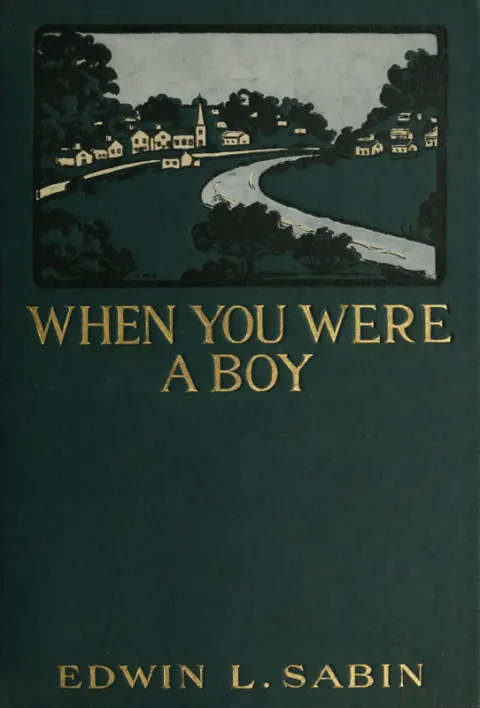
THE CLASSIC COLLECTION · 1905
"When You Were a Boy" by Edwin L. Sabin is a nostalgic children's narrative written in the early 20th century. The text is likely a novel or a collection of intertwined stories centered around the experiences of boys during childhood, exploring themes of innocence, adventure, and the simplicity of pastimes like baseball and the circus. The main character, addressed as "you," engages with a cast of friends, including relatable figures such as Fat Day, Hen Schmidt, and Billy Lunt, who embody the essence of youthful camaraderie and imaginative play. The opening portion of the work introduces the reader to a lively scene where the main character joins friends in forming a baseball team, the North Stars. The camaraderie is palpable as they organize their lineup, discuss their uniforms, and anticipate an upcoming match against the Second-street kids. The sense of competition, childhood rivalry, and the spirit of playfulness is highlighted as the boys navigate the trials of their baseball game, culminating in moments filled with excitement and disappointment. The narrative captures the essence of boyhood adventures, from the thrill of playing sports to the simplicity of the friendships formed during these formative years.
Introduction adapted from the source catalogue; source summaries may be automatically generated.
Free to read · English · 42,358 words · No account needed
MAKE TIME FOR A GOOD BOOK
On by default. Untick to stop anonymous reading totals. Each page counts after 10 seconds in view. How this works.
Anonymous counting is on unless you have switched it off.
“I’ll come,” comforted mother. “When is it?”
“We dunno yet; but everybody that gets in has got to bring ten pins—and bent ones don’t count, either. Hen’s mother’s comin’.”
“Do you think we can spare ten pins?” inquired mother of father.
The idea seemed preposterous to you, with a whole cushion bristling on the bedroom bureau; but nevertheless you awaited, with considerable anxiety, father’s reply.
“I guess so,” answered father. “But members of the performers’ families ought to go in free. How’s that, John?”
You shook your head decidedly. Such a suggestion must be nipped in the
bud.
“Naw, sir! Everybody has to pay!”
There was no dearth of performers; they were as plenty as ball-players, and you had an embarrassing number of volunteers, who offered themselves as soon as the news of your circus spread through the neighborhood.
Snoopie Mitchell was among the earliest.
“Say, I’ll be in your circus,” he proposed. “I can skin the cat twice, an’ do the giant’s swing, an’ turn flip-flops both ways, an’—”
“Pooh! That’s nothin’. So can I,” scoffed Hen.
“You can’t, neither!” contradicted Snoopie. “Le’ ’s see you, now.”
Hen obligingly cut a caper.
“Aw, gee!” sneered the redoubtable Snoopie, in high scorn. “That ain’t no hand-spring! That’s a cart-wheel! Anybody can turn a cart-wheel! Aw, gee! Lookee here! Here’s the way you did.” He demonstrated. “Lookee!”—and again he demonstrated.—“That’s a reg’lar hand-spring.”
“Well—I can do it, only my back’s lame,” faltered the abashed Hen. “And I can skin the cat, too. Can’t I, John?”
You nodded.
“But I’ve skun it twice, an’ John’s seen me, haven’t you, John?”
trumpeted Snoopie.
You nodded confirmation to this, also.
“Yep,” you said; “he did, Hen; truly he did.”
“Without changin’ hands?” insisted Hen.
“Of course,” asserted Snoopie.
Snoopie was accepted.
Tom Kemp and Nixie Kemp were organizing a circus of their own, but consented to be in yours if you’d be in theirs.
Over Billy Lunt occurred almost a fight, because a rival company set up the claim that he had promised them; but by bribe of a jews’-harp he was won to your side. Fat Day was asked chiefly on account of his pair of white rats, which would prove a valuable addition to the prospective menagerie.
“If you’ll lemme be clown, I’ll bring ’em,” consented Fat.
“But John he’s clown,” explained Hen.
This was true. Before advertising for talent, Hen had preempted ringmaster, and you, clown, as the choice positions, which was only the part of ordinary discretion.
Your reading position is saved on this browser. Take it to another device with a library code. Reading pages adapt to text, rather than matching a printed edition.
Edwin L. (Edwin Legrand) Sabin

Edwin L. (Edwin Legrand) Sabin

Edwin L. (Edwin Legrand) Sabin

Edwin L. (Edwin Legrand) Sabin
BEHIND THE BOOK
This eBook is for the use of anyone anywhere in the United States and most other parts of the world at no cost and with almost no restrictions whatsoever. You may copy it, give it away or re-use it under the terms of the Project Gutenberg License included with this eBook or online at www.gutenberg.org. If you are not located in the United States, you will have to check the laws of the country where you are located before using this eBook. Read the source licence.
The original source file, including credits and licence, is retained by this library. Request an original-format copy at no charge. Please include the book title and Project Gutenberg identifier #58165.
KEEP YOUR CURIOSITY GOING
Coulson Kernahan

Maurice Baring
Frances Wright
Cécile Tormay

Frederic Jesup Stimson

W. H. P. (William Henry Pope) Jarvis