THE CLASSIC COLLECTION✦Building the pacific railwayCLASSIC FREE BOOKS
Building the pacific railway
Edwin L. (Edwin Legrand) Sabin
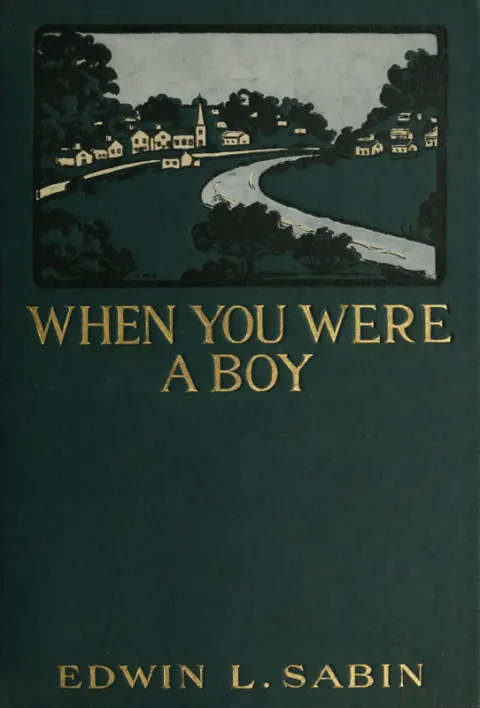
THE CLASSIC COLLECTION · 1905
"When You Were a Boy" by Edwin L. Sabin is a nostalgic children's narrative written in the early 20th century. The text is likely a novel or a collection of intertwined stories centered around the experiences of boys during childhood, exploring themes of innocence, adventure, and the simplicity of pastimes like baseball and the circus. The main character, addressed as "you," engages with a cast of friends, including relatable figures such as Fat Day, Hen Schmidt, and Billy Lunt, who embody the essence of youthful camaraderie and imaginative play. The opening portion of the work introduces the reader to a lively scene where the main character joins friends in forming a baseball team, the North Stars. The camaraderie is palpable as they organize their lineup, discuss their uniforms, and anticipate an upcoming match against the Second-street kids. The sense of competition, childhood rivalry, and the spirit of playfulness is highlighted as the boys navigate the trials of their baseball game, culminating in moments filled with excitement and disappointment. The narrative captures the essence of boyhood adventures, from the thrill of playing sports to the simplicity of the friendships formed during these formative years.
Introduction adapted from the source catalogue; source summaries may be automatically generated.
Free to read · English · 42,358 words · No account needed
MAKE TIME FOR A GOOD BOOK
On by default. Untick to stop anonymous reading totals. Each page counts after 10 seconds in view. How this works.
Anonymous counting is on unless you have switched it off.
The fateful lot dawned upon the right, around the corner of an alley fence. Hurrah, there they are! You see Nixie and Tom Kemp, and Hod O’Shea, and Bob Leslie, and Spunk, and Screw Major, and Ted Watson, and Slim Harding, and the redoubtable Red Conroy (engaged in bullying a smaller boy), and others who must be the remainder of the Second-streets.
“Hello, kids,” you say, and likewise say your three companions; and with bat trailing you stalk with free and easy dignity into the crowd.
“Where’s Fat? Who’s seen Fat?” asked everybody of everybody; for Captain Fat was the sole essential personage lacking. However, even without him, pending his arrival the scene was one of stirring animation.
Thick and fast flew here and there the several balls on the grounds, each nine keeping to itself, and each boy throwing “curves”—or, at least, thus essaying.
You yourself, brave in your splendor of blue star and red stripe, endeavored, by now and then negligently catching with one hand, to make it plain that you were virtually a professional.
The Second-streets were as yet ununiformed, even in sections. But they were a rugged, rough-and-ready set, and two of them had base-ball shoes on, proving that they were experts.
“Here’s Fat! Here comes Fat!” suddenly arose the welcoming cry; and appareled in his regimentals, his cap announcing to all beholders his high rank, panting, hot, perspiring, up hustled the leader of the North Stars.
It was time to begin.
“Who’s got a ball?” demanded Umpire Hopkins, sometimes called Harry, but more generally known as Hop or Hoptoad.
The query disclosed a serious condition. Balls there were, but not suitable for a championship match game. They were ten- and fifteen-centers, as hard as grapeshot or already knocked flabby.
“Where’s your ball, Fat?” you asked incautiously.
“In my pocket,” admitted Fat—a bulging fact that he could not well deny.
“What is it? Le’ ’s see, Fat,” demanded Captain Spunk.
“It’s a regular dollar league,” you informed glibly; and Fat, with mingled pride and reluctance, extracted it from the pocket of his knickerbockers,—peeled it, so to speak, into the open,—and handed it out for inspection.
“Gee!” commented Spunk, thumbing it, and chucking it up and catching it. “It’s a dandy! Come on, kids; here’s a ball!”
“But if you use my ball, you’ve got to give us our outs,” bargained Fat,
dismayed.
“G’wan!” growled Red Conroy. “Don’t you do it, Spunk. ‘Tain’t goin’ to hurt his old ball any.”
Your reading position is saved on this browser. Take it to another device with a library code. Reading pages adapt to text, rather than matching a printed edition.
Edwin L. (Edwin Legrand) Sabin

Edwin L. (Edwin Legrand) Sabin

Edwin L. (Edwin Legrand) Sabin

Edwin L. (Edwin Legrand) Sabin
BEHIND THE BOOK
This eBook is for the use of anyone anywhere in the United States and most other parts of the world at no cost and with almost no restrictions whatsoever. You may copy it, give it away or re-use it under the terms of the Project Gutenberg License included with this eBook or online at www.gutenberg.org. If you are not located in the United States, you will have to check the laws of the country where you are located before using this eBook. Read the source licence.
The original source file, including credits and licence, is retained by this library. Request an original-format copy at no charge. Please include the book title and Project Gutenberg identifier #58165.
KEEP YOUR CURIOSITY GOING
Coulson Kernahan

Maurice Baring
Frances Wright
Cécile Tormay

Frederic Jesup Stimson

W. H. P. (William Henry Pope) Jarvis