Wolves of the Sea Being a Tale of the Colonies from the Manuscript of One Geoffry Carlyle, Seaman, Narrating Certain Strange Adventures Which Befell Him Aboard the Pirate Craft “Namur”
Randall Parrish

THE CLASSIC COLLECTION · 1904
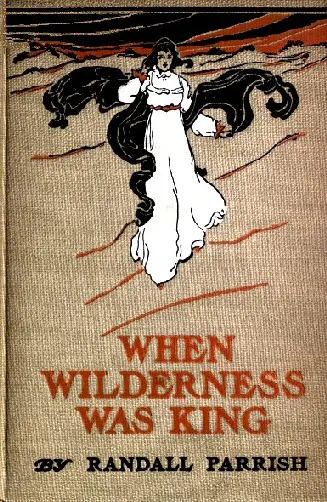
"When Wilderness Was King: A Tale of the Illinois Country" by Randall Parrish is a historical novel written in the late 19th century. The story unfolds in the wilderness of early America, focusing on the adventures and challenges faced by its young protagonist, John Wayland. The plot is set against the backdrop of the Illinois frontier during a time of conflict with Native American tribes, highlighting themes of duty, bravery, and the bond between family and friendship. At the start of the narrative, we are introduced to John Wayland, who lives a quiet life with his parents on the edge of the wilderness. One day, a stranger named Ol' Tom Burns arrives with a letter that reveals the death of John’s father’s old comrade, Roger Matherson, and requests John’s family to take in Matherson's orphaned daughter, Elsa. John’s father decides that John must embark on a dangerous journey to bring Elsa back. As the story progresses, John departs for the Illinois Country, experiencing moments of introspection and anticipation about his upcoming adventure, as well as the stirring presence of a mysterious girl named Mademoiselle Antoinette, whom he discovers at the shore and who may well hold a significant place in his quest. The opening chapters set the stage for a gripping tale of resilience amid the wilderness and the impending upheaval caused by the war.
Introduction adapted from the source catalogue; source summaries may be automatically generated.
Free to read · English · 89,154 words · No account needed
MAKE TIME FOR A GOOD BOOK
On by default. Untick to stop anonymous reading totals. Each page counts after 10 seconds in view. How this works.
Anonymous counting is on unless you have switched it off.
"Well, Monsieur, 'tis not often that your lips fail of words," she continued, archly. "Why is it I am made the subject of your quarrel?"
The slight sarcastic sting in her voice aroused him.
"By all the saints, Toinette!" he exclaimed, striving to appear at his ease, "this seems a poor greeting for one who has followed you through leagues of forest and across oceans of sand, hopeful at the least to gain a smile of welcome from your lips. Know you not I am here, at the very end of the world, for you?"
"I think it not altogether unlikely," she replied with calmness. "You have ever been of a nature to do strange things, yet it has always been of your own sweet will. Surely, Monsieur, I did never bid you come, or promise you a greeting."
"No," he admitted regretfully, "'tis, alas, true"; and his eyes seemed to regain something of their old audacity. "But there was that about our parting,--you recall it, Toinette, in the shadow of the castle wall?--which did afford me hope. No one so fair as you can be without heart."
She laughed softly, as though his words recalled memories of other days, pressing back her hair within its ribbon.
"Such art of compliment seems more in place at Montreal than here. This is a land of deeds, not words, Monsieur. Yet, even though I confess your conclusion partially true, what cause does it yield why you should seek a quarrel with my good friend, John Wayland?"
"You know him, then?" he asked, in quick astonishment.
"Know him! Do you think I should be here otherwise? Fie, Captain de Croix, that you, the very flower of the French court, should express so poor a thought of one you profess to respect so highly!"
He looked from one to the other of us, scarce knowing whether she were
laughing at him or not.
"Sacre!" he exclaimed at last. "I believe it not, Mademoiselle. The boy would have boasted of such an acquaintance long before this. You know him, you say, for how long?"
"Since yester even, if you must know. But he has a face, Monsieur, a face frank and honest, not like that of a man long trained at courts to deceive. 'Tis for that I trust him, and have called him friend."
"You may rue the day."
"No, Captain de Croix," she exclaimed, proudly. "I know the frontiersmen of my father's blood. They are brave men, and true of heart. This John Wayland is of that race." And she rested one hand lightly upon my arm.
The motion, simple as it was, angered him.
Your reading position is saved on this browser. Take it to another device with a library code. Reading pages adapt to text, rather than matching a printed edition.
Randall Parrish
Randall Parrish
Randall Parrish
Randall Parrish
BEHIND THE BOOK
This eBook is for the use of anyone anywhere in the United States and most other parts of the world at no cost and with almost no restrictions whatsoever. You may copy it, give it away or re-use it under the terms of the Project Gutenberg License included with this eBook or online at www.gutenberg.org. If you are not located in the United States, you will have to check the laws of the country where you are located before using this eBook. Read the source licence.
The original source file, including credits and licence, is retained by this library. Request an original-format copy at no charge. Please include the book title and Project Gutenberg identifier #59617.
KEEP YOUR CURIOSITY GOING
Cécile Tormay

Moritz Busch
Coulson Kernahan
John L. Ransom

Maurice Baring
Frances Wright

