THE CLASSIC COLLECTION✦Ruben and Ivy SênCLASSIC FREE BOOKS
Ruben and Ivy Sên
Louise Jordan Miln
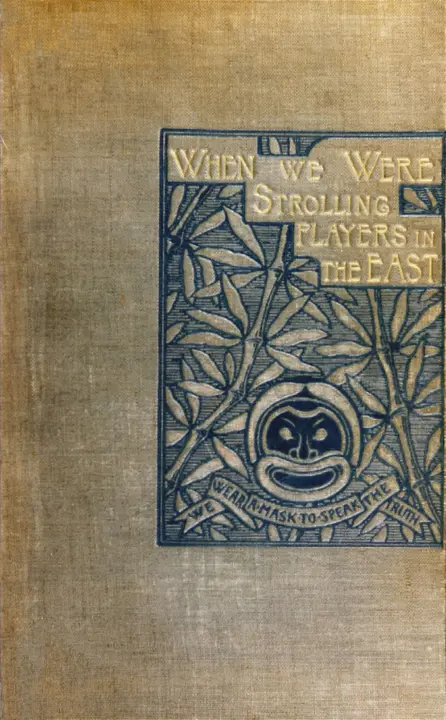
THE CLASSIC COLLECTION · 1894
"When We Were Strolling Players in the East" by Louise Jordan Miln is a memoir written in the late 19th century. This narrative chronicles the author's experiences as she travels across various Eastern locations with her husband, showcasing her deep appreciation for the culture, people, and landscapes she encounters along the way. The work is likely to appeal to readers interested in travel, personal anecdotes, and cultural exploration. At the start of the memoir, the author reflects on her intense curiosity and love for the East, describing her arrival in Colombo. She shares her initial impressions of the vibrant and bustling life around the port, filled with native boats, merchants, and exotic sounds. The opening portion introduces her excitement for new experiences while highlighting her family, especially her husband and children, as they begin their adventures in this unfamiliar yet fascinating land. Through her observations and encounters, Miln captures the essence of her journey, setting the tone for a deeper exploration of the East in the subsequent chapters.
Introduction adapted from the source catalogue; source summaries may be automatically generated.
Free to read · English · 103,374 words · No account needed
MAKE TIME FOR A GOOD BOOK
On by default. Untick to stop anonymous reading totals. Each page counts after 10 seconds in view. How this works.
Anonymous counting is on unless you have switched it off.
“Tell him that European women do not strike servants,” I said grandly.
The unwonted occurrence had drawn all the servants to the door. At my remark they burst into concerted laughter. It is not Anglo-Indian etiquette for a servant to laugh at a memsahib; yet my servants, who were fairly well bred, laughed now; even my own “boy,” who was usually a model of propriety. The cook, a dignified old Goanese, who took many liberties because he knew he was the best chef between Poona and Bombay, took a step forward. “Memsahib,” said the old fellow, “vera much memsahib, European beat plenty—plenty hard.”—“Then tell him that I don’t,” I said rather shortly, and went out. To do myself justice I was very angry. It was too late to send anywhere for what I required. Moreover, that ten-rupee note had been my last one; and my next letter from my husband in Calcutta was not due until Tuesday. And in Khandalah there were neither banks nor pawnshops.
Sambo came to me at five every morning, and went home at eight or nine at night. That night Ayah said to me, “Sambo not come back morning morrow. He thief. He too frightened.” I had a long talk with the European woman who has for years shared all my ups and downs, nursing my babies, keeping my accounts, mending my gowns, and doing me a hundred other loving services. We didn’t know what to think. The ten rupees were gone, and at an inconvenient moment. But we were in doubt whether Sambo had lost or stolen them.
When I woke in the morning Sambo was stealing about the house doing his work with trembling hands. His big, soft eyes were very red. When I saw that he had come back I was sure that he was innocent of any worse fault than carelessness. My housekeeper went to the stationmaster, from whom Sambo had bought his ticket, and to the storekeeper in Lanaulie. Neither could give any conclusive testimony. He had bought his ticket out of the six-anna piece. He had handed in my order at the little store; it was then that he had discovered, or seemed to discover, his loss. He had cried and seemed very terrified. He had spent hours hunting for the note. I thought it greatly to his credit that he had come back to me; he could so easily have disappeared. But he had been careless, and I more than half suspected him of having shown the note on the train, in a moment of boyish braggadocio. I told him that night that I should cut his pay an anna a day until he had paid back the ten rupees. He seemed to think my decision a kind one. The next morning he came to the bungalow a little late, and he had an ugly scar upon his back. I ascertained with some difficulty that the scar was his grandmother’s autograph. It was the only one she knew how to write, and she had inscribed it upon her grandson’s back with a stick, because he had brought home two annas instead of three. I sent the bearer for a gharri. When it came I took Ayah with me, and went in search of the grandmother. We passed through the native bazaar, and found her in a miserable little native hut. It was a chill, cool day. She lay half asleep upon the mud floor of her “home.” She was as ragged and far filthier than Sambo had been when I first saw him. The skin hung in thick wrinkles, half clinging to, half falling from, her bent bones. Her dark-red gums were toothless. In one palsied hand she grasped a stout stick. On her narrow forehead, beneath her scant gray hair, a circle of white paper and a daub of red paint denoted I know not what length of performed prayer and caste altitude. A brightly-burnished chattee stood in one corner. The woman and the chattee were all the room contained; and it was the only room in the house. I had come with big wrath in my heart. It was gone. Her poverty, her misery, had scarred Sambo’s back—not she. “Why does she sleep?” I asked Ayah. “Because she has no rice to eat,” was the answer. We went back to the bazaar. I bought fifteen pounds of rice for a rupee, and a big bag of gram for three annas, a bottle of milk for one anna, a packet of curry ingredients for two annas, six eggs, a few plantains, a loaf of bread, some firewood, a box of matches, a few simple cooking utensils, a bar of soap, a pair of cheap blankets, and a chicken. A chicken sounds rather lavish, but it only cost two annas. I have bought them in India for less. When we went back, Ayah lit a fire, and then we woke the old woman. She ate ravenously, though she seemed scarcely to have strength to eat at all. And I wondered what moment of distress had given her the sudden power to deal her grandson so cruel a blow. She had, however, the strength to thank me abundantly. I left a few small coins with her; bade Ayah tell her that if she never beat Sambo again she should be helped, and drove home through the soft, sweet twilight. Please don’t think that I am a philanthropist. I am not. I am a woman, and, like most women, very selfish. But I had tinned asparagus and a glass of very good claret for my dinner that night; and I should have lost half the flavour of the one and the bouquet of the latter had I not known that one old bag of Hindoo bones was no longer cold and famished. After dinner, out amid my little paradise of Indian flowers, I enjoyed the perfumed Indian night and the cup of coffee that Sambo brought me far more because I had arranged that, while he was in my service, his back should not again ache so cruelly. I gained among the simple natives the reputation of great generosity. And any European who fails to buy that reputation at the cost of a few wisely-spent rupees foregoes one of the greatest charms of an Indian sojourn.
Your reading position is saved on this browser. Take it to another device with a library code. Reading pages adapt to text, rather than matching a printed edition.
Louise Jordan Miln
Louise Jordan Miln & Harold Owen & Harry M. Vernon
Louise Jordan Miln
Louise Jordan Miln
BEHIND THE BOOK
This eBook is for the use of anyone anywhere in the United States and most other parts of the world at no cost and with almost no restrictions whatsoever. You may copy it, give it away or re-use it under the terms of the Project Gutenberg License included with this eBook or online at www.gutenberg.org. If you are not located in the United States, you will have to check the laws of the country where you are located before using this eBook. Read the source licence.
The original source file, including credits and licence, is retained by this library. Request an original-format copy at no charge. Please include the book title and Project Gutenberg identifier #56262.
KEEP YOUR CURIOSITY GOING
Wilfrid Scawen Blunt
Wilfrid Scawen Blunt

E. W. (Edgar Watson) Howe
Francis Greenleaf Allinson & Anne C. E. (Anne Crosby Emery) Allinson
Cyrenus Cole

John Martineau