THE CLASSIC COLLECTION✦A dead man’s diaryCLASSIC FREE BOOKS
A dead man’s diary
Coulson Kernahan
THE CLASSIC COLLECTION · 1903
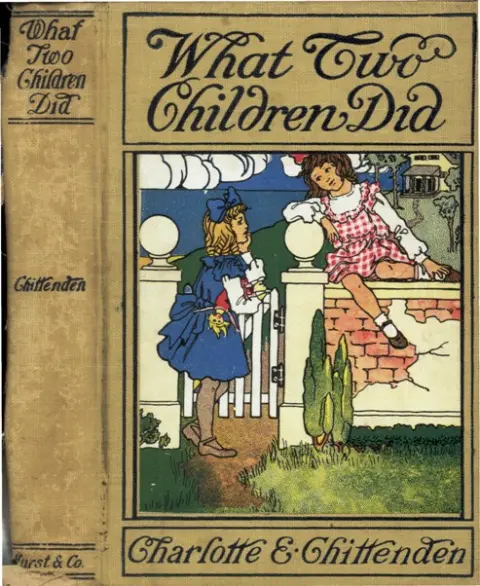
"What Two Children Did" by Charlotte E. Chittenden is a children's fiction book written in the early 20th century. The story revolves around two sisters, Ethelwyn and Beth, as they embark on various adventures and musings, highlighting themes of childhood innocence, curiosity, and the bond between siblings. Against a backdrop of summer activities at the seashore, the book illustrates their simple, yet profound interactions with their mother and the world around them. At the start of the narrative, we find Ethelwyn and Beth traveling by train with their mother, who is preoccupied with her thoughts. The children, noticing their mother's furrowed brow, worry that they are the cause of her distress due to past mischief. As they indulge in a feast of sandwiches and cookies, they ponder deep questions about mistakes and the nature of God. This opening segment sets the stage for their character development, showcasing the children's playful spirits and desire to please their mother while navigating their own understanding of the complexities of life. Their summer journey introduces them to new friends, responsibilities, and opportunities to help others in need, laying the groundwork for further adventures to unfold.
Introduction adapted from the source catalogue; source summaries may be automatically generated.
Free to read · English · 27,709 words · No account needed
MAKE TIME FOR A GOOD BOOK
On by default. Untick to stop anonymous reading totals. Each page counts after 10 seconds in view. How this works.
Anonymous counting is on unless you have switched it off.
"Chick-a-dee-dee, chick-a-dee-dee,
I am so glad that Jesus loves me."
Then they sang what they called "Precious Julias,"
"Little children who love Mary Deemer."
"Why," Beth stopped to ask, "does it say Precious Julias when it's 'bout
Mary Deemer, sister?"
"Middle name, prob'ly," answered Ethelwyn; "anyway that's Mary Deemer," pointing to a picture of Murillo's "Magdalene," "and the reason that she's loved by children, is because she is pretty and good. If you are good, Elizabeth, people will love you."
"I'm as good as you are, anyway," began Beth wrathfully, when she saw
Nan in the doorway.
"May I come in?" she asked, wistfully. "Mother has a headache, father's gone fishing in a boat, and I've a toothpick in my side."
"Come in, deary," said Mrs. Rayburn, who felt an infinite pity for sturdy little Nan, with her invalid mother. "Bless me, what cold hands! What's this thing you have in your side?" she continued, cuddling Nan up in her lap.
Nan breathed a contented breath. "O, it's gone now. It's a sharp, pointed thing that sticks me when I'm lonesome."
"We're having Sunday-school, the singing part, and you may come if you're good, and know a verse, and won't baptize the Sunday-school," said Beth, multiplying conditions rapidly.
"I know a verse that father says he thinks ought to be in the Bible,"
said Nan.
"Let's not have Sunday-school," she continued, snuggling down on Mrs. Rayburn's shoulder. "It's so nice here, and I want to tell you 'bout my dream I had the other night. Dreamed I went to heaven awhile, and when I came home I slid down fifty miles of live wire and sissed all the way down like a hot flatiron."
"There's a gold crack in the sky now that shows a little weenty bit of Heaven's floor, I think, right now," said Ethelwyn, going to the west window.
They all followed her, and sure enough there was the gold of the sky shining through the misty rain clouds.
"Now, if God and the angels would just peek out a minute, I'd be
thankful," said Elizabeth.
CHAPTER V
The New Way
It's--hard--to--work--
And easy to play;
I'll tell you what we've done,
We play our work
And work our play,
And all the hard is gone.
The children were always glad when Mrs. Flaharty came to wash, for she was never too busy to talk to them, nor to let them wash dolls' clothes in some of her suds, nor, in her own way, to converse, and to explain things to them.
Your reading position is saved on this browser. Take it to another device with a library code. Reading pages adapt to text, rather than matching a printed edition.
BEHIND THE BOOK
This eBook is for the use of anyone anywhere in the United States and most other parts of the world at no cost and with almost no restrictions whatsoever. You may copy it, give it away or re-use it under the terms of the Project Gutenberg License included with this eBook or online at www.gutenberg.org. If you are not located in the United States, you will have to check the laws of the country where you are located before using this eBook. Read the source licence.
The original source file, including credits and licence, is retained by this library. Request an original-format copy at no charge. Please include the book title and Project Gutenberg identifier #15541.
KEEP YOUR CURIOSITY GOING
Coulson Kernahan

Maurice Baring
Frances Wright
Cécile Tormay

Frederic Jesup Stimson

W. H. P. (William Henry Pope) Jarvis