THE CLASSIC COLLECTION✦A dead man’s diaryCLASSIC FREE BOOKS
A dead man’s diary
Coulson Kernahan
THE CLASSIC COLLECTION · 1903
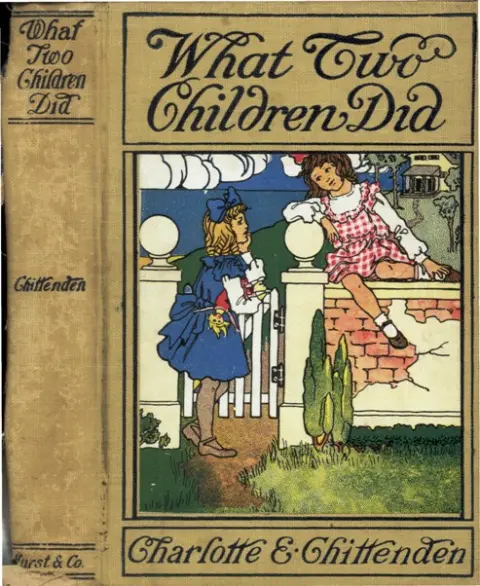
"What Two Children Did" by Charlotte E. Chittenden is a children's fiction book written in the early 20th century. The story revolves around two sisters, Ethelwyn and Beth, as they embark on various adventures and musings, highlighting themes of childhood innocence, curiosity, and the bond between siblings. Against a backdrop of summer activities at the seashore, the book illustrates their simple, yet profound interactions with their mother and the world around them. At the start of the narrative, we find Ethelwyn and Beth traveling by train with their mother, who is preoccupied with her thoughts. The children, noticing their mother's furrowed brow, worry that they are the cause of her distress due to past mischief. As they indulge in a feast of sandwiches and cookies, they ponder deep questions about mistakes and the nature of God. This opening segment sets the stage for their character development, showcasing the children's playful spirits and desire to please their mother while navigating their own understanding of the complexities of life. Their summer journey introduces them to new friends, responsibilities, and opportunities to help others in need, laying the groundwork for further adventures to unfold.
Introduction adapted from the source catalogue; source summaries may be automatically generated.
Free to read · English · 27,709 words · No account needed
MAKE TIME FOR A GOOD BOOK
On by default. Untick to stop anonymous reading totals. Each page counts after 10 seconds in view. How this works.
Anonymous counting is on unless you have switched it off.
Grandmother's house, I tell you most emphatic, Is full of good times from cellar to the attic.
There came to Grandmother Van Stark's one day, a forlorn black tramp
kitten, mewing dismally.
Ethelwyn, who loved kittens devotedly, was melted to the verge of tears by his wailing appeals in a minor key; so she cuddled him and fed him on Lady Babby's creamy, foamy milk. In the intervals of eating, however, he still wailed like a lost soul.
"The critter don't stop crying long enough to catch a mouse," said cook, eyeing the disconsolate bundle of grief with strong disfavor.
"He almost did this morning, Hannah," said Ethelwyn in his defense. "I saw him watching a hole, and he's so little yet, I grabbed him away. Besides, I don't like mice myself, and I was so afraid I'd see one or two."
"No danger; his bawling will keep them away," said Hannah, grimly.
"O, well then, his crying is some good, after all," returned Ethelwyn, triumphantly. "That's a good deal nicer than killing the poor little things."
"Humph!" said Hannah.
But Grandmother Van Stark had given orders that Johnny Bear--so named from one of Ernest Thompson-Seton's illustrations, which Ethelwyn thought he resembled--was to be treated tenderly and fed often, because Ethelwyn loved him, and she herself loved to feed hungry people and animals.
But one morning there was a great commotion over the discovery that a mouse had been in Grandmother Van Stark's room.
"This is a chance for Johnny Bear to make a reputation as a mouser," said grandmother. "We will take him up-stairs to-night and he shall have a chance to catch that mouse."
"O grandmother, I'm sure he will," said Ethelwyn, earnestly; so she talked to him that afternoon about it.
It had rained in the afternoon,--a cold drizzly rain, so Nancy had lighted a little snapping wood-fire in Grandmother Van Stark's sitting-room. Into this opened the sleeping room in which was Ethelwyn's small bed, and the big mahogany tester bed, where Grandmother Van Stark had slept for more years than Ethelwyn could imagine.
Ethelwyn put Johnny Bear and his basket in front of the grate. It was so "comfy" that he stopped yowling at once and began to purr.
"How does middle night look, Nancy?" said Ethelwyn, as she lay in her little brass bed, watching the dancing shadows on the wall.
"Like any other time, only stiller," replied Nancy. "Go to sleep now,
Miss Ethelwyn."
So Ethelwyn presently fell asleep and woke up with a little start just as the clock was striking twelve.
Your reading position is saved on this browser. Take it to another device with a library code. Reading pages adapt to text, rather than matching a printed edition.
BEHIND THE BOOK
This eBook is for the use of anyone anywhere in the United States and most other parts of the world at no cost and with almost no restrictions whatsoever. You may copy it, give it away or re-use it under the terms of the Project Gutenberg License included with this eBook or online at www.gutenberg.org. If you are not located in the United States, you will have to check the laws of the country where you are located before using this eBook. Read the source licence.
The original source file, including credits and licence, is retained by this library. Request an original-format copy at no charge. Please include the book title and Project Gutenberg identifier #15541.
KEEP YOUR CURIOSITY GOING
Coulson Kernahan

Maurice Baring
Frances Wright
Cécile Tormay

Frederic Jesup Stimson

W. H. P. (William Henry Pope) Jarvis