THE CLASSIC COLLECTION✦A dead man’s diaryCLASSIC FREE BOOKS
A dead man’s diary
Coulson Kernahan
THE CLASSIC COLLECTION · 1903
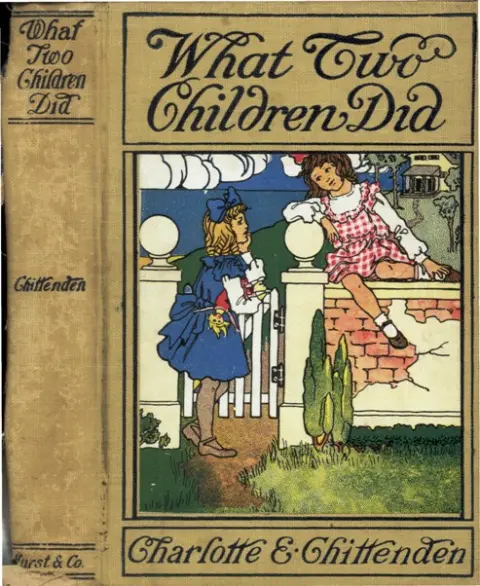
"What Two Children Did" by Charlotte E. Chittenden is a children's fiction book written in the early 20th century. The story revolves around two sisters, Ethelwyn and Beth, as they embark on various adventures and musings, highlighting themes of childhood innocence, curiosity, and the bond between siblings. Against a backdrop of summer activities at the seashore, the book illustrates their simple, yet profound interactions with their mother and the world around them. At the start of the narrative, we find Ethelwyn and Beth traveling by train with their mother, who is preoccupied with her thoughts. The children, noticing their mother's furrowed brow, worry that they are the cause of her distress due to past mischief. As they indulge in a feast of sandwiches and cookies, they ponder deep questions about mistakes and the nature of God. This opening segment sets the stage for their character development, showcasing the children's playful spirits and desire to please their mother while navigating their own understanding of the complexities of life. Their summer journey introduces them to new friends, responsibilities, and opportunities to help others in need, laying the groundwork for further adventures to unfold.
Introduction adapted from the source catalogue; source summaries may be automatically generated.
Free to read · English · 27,709 words · No account needed
MAKE TIME FOR A GOOD BOOK
On by default. Untick to stop anonymous reading totals. Each page counts after 10 seconds in view. How this works.
Anonymous counting is on unless you have switched it off.
"O, then we'll have fun spending it for folks; I'd like to. But, oh, I'm hungrier than I ever was before."
"Me, too," said Beth. "I feel a great big appeltite inside me."
They decided at once that the dining-room also was charming, with its cheery open fire of snapping pine knots, for the air outside was chilly. Then, too, there was a parrot on a pole, who greeted them with, "Well, well, well, what's all this? Did you ever?"
Miss Dorothy Stevens had the kind of face that children take to at once. There never could be any question about Aunty Stevens, who laughed every time they said anything, and who on top of their excellent breakfast, brought them in some most delicious cookies--just the kind you would know she could make, sugary and melty, entirely perfect, in fact,--to take down on the beach for luncheon.
After breakfast was over they at once started for the beach. Sierra Nevada, their colored nurse, following them with small buckets, shovels, wraps, and cushions.
"Mother, this is the nicest place, and I love the Stevenses; but why are they sad around the eyes, and dressed in black, like you? Has their father gone to Paradise too?" asked Ethelwyn, as they walked along.
"Yes, dear. Besides, the young captain whom Dorothy was going to marry went away last year and, his ship was wrecked and he has never been heard from. So they fear he was drowned."
"O, mother, can this pretty sea do that? What was it they were saying
about a tide?"
Their mother tried to explain all she knew about the tides, and when she had finished, Ethelwyn said:
"I think it would be easier to remember to call it tied, and then
untied."
CHAPTER III
Beth and Her Dolls
Dollie's poor mother is quite full of care,
As she who lived in a shoe,
For this child is tousled, this one undressed--
Mother has all she can do.
More dollies there are, than possible clothes,
Some of them must go to bed.
And some to be healed by mother with glue,
Lacking an arm or a head.
Then others, wearing the invalid's clothes,
Care not a fling or a jot
Nor know that to-morrow their own fate may be
The bed, or the mucilage pot.
The first Sunday that the children were at the seashore was warm and
beautiful.
Mrs. Rayburn and Mrs. Stevens went to church in the picturesque stone chapel built by a sea captain, as a memorial to his daughter who was drowned on the coast some years before this.
Your reading position is saved on this browser. Take it to another device with a library code. Reading pages adapt to text, rather than matching a printed edition.
BEHIND THE BOOK
This eBook is for the use of anyone anywhere in the United States and most other parts of the world at no cost and with almost no restrictions whatsoever. You may copy it, give it away or re-use it under the terms of the Project Gutenberg License included with this eBook or online at www.gutenberg.org. If you are not located in the United States, you will have to check the laws of the country where you are located before using this eBook. Read the source licence.
The original source file, including credits and licence, is retained by this library. Request an original-format copy at no charge. Please include the book title and Project Gutenberg identifier #15541.
KEEP YOUR CURIOSITY GOING
Coulson Kernahan

Maurice Baring
Frances Wright
Cécile Tormay

Frederic Jesup Stimson

W. H. P. (William Henry Pope) Jarvis