THE CLASSIC COLLECTION✦A dead man’s diaryCLASSIC FREE BOOKS
A dead man’s diary
Coulson Kernahan
THE CLASSIC COLLECTION · 1903
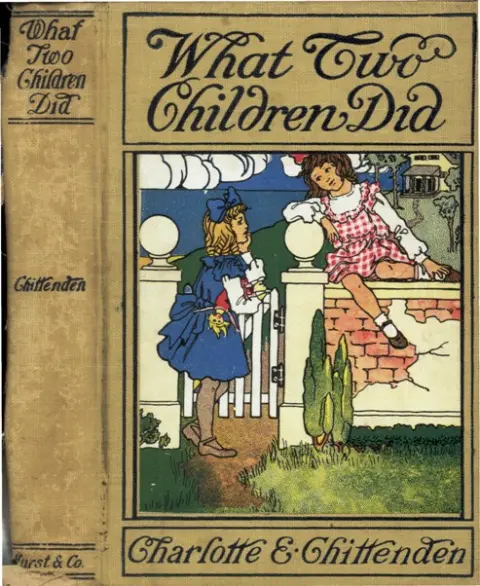
"What Two Children Did" by Charlotte E. Chittenden is a children's fiction book written in the early 20th century. The story revolves around two sisters, Ethelwyn and Beth, as they embark on various adventures and musings, highlighting themes of childhood innocence, curiosity, and the bond between siblings. Against a backdrop of summer activities at the seashore, the book illustrates their simple, yet profound interactions with their mother and the world around them. At the start of the narrative, we find Ethelwyn and Beth traveling by train with their mother, who is preoccupied with her thoughts. The children, noticing their mother's furrowed brow, worry that they are the cause of her distress due to past mischief. As they indulge in a feast of sandwiches and cookies, they ponder deep questions about mistakes and the nature of God. This opening segment sets the stage for their character development, showcasing the children's playful spirits and desire to please their mother while navigating their own understanding of the complexities of life. Their summer journey introduces them to new friends, responsibilities, and opportunities to help others in need, laying the groundwork for further adventures to unfold.
Introduction adapted from the source catalogue; source summaries may be automatically generated.
Free to read · English · 27,709 words · No account needed
MAKE TIME FOR A GOOD BOOK
On by default. Untick to stop anonymous reading totals. Each page counts after 10 seconds in view. How this works.
Anonymous counting is on unless you have switched it off.
"Elder?" said Ethelwyn, after a hard think.
"Yes."
"I didn't really know there was such a tree, but I had heard something like it, and thought there wasn't a younger tree."
"One of the little girls was named Louise and the other Minerva, and people grew to calling them by their initials, which together made--"
"Elm," said Beth.
"They were very good children, and people used to say what a nice--"
"Pear," they both said at once.
"They were. They had cheeks like a--"
"Peach."
"It was spring, and they were invited to a sugaring off party, and they saw the men tap the trees to make--"
"Maple sugar," cried Beth, who knew that, if she knew anything.
"So, when they went home, they tapped a tree in the front yard, and invited a party to come and eat maple sugar; but they tapped the wrong tree, and their father was vexed, saying, 'I ought to take a ---- to ----'"
But mother had to tell them these words for they had never heard of birch, or of yew. "'I wonder if you will be ----'"
"Evergreen," said Ethelwyn, after a little prompting.
"'All your life.' 'I thought,' said one, 'that maple sugar parties were
very ----'"
"'Pop'lar? (mother had to tell them this also), 'at this time of year.'"
"---- laughed their father."
"Haw, haw," said Ethelwyn, who had been thinking of the tree under which
they played at home.
"'I'll have to take you to the seashore to play on the ----'"
"Beech," said Beth in triumph.
"Then he lighted a cigar and knocked off the ----"
"Ash," said Ethelwyn.
"And walked down street, whistling a song from 'Mikado.' Tit ----"
"Willow," they both cried at once, for they knew that song as well as
the tree.
"You have done well," said mother, "but you each have two fines to pay, and it really is your turn next time; so you must remember to think up a game. But here we are at home, and there is 'Vada coming out to meet us."
"O, 'Vada, what has happened since we went away?" said Ethelwyn,
climbing out.
"Mista Bobby gwine to give a party this ebenin'; it's his birthday, and his uncle brought him some fiah works like those you all had las' yeah," said 'Vada.
"O goody! did he invite us?"
"Nome, not to say invite. But he's been in to see if you all was
expected home."
"O, it won't matter," said Beth easily; "we'll go anyway. Of course he
knew we would come."
Your reading position is saved on this browser. Take it to another device with a library code. Reading pages adapt to text, rather than matching a printed edition.
BEHIND THE BOOK
This eBook is for the use of anyone anywhere in the United States and most other parts of the world at no cost and with almost no restrictions whatsoever. You may copy it, give it away or re-use it under the terms of the Project Gutenberg License included with this eBook or online at www.gutenberg.org. If you are not located in the United States, you will have to check the laws of the country where you are located before using this eBook. Read the source licence.
The original source file, including credits and licence, is retained by this library. Request an original-format copy at no charge. Please include the book title and Project Gutenberg identifier #15541.
KEEP YOUR CURIOSITY GOING
Coulson Kernahan

Maurice Baring
Frances Wright
Cécile Tormay

Frederic Jesup Stimson

W. H. P. (William Henry Pope) Jarvis