
The Writing of News A Handbook with Chapters on Newspaper Correspondence and Copy Reading
Charles G. (Charles Griffith) Ross
THE CLASSIC COLLECTION · 1920
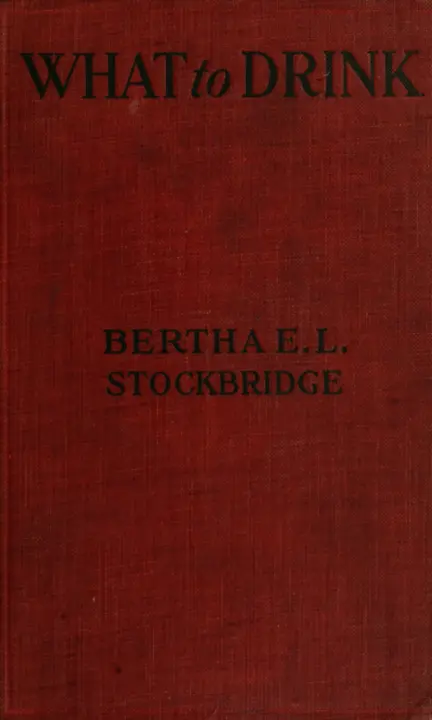
"What to drink : The blue book of beverages; recipes and directions for making…." by Bertha E. L. Stockbridge is a household guide and recipe book written in the early 20th century. It focuses on non‑alcoholic beverages for entertaining, offering practical advice on equipment, presentation, and make‑ahead syrups, vinegars, and shrubs. The emphasis is on attractive service, careful measuring, and quick, refreshing drinks suited to home hospitality. The opening of this manual sets a bright, Prohibition‑era tone with a playful quatrain, then turns to a foreword “to the hostess of to‑day,” urging readers to keep syrups, shrubs, and fruit vinegars on hand, select clear thin glassware and simple linens, chill or warm glasses appropriately, and pay special attention when serving invalids. A “Measures” section insists on exact measurement and introduces basic tools like cups, spoons, scales, shaker, and ice shaver. The first chapters then launch into method and recipes: fruitades and lemonades (with tips like peeling lemons, using shaved ice, shakers, and carbonated water), ways to use canned fruit juices, hot lemonades, and an array of frappés (including quick and economical versions from purchased syrups). Next come fruit punches, cups, and bowls built from teas, citrus, berries, pineapple, mint, cider, grape juice, Apollinaris, and ginger ale, followed by non‑alcoholic “cocktails” (fruit and vegetable), and the home-bar canon reimagined—highballs, fizzes, sours, rickeys, cobblers, flips, and juleps—always stressing chilled service, moderate sweetness, and appealing presentation.
Introduction adapted from the source catalogue; source summaries may be automatically generated.
Free to read · English · 37,043 words · No account needed
MAKE TIME FOR A GOOD BOOK
On by default. Untick to stop anonymous reading totals. Each page counts after 10 seconds in view. How this works.
Anonymous counting is on unless you have switched it off.
Mix the barley flour with a little cold water, making a smooth paste; pour the rest of the water on slowly, mixing and stirring constantly. Boil for a half hour, boiling fast all the time. Strain and add to milk, or add a little sugar, or if it is for an infant, it may be given from a nursing bottle without the sugar, between feedings, especially if the child is not getting sufficient nourishment from its own food.
It is said that this tea is excellent to alleviate hoarseness, and is a most appetizing beverage.
1 dessertspoonful of black currant jam,
½ pint of water,
1 teaspoonful of sugar.
Put jam, sugar and water in an enamel dish and bring to the boiling point; simmer for five or six minutes. Strain and add lemon juice and serve hot; or chill and add a little cracked ice and serve very cold.
2 tablespoonfuls of bran,
1 pint of water,
½ ounce of gum arabic,
1 tablespoonful of honey.
Mix water and bran and boil for fifteen minutes. Add gum arabic and honey, stir until dissolved. Strain through a cloth and serve. This, too, may be served hot or cold.
1 egg white,
1 cupful of milk,
Vanilla.
Boil the milk and let it cool. Whip the egg white until dry and put it in a tall glass with the milk, flavor with vanilla and serve.
1 tablespoonful of fine oatmeal (ground, not rolled),
1 cupful of water,
1 cupful of milk,
1 tablespoonful of lemon juice,
1 strip of lemon rind,
1 tablespoonful of sugar,
Nutmeg.
Boil oatmeal, water, milk and lemon rind together for ten minutes; remove the rind, add the lemon juice, sugar and a sprinkling of grated nutmeg. Serve hot. The beaten yolk of an egg may be stirred in if extra nourishment is needed.
1 pint of rice gruel (see gruel),
1 egg yolk,
1 tablespoonful of sugar,
¼ cupful of cold water,
2 tablespoonfuls of orange juice,
1 teaspoonful of lemon juice,
Nutmeg.
When the gruel is boiling, add the following mixture; beat the yolk of the egg with the sugar and stir in the water, fruit juices and a sprinkling of grated nutmeg. Strain and serve very hot.
½ cupful of cream,
Carbonated water.
There are times when a patient is not allowed milk, but cream is permissible; under those conditions, this will be found useful as well as nutritious.
Pour the cream in a tumbler or straight-sided, tall glass; fill the glass with carbonated water, using a syphon.
½ cupful of carbonated water,
¾ cupful of milk.
Your reading position is saved on this browser. Take it to another device with a library code. Reading pages adapt to text, rather than matching a printed edition.
BEHIND THE BOOK
This eBook is for the use of anyone anywhere in the United States and most other parts of the world at no cost and with almost no restrictions whatsoever. You may copy it, give it away or re-use it under the terms of the Project Gutenberg License included with this eBook or online at www.gutenberg.org. If you are not located in the United States, you will have to check the laws of the country where you are located before using this eBook. Read the source licence.
The original source file, including credits and licence, is retained by this library. Request an original-format copy at no charge. Please include the book title and Project Gutenberg identifier #76921.
KEEP YOUR CURIOSITY GOING
Charles G. (Charles Griffith) Ross
Hannah Webster Foster

Emily Lawless
Edwin Hamlin Carr

Charles De Lano Hine
Andrew Ure