THE CLASSIC COLLECTION✦A Few More VersesCLASSIC FREE BOOKS
A Few More Verses
Susan Coolidge
THE CLASSIC COLLECTION · 1873
"What Katy Did" by Susan Coolidge is a novel written during the late 19th century. The story revolves around the spirited and imaginative Katy Carr, the eldest daughter in the Carr family, who is tasked with caring for her younger siblings while navigating the challenges of childhood, responsibility, and growing up without their mother. The novel explores themes of familial love, personal growth, and the importance of resilience. At the start of the story, Katy Carr is introduced in her idyllic childhood home with her five siblings and their kind father, Dr. Carr. Katy is portrayed as an adventurous girl with grand dreams, often getting into mischief while trying to balance her playful nature and the expectations placed upon her by Aunt Izzie, who helps raise the children. The opening highlights Katy's interactions with her siblings and sets the stage for her character development as she learns to embrace both the joys and trials of family life while embarking on a journey of self-discovery and responsibility. This exploration of childhood, along with vivid descriptions of their playful escapades and the bond among siblings, draws readers into a charming and relatable world.
Introduction adapted from the source catalogue; source summaries may be automatically generated.
Free to read · English · 49,444 words · No account needed
MAKE TIME FOR A GOOD BOOK
On by default. Untick to stop anonymous reading totals. Each page counts after 10 seconds in view. How this works.
Anonymous counting is on unless you have switched it off.
Clover, next in age to Katy, sat in the middle. She was a fair, sweet dumpling of a girl, with thick pig-tails of light brown hair, and short-sighted blue eyes, which seemed to hold tears, just ready to fall from under the blue. Really, Clover was the jolliest little thing in the world; but these eyes, and her soft cooing voice, always made people feel like petting her and taking her part. Once, when she was very small, she ran away with Katy's doll, and when Katy pursued, and tried to take it from her, Clover held fast and would not let go. Dr. Carr, who wasn't attending particularly, heard nothing but the pathetic tone of Clover's voice, as she said: "Me won't! Me want dolly!" and, without stopping to inquire, he called out sharply: "For shame, Katy! give your sister her doll at once!" which Katy, much surprised, did; while Clover purred in triumph, like a satisfied kitten. Clover was sunny and sweet-tempered, a little indolent, and very modest about herself, though, in fact, she was particularly clever in all sorts of games, and extremely droll and funny in a quiet way. Everybody loved her, and she loved everybody, especially Katy, whom she looked up to as one of the wisest people in the world.
Pretty little Phil sat next on the roof to Clover, and she held him tight with her arm. Then came Elsie, a thin, brown child of eight, with beautiful dark eyes, and crisp, short curls covering the whole of her small head. Poor little Elsie was the "odd one" among the Carrs. She didn't seem to belong exactly to either the older or the younger children. The great desire and ambition of her heart was to be allowed to go about with Katy and Clover and Cecy Hall, and to know their secrets, and be permitted to put notes into the little post-offices they were forever establishing in all sorts of hidden places. But they didn't want Elsie, and used to tell her to "run away and play with the children," which hurt her feelings very much. When she wouldn't run away, I am sorry to say they ran away from her, which, as their legs were longest, it was easy to do. Poor Elsie, left behind, would cry bitter tears, and, as she was too proud to play much with Dorry and John, her principal comfort was tracking the older ones about and discovering their mysteries, especially the post-offices, which were her greatest grievance. Her eyes were bright and quick as a bird's. She would peep and peer, and follow and watch, till at last, in some odd, unlikely place, the crotch of a tree, the middle of the asparagus bed, or, perhaps, on the very top step of the scuttle ladder, she spied the little paper box, with its load of notes, all ending with: "Be sure and not let Elsie know." Then she would seize the box, and, marching up to wherever the others were, she would throw it down, saying, defiantly: "There's your old post-office!" but feeling all the time just like crying. Poor little Elsie! In almost every big family, there is one of these unmated, left-out children. Katy, who had the finest plans in the world for being "heroic," and of use, never saw, as she drifted on her heedless way, that here, in this lonely little sister, was the very chance she wanted for being a comfort to somebody who needed comfort very much. She never saw it, and Elsie's heavy heart went uncheered.
Your reading position is saved on this browser. Take it to another device with a library code. Reading pages adapt to text, rather than matching a printed edition.
Susan Coolidge
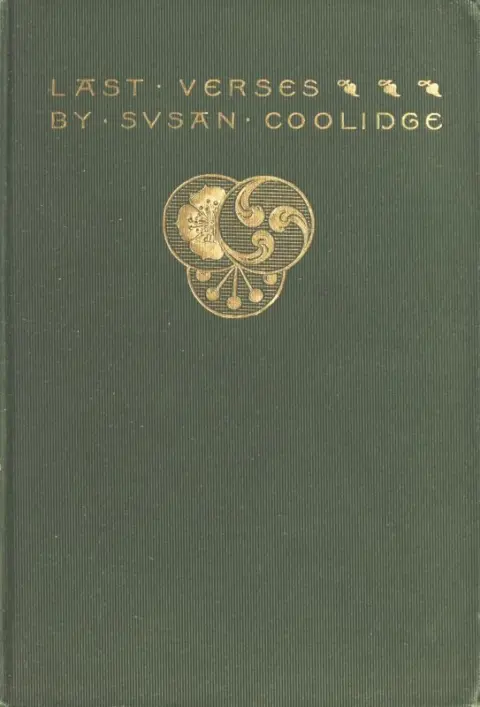
Susan Coolidge
Susan Coolidge
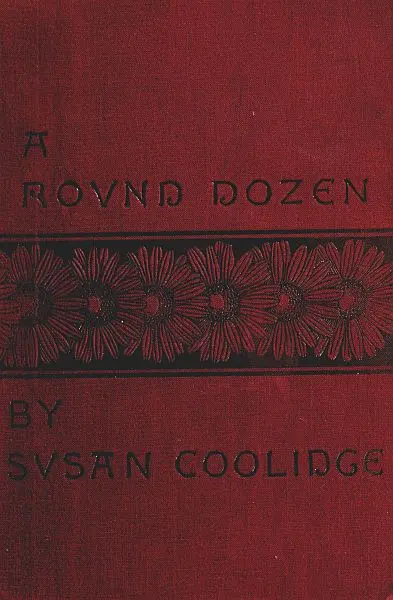
Susan Coolidge
BEHIND THE BOOK
This eBook is for the use of anyone anywhere in the United States and most other parts of the world at no cost and with almost no restrictions whatsoever. You may copy it, give it away or re-use it under the terms of the Project Gutenberg License included with this eBook or online at www.gutenberg.org. If you are not located in the United States, you will have to check the laws of the country where you are located before using this eBook. Read the source licence.
The original source file, including credits and licence, is retained by this library. Request an original-format copy at no charge. Please include the book title and Project Gutenberg identifier #8994.
KEEP YOUR CURIOSITY GOING
Coulson Kernahan

Maurice Baring
Frances Wright
Cécile Tormay

Frederic Jesup Stimson

W. H. P. (William Henry Pope) Jarvis