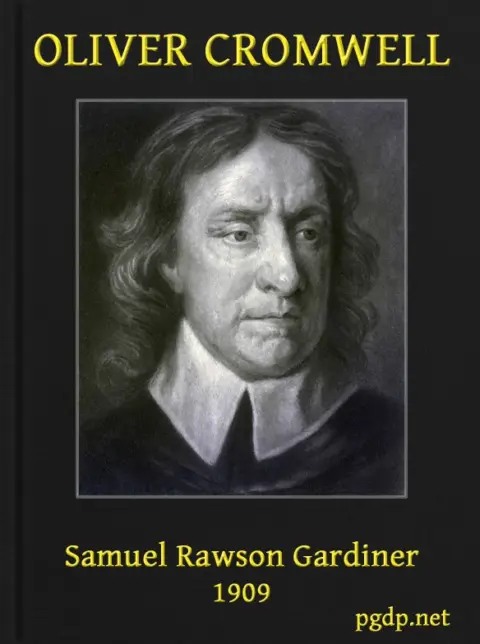
Oliver Cromwell
Samuel Rawson Gardiner
THE CLASSIC COLLECTION · 1897
"What Gunpowder Plot Was" by Samuel Rawson Gardiner is a historical account written in the late 19th century. The book examines the infamous Gunpowder Plot of 1605, challenging traditional narratives and exploring the motivations behind the conspiracy to blow up the British Parliament. Gardiner engages with various historical evidences and interpretations, particularly focusing on the claims made by Father Gerard regarding the conspirators' supposed manipulation by government officials. The opening of the text sets the stage for an in-depth analysis of the historical controversy surrounding the Gunpowder Plot. Gardiner begins by referencing Father Gerard’s examination of evidence asserting the plot was fabricated by the Earl of Salisbury for political gain. He discusses Gerard's conclusions, noting their implications on Catholic perceptions and the subsequent penalties they suffered following the event. Gardiner moves to critique Gerard's approach and the reliability of various sources, hinting at a meticulous inquiry into the established narrative while arguing for a thorough exploration of historical documents to discover the truth behind this pivotal moment in British history.
Introduction adapted from the source catalogue; source summaries may be automatically generated.
Free to read · English · 71,803 words · No account needed
MAKE TIME FOR A GOOD BOOK
On by default. Untick to stop anonymous reading totals. Each page counts after 10 seconds in view. How this works.
Anonymous counting is on unless you have switched it off.
"Returning to Dunkirk with Mr. Owen, we had speach whether he thought the Constable would faithfully help us or no. He said he believed nothing less, and that they sought only their own ends, holding small account of Catholics. I told him, that there were many gentlemen in England, who would not forsake their country until they had tried the uttermost, and rather venture their lives than forsake her in this misery; and to add one more to our number as a fit man, both for counsel and execution of whatsoever we should resolve, wished for Mr. Fawkes whom I had heard good commendations of. He told me the gentleman deserved no less, but was at Brussels, and that if he came not, as happily he might, before my departure, he would send him shortly after into England. I went soon after to Ostend, where Sir William Stanley as then was not, but came two days after. I remained with him three or four days, in which time I asked him, if the Catholics in England should do anything to help themselves, whether he thought the Archduke would second them. He answered, No; for all those parts were so desirous of peace with England as they would endure no speach of other enterprise, neither were it fit, said he, to set any project afoot now the peace is upon concluding. I told him there was no such resolution, and so fell to discourse of other matters until I came to speak of Mr. Fawkes whose company I wished over into England. I asked of his sufficiency in the wars, and told him we should need such as he, if occasion required. He gave very good commendations of him; and as we were thus discoursing and I ready to depart for Nieuport and taking my leave of Sir William, Mr. Fawkes came into our company newly returned and saluted us. This is the gentleman, said Sir William, that you wished for, and so we embraced again. I told him some good friends of his wished his company in England; and that if he pleased to come to Dunkirk, we would have further conference, whither I was then going: so taking my leave of both, I departed. About two days after came Mr. Fawkes to Dunkirk, where I told him that we were upon a resolution to do somewhat in England if the peace with Spain helped us not, but had as yet resolved upon nothing. Such or the like talk we passed at Gravelines, where I lay for a wind, and when it served, came both in one passage to Greenwich, near which place we took a pair of oars, and so came up to London, and came to Mr. Catesby whom we found in his lodging. He welcomed us into England, and asked me what news from the Constable. I told him Good words, but I feared the deeds would not answer. This was the beginning of Easter term[97] and about the midst of the same term (whether sent for by Mr. Catesby, or upon some business of his own) up came Mr. Thomas Percy. The first word he spake (after he came into our company) was Shall we always, gentlemen, talk and never do anything? Mr. Catesby took him aside and had speech about somewhat to be done, so as first we might all take an oath of secrecy, which we resolved within two or three days to do, so as there we met behind St. Clement's, Mr. Catesby, Mr. Percy, Mr. Wright, Mr. Guy Fawkes, and myself, and having, upon a primer given each other the oath of secrecy in a chamber where no other body was, we went after into the next room and heard mass, and received the blessed sacrament upon the same. Then did Mr. Catesby disclose to Mr. Percy,[98] and I together with Jack Wright tell to Mr. Fawkes the business for which they took this oath which they both approved; and then Mr. Percy sent to take the house, which Mr. Catesby, in my absence, had learnt did belong to one Ferris, which with some difficulty in the end he obtained, and became, as Ferris before was, tenant to Whynniard. Mr. Fawkes underwent the name of Mr. Percy's man, calling himself Johnson, because his face was the most unknown,[99] and received the keys of the house, until we heard that the Parliament was adjourned to the 7 of February. At which time we all departed several ways into the country, to meet again at the beginning of Michaelmas term.[100] Before this time also it was thought convenient to have a house that might answer to Mr. Percy's, where we might make provision of powder and wood for the mine which, being there made ready, should in a night be conveyed by boat to the house by the Parliament because we were loth to foil that with often going in and out. There was none that we could devise so fit as Lambeth where Mr. Catesby often lay, and to be keeper thereof, by Mr. Catesby's choice, we received into the number Keyes, as a trusty honest man.[101]
Your reading position is saved on this browser. Take it to another device with a library code. Reading pages adapt to text, rather than matching a printed edition.
Samuel Rawson Gardiner
Samuel Rawson Gardiner
BEHIND THE BOOK
This eBook is for the use of anyone anywhere in the United States and most other parts of the world at no cost and with almost no restrictions whatsoever. You may copy it, give it away or re-use it under the terms of the Project Gutenberg License included with this eBook or online at www.gutenberg.org. If you are not located in the United States, you will have to check the laws of the country where you are located before using this eBook. Read the source licence.
The original source file, including credits and licence, is retained by this library. Request an original-format copy at no charge. Please include the book title and Project Gutenberg identifier #34606.
KEEP YOUR CURIOSITY GOING
Cécile Tormay

Moritz Busch
John L. Ransom
Frances Wright
Cécile Tormay

Mabel Potter Daggett