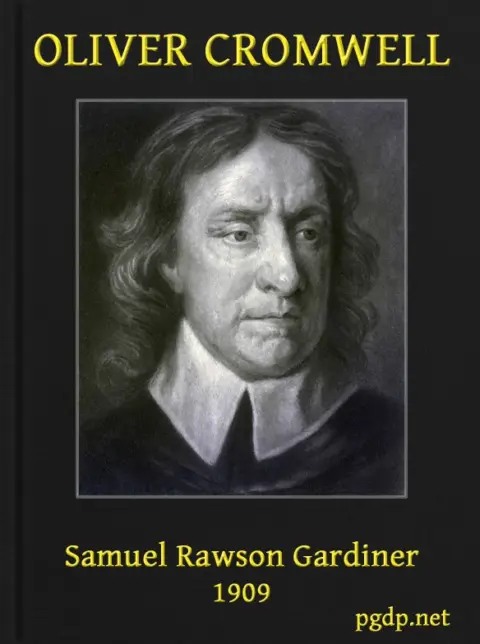
Oliver Cromwell
Samuel Rawson Gardiner
THE CLASSIC COLLECTION · 1897
"What Gunpowder Plot Was" by Samuel Rawson Gardiner is a historical account written in the late 19th century. The book examines the infamous Gunpowder Plot of 1605, challenging traditional narratives and exploring the motivations behind the conspiracy to blow up the British Parliament. Gardiner engages with various historical evidences and interpretations, particularly focusing on the claims made by Father Gerard regarding the conspirators' supposed manipulation by government officials. The opening of the text sets the stage for an in-depth analysis of the historical controversy surrounding the Gunpowder Plot. Gardiner begins by referencing Father Gerard’s examination of evidence asserting the plot was fabricated by the Earl of Salisbury for political gain. He discusses Gerard's conclusions, noting their implications on Catholic perceptions and the subsequent penalties they suffered following the event. Gardiner moves to critique Gerard's approach and the reliability of various sources, hinting at a meticulous inquiry into the established narrative while arguing for a thorough exploration of historical documents to discover the truth behind this pivotal moment in British history.
Introduction adapted from the source catalogue; source summaries may be automatically generated.
Free to read · English · 71,803 words · No account needed
MAKE TIME FOR A GOOD BOOK
On by default. Untick to stop anonymous reading totals. Each page counts after 10 seconds in view. How this works.
Anonymous counting is on unless you have switched it off.
Nuncio at Brussels, the, makes overtures to James, 151
Nuncio at Paris, the, reports on James's proceedings, 151;
writes to Parry on the Pope's desire to keep the Catholics in
obedience, 154;
writes to James, 155;
James's reply to the overtures of, 156;
sends the reply to Rome, 157
Osborne, Francis, thinks the plot a device of Salisbury, 7
Owen, Hugh, not a priest, 60, note 1
Parry, Sir Thomas, draft of a letter to, 22; uncertainty when Salisbury's letter was sent to, 31; receives overtures from the Nuncio, 154
Percy, Thomas, Fawkes's statement about the hiring of the house and
cellar by, 18;
proclamation for the apprehension of, 23;
rumours about the movements of, ib.;
search of his house, 24;
enters into possession of the house and cellar, 29;
reward offered for the apprehension of, 44;
the Sheriff of Worcestershire announces the death of, 44;
buys a watch for Fawkes, 49;
Winter's account of the proceedings of, 62-69;
agreement for the lease of the house to, 85;
not likely to be turned out when Parliament met, 86;
takes the cellar, 105;
alleged bigamy of, 115;
said to have visited Salisbury, 117;
displays his connection with the Court, 118;
receives a pass for post-horses, ib.;
alleged secret orders to kill, 119
Pope, the (see Clement VIII.)
Popham, Chief Justice, examines Fawkes, 17; sends to Salisbury a rumour of Percy's movements, 23; makes inquiries into the movements of Catholics, 24; a commissioner to examine the plot, 25
Priests, the banishment of, proclamation for, 160
Privy Councillors, form of publishing the signatures of, 40
Recusants, their fines remitted, 149;
fines reimposed on, 161
Rokewood, Ambrose, examination of the landlady of, 24
Salisbury, Earl of, alleged to have invented the plot, 7; said to have told his son that he had contrived the plot, 10; writes an account of the plot to Parry, 22; is a commissioner for the examination into the plot, 24; his letter to the ambassadors, 31; cannot have deceived his fellow-commissioners, 41; said to have known of the plot before the Monteagle letter, 115; said to have received visits from Percy, 117; said to have issued orders not to take Percy alive, 119; the Monteagle letter delivered to, 123; probably knew nothing of the plot independent of the letter, 124; was the probable interpreter of the letter, 125; receives a letter from Sir E. Digby, 169; has no motive for inventing the plot, 172; expects plots, 176; writes to Favat, 183; failure of the charge against, 200
Shepherd, John, evidence of, 77
Skinner, Mrs., gives up the cellar to Percy, 28, 105
Spedding, James, his canon of historical evidence, 5
Speed, John, his statement that Percy's house was only to be let when Parliament was not sitting, 85
Standen, Sir Anthony, mission of, 158
Suffolk, Earl of, a commissioner for examining the plot, 24;
friendly to the Catholics, 25;
sent to search the cellar, 131
Talbot of Grafton, John, summoned before the Council, 48
Tresham, Francis, informed of the plot, 66;
probably informs the Government, 121;
his connection with the letter to Monteagle, 122
Your reading position is saved on this browser. Take it to another device with a library code. Reading pages adapt to text, rather than matching a printed edition.
Samuel Rawson Gardiner
Samuel Rawson Gardiner
BEHIND THE BOOK
This eBook is for the use of anyone anywhere in the United States and most other parts of the world at no cost and with almost no restrictions whatsoever. You may copy it, give it away or re-use it under the terms of the Project Gutenberg License included with this eBook or online at www.gutenberg.org. If you are not located in the United States, you will have to check the laws of the country where you are located before using this eBook. Read the source licence.
The original source file, including credits and licence, is retained by this library. Request an original-format copy at no charge. Please include the book title and Project Gutenberg identifier #34606.
KEEP YOUR CURIOSITY GOING
Cécile Tormay

Moritz Busch
John L. Ransom
Frances Wright
Cécile Tormay

Mabel Potter Daggett