THE CLASSIC COLLECTION✦Doesticks: What He SaysCLASSIC FREE BOOKS
Doesticks: What He Says
Q. K. Philander Doesticks
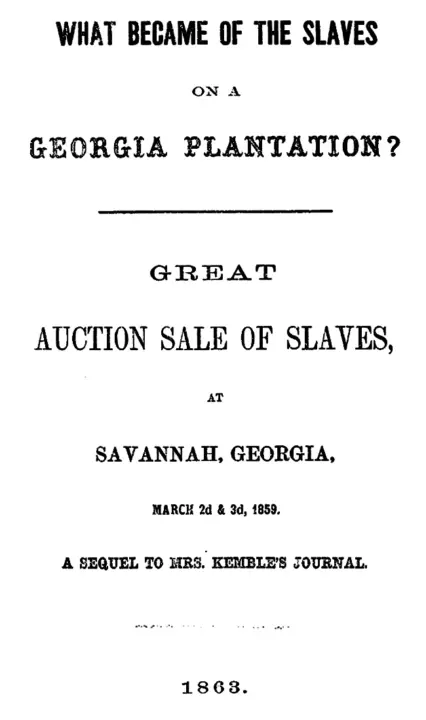
THE CLASSIC COLLECTION · 1863
"What Became of the Slaves on a Georgia Plantation?" by Q. K. Philander Doesticks is a historical account written during the early 1860s. The book delves into the experiences of enslaved individuals during a significant auction of slaves in Savannah, Georgia, specifically detailing the emotional and physical turmoil faced by those being sold. It offers a poignant perspective on the inhumane practices of slavery and the deep bonds of family and community that were ruthlessly severed during such sales. The narrative unfolds around a major slave auction that occurred in March 1859, spotlighting the human cost of such transactions. The book vividly depicts the conditions in which slaves were kept prior to the auction, their hopeful attempts to remain together as families, and the harsh realities as they were inspected and sold to the highest bidder. Through poignant scenes and dialogues, Doesticks captures the anguish of families torn apart, the silent suffering of individuals waiting for their fate, and the often crude behavior of the buyers. Each story adds to the collective heartbreak of being commoditized, underscoring the inherent humanity and dignity of the enslaved people despite their dire circumstances.
Introduction adapted from the source catalogue; source summaries may be automatically generated.
Free to read · English · 8,887 words · No account needed
MAKE TIME FOR A GOOD BOOK
On by default. Untick to stop anonymous reading totals. Each page counts after 10 seconds in view. How this works.
Anonymous counting is on unless you have switched it off.
99--Kate's John, aged 30; rice, prime man.
100--Betsey, 29; rice, unsound.
101--Kate, 6.
102--Violet, 3 months.
Sold for $510 each.
103--Wooster, 45; rice hand, and fair mason.
104--Mary, 40; cotton hand.
Sold for $300 each.
105--Commodore Bob, aged; rice hand.
106--Kate, aged; cotton.
107--Linda, 19; cotton, prime young woman.
108--Joe, 13; rice, prime boy.
Sold for $600 each.
109--Bob, 30; rice.
110--Mary, 25; rice, prime woman.
Sold for $1,135 each.
111--Anson, 49; rice--ruptured, one eye.
112--Violet, 55; rice hand.
Sold for $250 each.
113--Allen Jeffrey, 46; rice hand and sawyer in steam mill.
114--Sikey, 43; rice hand.
115--Watty, 5; infirm legs.
Sold for $520 each.
116--Rina, 18; rice, prime young woman.
117--Lena, 1.
Sold for $645 each.
118--Pompey, 31; rice--lame in one foot.
119--Kitty, 30; rice, prime woman.
120--Pompey, Jr., 10; prime boy.
121--John, 7.
122--Noble, 1; boy.
Sold for $580 each.
341--Goin, 39; rice hand.
342--Cassander, 35; cotton hand--has fits.
343--Emiline, 19; cotton, prime young woman.
344--Judy, 11; cotton, prime girl.
Sold for $400 each.
345--Dorcas, 17; cotton, prime woman.
346--Joe, 3 months.
Sold for $1,200 each.
347--Tom, 22; cotton hand. Sold for $1,260.
348--Judge Will, 55; rice hand. Sold for $325.
349--Lowden, 54; cotton hand.
350--Hagar, 50; cotton hand.
351--Lowden, 15; cotton, prime boy.
352--Silas, 13; cotton, prime boy.
353--Lettia, 11; cotton, prime girl.
Sold for $300 each.
354--Fielding, 21; cotton, prime young man.
355--Abel, 19; cotton, prime young man.
Sold for $1,295 each.
356--Smith's Bill, aged; sore leg.
357--Leah, 46; cotton hand.
358--Sally, 9.
Withdrawn.
359--Adam, 24; rice, prime man.
360--Charlotte, 22; rice, prime woman.
361--Lesh, 1.
Sold for $750 each.
362--Maria, 47; rice hand.
363--Luna, 22; rice, prime woman.
364--Clementina, 17; rice, prime young woman.
Sold for $950 each.
365--Tom, 48; rice hand.
366--Harriet, 41; rice hand
367--Wanney, 19; rice hand, prime young man.
368--Deborah, 6.
369--Infant, 3 months.
Sold for $700 each.
It seems as if every shade of character capable of being implicated in the sale of human flesh and blood was represented among the buyers. There was the Georgia fast young man, with his pantaloons tucked into his boots, his velvet cap jauntily dragged over to one side, his cheek full of tobacco, which he bites from a huge plug, that resembles more than anything else an old bit of a rusty wagon tire, and who is altogether an animal of quite a different breed from your New York fast man. His ready revolver, or his convenient knife, is ready for instant use in case of a heated argument. White-neck-clothed, gold-spectacled, and silver-haired old men were there, resembling in appearance that noxious breed of sanctimonious deacons we have at the North, who are perpetually leaving documents at your door that you never read, and the business of whose mendicant life it is to eternally solicit subscriptions for charitable associations, of which they are treasurers. These gentry, with quiet step and subdued voice, moved carefully about among the live stock, ignoring, as a general rule, the men, but tormenting the women with questions which, when accidentally overheard by the disinterested spectator, bred in that spectator's mind an almost irresistible desire to knock somebody down. And then, all imaginable varieties of rough, backwoods rowdies, who began the day in a spirited manner, but who, as its hours progressed, and their practice at the bar became more prolific in results, waxed louder and talkier and more violent, were present, and added a characteristic feature to the assemblage. Those of your readers who have read "Uncle Tom,"--and who has not?--will remember, with peculiar feelings, Legree, the slave-driver and woman-whipper. That that character is not been overdrawn, or too highly colored, there is abundant testimony. Witness the subjoined dialogue: A party of men were conversing on the fruitful subject of managing refractory "niggers;" some were for severe whipping, some recommending branding, one or two advocated other modes of torture, but one huge brute of a man, who had not taken an active part in the discussion, save to assent, with approving nod, to any unusually barbarous proposition, at last broke his silence by saying, in an oracular way, "You may say what you like about managing niggers; I'm a driver myself, and I've had some experience, and I ought to know. You can manage ordinary niggers by lickin' 'em, and givin' 'em a taste of the hot iron once in awhile when they're extra ugly; but if a nigger really sets himself up against me, I can't never have any patience with him. I just get my pistol and shoot him right down; and that's the best way."
Your reading position is saved on this browser. Take it to another device with a library code. Reading pages adapt to text, rather than matching a printed edition.
Q. K. Philander Doesticks
Q. K. Philander Doesticks
Q. K. Philander Doesticks
BEHIND THE BOOK
This eBook is for the use of anyone anywhere in the United States and most other parts of the world at no cost and with almost no restrictions whatsoever. You may copy it, give it away or re-use it under the terms of the Project Gutenberg License included with this eBook or online at www.gutenberg.org. If you are not located in the United States, you will have to check the laws of the country where you are located before using this eBook. Read the source licence.
The original source file, including credits and licence, is retained by this library. Request an original-format copy at no charge. Please include the book title and Project Gutenberg identifier #64804.
KEEP YOUR CURIOSITY GOING
Cécile Tormay

Moritz Busch
John L. Ransom
Frances Wright
Cécile Tormay

Mabel Potter Daggett