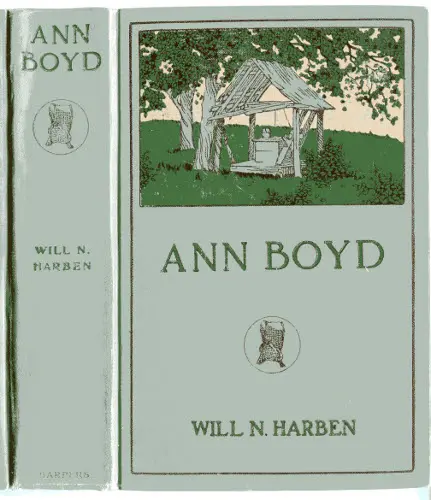
Ann Boyd: A Novel
Will N. (Will Nathaniel) Harben
THE CLASSIC COLLECTION · 1901
"Westerfelt" by Will N. Harben is a novel written in the early 20th century. The story sets a poignant tone as it explores themes of romance, betrayal, and the complexities of human emotions. The narrative particularly focuses on the life of Sally Dawson, a girl whose heartfelt affections for John Westerfelt become tragically complicated by the arrival of societal gossip and alternative romantic interests. The opening of the novel depicts a quilting gathering among the women of the neighborhood, where gossip flourishes about John Westerfelt's apparent intentions to pursue Lizzie Lithicum rather than Sally. As the gossip unfolds, Sally is confronted with the rumor and struggles with her feelings, facing a moment of emotional turmoil and despair. The narrative unveils a deep sense of communal interaction and human connection while foreshadowing the later tragedy that shakes the lives of the characters involved. The interactions between the characters establish the social dynamics at play, particularly showcasing the harsh realities of love, jealousy, and societal expectations.
Introduction adapted from the source catalogue; source summaries may be automatically generated.
Free to read · English · 66,664 words · No account needed
MAKE TIME FOR A GOOD BOOK
On by default. Untick to stop anonymous reading totals. Each page counts after 10 seconds in view. How this works.
Anonymous counting is on unless you have switched it off.
"I'll pay you for this, Bale Warlick," he groaned in pain, but he still
held to the knife.
"Let go that knife," thundered the sheriff. "Let it a-loose, I tell you, or I'll mash your skull!"
"Not while I hold 'im, Bale," said the bar-keeper, sullenly. "Law or no law, I won't he'p beat no man 'at's down!"
"Let go that knife!" The sheriff spoke the last word almost in a scream, and he beat Wambush's knuckles so furiously that the knife fell to the ground.
He then pinned Toot's legs to the earth with his knees, and held the knife up to a man in the crowd.
"Keep it jest like it is fur evidence," he panted. "Don't shet it up
or tetch the blade."
Disarmed, Wambush seemed suddenly overcome with fear. He allowed the sheriff to jerk him to his feet, and walked passively between the three men across the street to the stone jail.
Westerfelt stood alone on the sidewalk. Everybody went to see Wambush locked up except Harriet and her mother. They instantly came out to Westerfelt. Harriet picked up a folded piece of letter paper.
"Did you drop this?" she asked.
He did not reply, but took the paper absently and thrust it into his coat pocket. It had fallen from Wambush's pocket. He was very white and leaned heavily against a sycamore-tree.
"Oh, he's cut your coat; look!" Harriet cried.
Still he did not speak. He looked down at the slit in the cloth and raised his hand towards it, but his arm fell limply and he swayed from side to side.
"Are you hurt?" asked Mrs. Floyd, anxiously.
"I think not," he said; "but maybe I am, a little."
Harriet opened his coat and screamed, "Oh, mother, he's cut! Look at
the blood!"
He tried to button his coat, but could not use his fingers. "Only a
scratch," he said.
"But your clothes are wet with blood," Harriet insisted, as she pointed
to his trousers.
He stooped and felt them. They were damp and heavy. Then he raised his heel in his right boot, and let it down again.
"It's full," he said, with a sickly smile. "I reckon I have lost some blood. Why--why, I didn't feel it."
Martin Worthy, the storekeeper, ran across from the jail ahead of the others. Hearing Westerfelt's remark, he cried:
"My Lord! you must go inside an' lie down; fix a place, Miss Harriet, an' send fer a doctor, quick!"
Harriet ran into the house, and Mrs. Floyd and Worthy supported Westerfelt between them into a room adjoining the parlor. They made him lie on a bed, and Worthy opened his waistcoat and shirt.
Your reading position is saved on this browser. Take it to another device with a library code. Reading pages adapt to text, rather than matching a printed edition.
Will N. (Will Nathaniel) Harben
Will N. (Will Nathaniel) Harben
Will N. (Will Nathaniel) Harben
BEHIND THE BOOK
This eBook is for the use of anyone anywhere in the United States and most other parts of the world at no cost and with almost no restrictions whatsoever. You may copy it, give it away or re-use it under the terms of the Project Gutenberg License included with this eBook or online at www.gutenberg.org. If you are not located in the United States, you will have to check the laws of the country where you are located before using this eBook. Read the source licence.
The original source file, including credits and licence, is retained by this library. Request an original-format copy at no charge. Please include the book title and Project Gutenberg identifier #17178.
KEEP YOUR CURIOSITY GOING
Coulson Kernahan

Maurice Baring
Frances Wright
Cécile Tormay

Frederic Jesup Stimson

W. H. P. (William Henry Pope) Jarvis