THE CLASSIC COLLECTION✦A Book of Strife in the Form of The Diary of an Old SoulCLASSIC FREE BOOKS
A Book of Strife in the Form of The Diary of an Old Soul
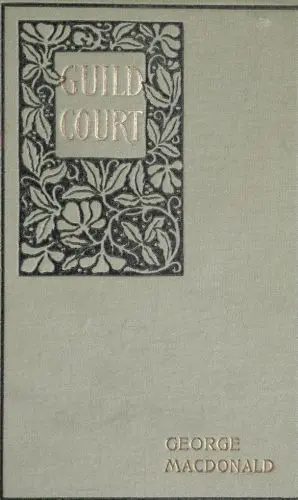
George MacDonald
THE CLASSIC COLLECTION · 1880
"Weighed and Wanting" by George MacDonald is a novel likely written in the late 19th century. This work delves deeply into the emotional and moral landscapes of its characters, particularly focusing on themes of struggle, aspiration, and human relationships, set against the backdrop of a changing society. The story introduces the Raymount family, emphasizing the complexities of their interactions and individual struggles, especially that of the eldest son, Cornelius, whose discontent and rebellious spirit appear to overshadow the family's dynamics. The opening of "Weighed and Wanting" presents a gray and dreary autumn day in Burcliff, reflecting the melancholy mood of its characters. We find Mrs. Raymount, the mother, embroidering with calm acceptance, while her son Cornelius expresses frustration with the oppressive weather that interrupts his holiday. The interactions between Cornelius and his sister Hester reveal familial tension; he feels trapped by societal expectations, while Hester displays a more optimistic and compassionate outlook. Their conversations highlight Cornelius's dissatisfaction with life and his longing for escape from his duties at the bank, setting the stage for themes of inner conflict and the search for meaning throughout the narrative. As Hester contemplates her place in the world, the narrative promises to explore her potential as a musical force for good against the backdrop of her brother's struggle to find purpose.
Introduction adapted from the source catalogue; source summaries may be automatically generated.
Free to read · English · 163,993 words · No account needed
MAKE TIME FOR A GOOD BOOK
On by default. Untick to stop anonymous reading totals. Each page counts after 10 seconds in view. How this works.
Anonymous counting is on unless you have switched it off.
All at once the master of the ceremonies drew 'himself up, and wiping his forehead, gave a deep sigh, as much as to say, "I have done my best, and if I have not pleased you, the more is my loss, for I have tried hard," and the performance was over.
The doctor rose, and in a manly voice, whose tones were more pleasing to Hester than the look of the man, which she did not find attractive, proceeded to point out to Franks one or two precautions which his knowledge of anatomy enabled him to suggest, with regard to the training especially of the little Moxy. At the same time he expressed himself greatly pleased with what his host had been so kind as to show him, remarking that the power to do such things implied labor more continuous and severe than would have sufficed to the learning of two or three trades. In reply, Franks, mistaking the drift of the remark, and supposing it a gentle remonstrance with what the doctor counted a waste of labor, said, in a tone that sounded sad in the ears of Hester,
"What's a fellow to do, sir, when he 'ain't got no dinner? He must take to the work as takes to him. There was no other trade handy for me. My father he was a poor laborer, an' died early, o' hard work an' many mouths. My mother lived but a year after him an' I had to do for the kids whatever came first to hand. There was two on 'em dead 'atwixt me an' the next alive, so I was a long way ahead o' the rest, an' I couldn't ha' seen them goin' to the dogs for want o' bread while I was learnin' a trade, even if I had had one in my mind more than another, which I never had. I always was a lively lad, an' for want of anything better to do, for my father wouldn't have us go to work till we was strong enough, he said--an' for that matter it turned out well when the hard time came--I used to amuse myself an' the rest by standin' on my head an' twistin' of my body into all sorts o' shapes--more'n it could well ha' been meant for to take. An' when the circus come round, I would make friends wi' the men, helpin' of 'em to look after their horses, an' they would sometimes, jest to amuse theirselves, teach me tricks I was glad enough to learn; an' they did say for a clod-hopper I got on very well. But that, you see, sir, set my monkey up, an' I took a hoath to myself I would do what none o' them could do afore I died--an' some thinks, sir," he added modestly, "as how I've done it--but that's neither here nor there. The p'int is, that, when my mother followed my father, an' the rest come upon my hands, I was able at once, goin' about an' showin' off, to gather a few coppers for 'em. But I soon found it was precious little I could get, no matter what I could do so long as my clothes warn't the right thing. So long as I didn't look my trade, they regarded my best as nothing but a clumsy imitation of my betters, an' laughed at what circus Joe said he couldn't do no better hisself. So I plucks up heart an' goes to Longstreet, as was the next market-town, an' into a draper's shop, an' tells 'em what I wanted, an' what it was for, promisin' to pay part out o' the first money I got, an' the rest as soon after as I could. The chaps in the shop, all but one on em', larfed at me; there's always one, or two p'raps, leastways sech as has been my expearence, sir an' miss, as is better'n most o' the rest, though it's a good thing everybody's not so soft-hearted as my wife there, or the world would soon be turned topsy turvey, an' the rogues have all the money out o' the good folk's pockets, an' them turned beggars in their turn, an' then the rogues wouldn't give them nothink, an' so the good ones would die out, an' the world be full o' nothing but damned rascals--I beg your pard'n, miss. But as I was sayin', though I fared no better at the next shop nor the next, there was one good woman I come to in a little shop in a back street, an' she was a resemblin' of yourself, miss, an' she took an' set me up in my trade, a givin' of me a few remnants o' colored calico, God bless her! I set to with my needle, an' I dressed myself as like a proper clown as I could, an' painted my face beautiful, an' from that time till they was able to do some'at for theirselves, I managed to keep the kids in life. It wasn't much more, you see, but life's life though it bean't tip-top style. An' if they're none o' them doin' jest so well as they might, there's none o' them been in pris'n yet, an' that's a comfort as long as it lasts. An' when folk tells me I'm a doin' o' nothink o' no good, an' my trade's o' no use to nobody, I says to them, says I, 'Beggin' your pardon, sir, or ma'am, but do you call it nothink to fill--leastways to nigh fill four hungry little bellies at home afore I wur fifteen?' An' after that, they ain't in general said nothink; an' one gen'leman he give me 'alf-a-crown."
Your reading position is saved on this browser. Take it to another device with a library code. Reading pages adapt to text, rather than matching a printed edition.
George MacDonald
George MacDonald
George MacDonald
George MacDonald
BEHIND THE BOOK
This eBook is for the use of anyone anywhere in the United States and most other parts of the world at no cost and with almost no restrictions whatsoever. You may copy it, give it away or re-use it under the terms of the Project Gutenberg License included with this eBook or online at www.gutenberg.org. If you are not located in the United States, you will have to check the laws of the country where you are located before using this eBook. Read the source licence.
The original source file, including credits and licence, is retained by this library. Request an original-format copy at no charge. Please include the book title and Project Gutenberg identifier #9096.
KEEP YOUR CURIOSITY GOING
Coulson Kernahan

Maurice Baring
Frances Wright
Cécile Tormay

Frederic Jesup Stimson

W. H. P. (William Henry Pope) Jarvis