THE CLASSIC COLLECTION✦Hawthorne (English Men of Letters Series)CLASSIC FREE BOOKS
Hawthorne (English Men of Letters Series)
Henry James
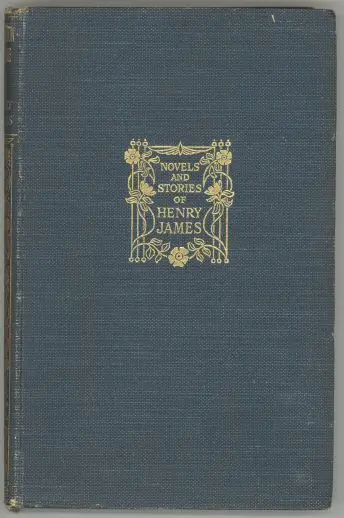
THE CLASSIC COLLECTION · 1881
"Washington Square" by Henry James is a novel written in 1880 about a plain, shy young woman caught between her wealthy father's disapproval and a charming suitor's romantic attention. When Catherine Sloper falls for the handsome Morris Townsend, her skeptical father suspects the man only wants her inheritance. What follows is a painful battle of wills that will test Catherine's loyalty, challenge her innocence, and ultimately force her to confront harsh truths about love, family, and betrayal in 1840s New York society.
Introduction adapted from the source catalogue; source summaries may be automatically generated.
Free to read · English · 65,133 words · No account needed
MAKE TIME FOR A GOOD BOOK
On by default. Untick to stop anonymous reading totals. Each page counts after 10 seconds in view. How this works.
Anonymous counting is on unless you have switched it off.
“Are you sick?” she asked of Morris. “You seem so restless, and you look
pale.”
“I am not at all well,” said Morris; and it occurred to him that, if he could only make her pity him enough, he might get off.
“I am afraid you are overworked; you oughtn’t to work so much.”
“I must do that.” And then he added, with a sort of calculated brutality, “I don’t want to owe you everything!”
“Ah, how can you say that?”
“I am too proud,” said Morris.
“Yes—you are too proud!”
“Well, you must take me as I am,” he went on, “you can never change me.”
“I don’t want to change you,” she said gently. “I will take you as you are!” And she stood looking at him.
“You know people talk tremendously about a man’s marrying a rich girl,” Morris remarked. “It’s excessively disagreeable.”
“But I am not rich?” said Catherine.
“You are rich enough to make me talked about!”
“Of course you are talked about. It’s an honour!”
“It’s an honour I could easily dispense with.”
She was on the point of asking him whether it were not a compensation for this annoyance that the poor girl who had the misfortune to bring it upon him, loved him so dearly and believed in him so truly; but she hesitated, thinking that this would perhaps seem an exacting speech, and while she hesitated, he suddenly left her.
The next time he came, however, she brought it out, and she told him again that he was too proud. He repeated that he couldn’t change, and this time she felt the impulse to say that with a little effort he might change.
Sometimes he thought that if he could only make a quarrel with her it might help him; but the question was how to quarrel with a young woman who had such treasures of concession. “I suppose you think the effort is all on your side!” he was reduced to exclaiming. “Don’t you believe that I have my own effort to make?”
“It’s all yours now,” she said. “My effort is finished and done with!”
“Well, mine is not.”
“We must bear things together,” said Catherine. “That’s what we ought to
do.”
Morris attempted a natural smile. “There are some things which we can’t very well bear together—for instance, separation.”
“Why do you speak of separation?”
“Ah! you don’t like it; I knew you wouldn’t!”
“Where are you going, Morris?” she suddenly asked.
Your reading position is saved on this browser. Take it to another device with a library code. Reading pages adapt to text, rather than matching a printed edition.
Henry James
Henry James
Henry James
Henry James
BEHIND THE BOOK
This eBook is for the use of anyone anywhere in the United States and most other parts of the world at no cost and with almost no restrictions whatsoever. You may copy it, give it away or re-use it under the terms of the Project Gutenberg License included with this eBook or online at www.gutenberg.org. If you are not located in the United States, you will have to check the laws of the country where you are located before using this eBook. Read the source licence.
The original source file, including credits and licence, is retained by this library. Request an original-format copy at no charge. Please include the book title and Project Gutenberg identifier #2870.
KEEP YOUR CURIOSITY GOING
Coulson Kernahan

Maurice Baring
Frances Wright
Cécile Tormay

Frederic Jesup Stimson

W. H. P. (William Henry Pope) Jarvis