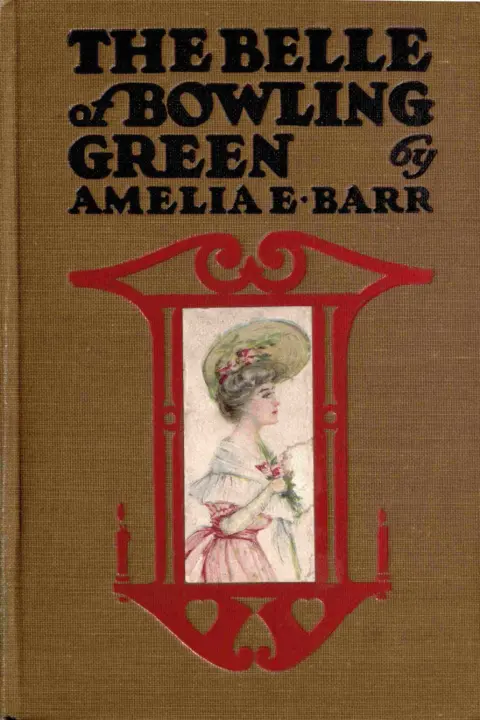
The Belle of Bowling Green
Amelia E. Barr
THE CLASSIC COLLECTION · 1899
"Was It Right to Forgive? A Domestic Romance" by Amelia E. Barr is a novel written in the late 19th century. The story revolves around Peter Van Hoosen, a skilled stone builder influenced by his Dutch Calvinist upbringing, and his beloved daughter Adriana. The narrative explores themes of family, responsibilities, and the emotional complexities of social relationships as Adriana navigates her education, friendships, and budding romance while facing personal challenges. The opening of the novel introduces Peter and his deep bond with his daughter Adriana, emphasizing his pride in her academic achievements and beauty. As Peter encourages Adriana’s aspirations for higher education, the narrative hints at the changing dynamics between the two, especially with their interactions with the wealthy Filmer family. As Adriana develops feelings for Harry Filmer, the story presents intricate social tensions around class and the struggle between personal desires and societal expectations. Through the reflection of the Van Hoosen family life and their relationships with the Filmers, the stage is set for exploring themes of forgiveness, love, and societal judgment in the chapters that follow.
Introduction adapted from the source catalogue; source summaries may be automatically generated.
Free to read · English · 85,061 words · No account needed
MAKE TIME FOR A GOOD BOOK
On by default. Untick to stop anonymous reading totals. Each page counts after 10 seconds in view. How this works.
Anonymous counting is on unless you have switched it off.
"No further than the ferry boat. It gave me, this morning, an opportunity of studying human nature, in its betting aspect."
"What did you think of it, sir?"
"I thought instantly of Disraeli's definition of the Turf:--'this institution for national demoralization.'"
"Is it worse than politics?"
"Yes. Loyalty to one's country is fed upon sentiment, or self-interest. Americans are a sentimental race--whether they know it or not--and Americans do not, as a general rule, want their country to pay them for loving her. Do you, Harry?"
"No, indeed, sir!"
"There are tens of thousands just as loyal as you are."
"When women get the suffrage," said Rose, "politics will be better and
purer."
"Oh, Rosie! are there not politicians enough in America, without women increasing the awful sum?"
"We feel compelled to increase it, papa. Noblesse oblige, if you will read sex for rank. I intend to be a Socialist."
"Then you must become very rich, or very poor. Socialism is only permitted to the very great, or the very small."
"What of Republicanism, sir?"
"It is highly respectable, Harry. Men who would be gentlemen cannot afford to be anything else; and I have noticed they are more Republican than Harrison himself."
"Are you a Democrat now, sir?"
"I love Democracy, Harry; but I do not love Democrats."
"Do let us change the subject," said Mrs. Filmer, fretfully. "In a month or two, the election influenza will be raging. Let us forget politics among the June roses."
"Suppose we talk of love, then. Love is quite at the other end of the pole of feeling. What do you think of love in these days, father?"
Harry spoke in his lightest manner, but Mr. Filmer's serious face reproved it. "Love is a kind of religion, Harry," he answered. "We will not joke about it, as fools do. And it is the same divine thing to-day as it was in its exquisite beginnings in Paradise. Love is either the greatest bliss or the profoundest misery the soul of man can know." And quite inadvertently, his eyes fell upon Rose, and she trembled and resolved to take her letter to Dick Duval out of the mail bag.
But when she went for it the bag had been sent to the post-office, and she whispered to herself dramatically, "The die is cast!" and then she sat down and played a "Romanza," and wove into it her memories of poor Horace Key, watching his old love plight her broken faith to a rich husband. Swiftly Horace Key became Dick Duval, and she played herself into tears, thinking of his black, velvety eyes, and his love-darting glances.
Your reading position is saved on this browser. Take it to another device with a library code. Reading pages adapt to text, rather than matching a printed edition.
Amelia E. Barr
Amelia E. Barr
Amelia E. Barr
Amelia E. Barr
BEHIND THE BOOK
This eBook is for the use of anyone anywhere in the United States and most other parts of the world at no cost and with almost no restrictions whatsoever. You may copy it, give it away or re-use it under the terms of the Project Gutenberg License included with this eBook or online at www.gutenberg.org. If you are not located in the United States, you will have to check the laws of the country where you are located before using this eBook. Read the source licence.
The original source file, including credits and licence, is retained by this library. Request an original-format copy at no charge. Please include the book title and Project Gutenberg identifier #33195.
KEEP YOUR CURIOSITY GOING
Coulson Kernahan

Maurice Baring
Frances Wright
Cécile Tormay

Frederic Jesup Stimson

W. H. P. (William Henry Pope) Jarvis