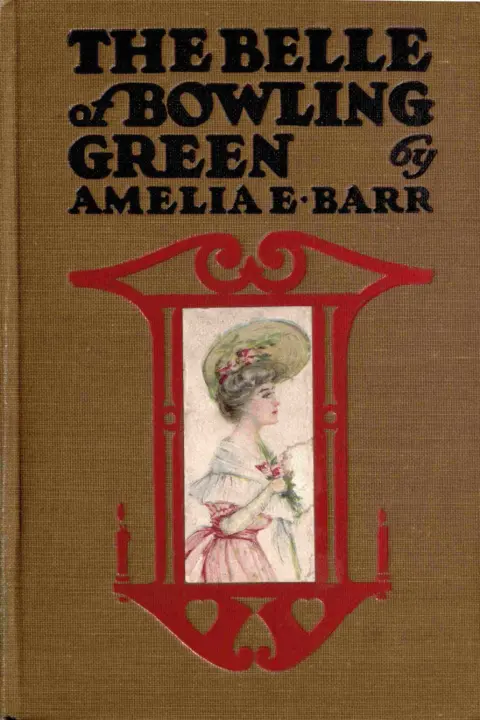
The Belle of Bowling Green
Amelia E. Barr
THE CLASSIC COLLECTION · 1899
"Was It Right to Forgive? A Domestic Romance" by Amelia E. Barr is a novel written in the late 19th century. The story revolves around Peter Van Hoosen, a skilled stone builder influenced by his Dutch Calvinist upbringing, and his beloved daughter Adriana. The narrative explores themes of family, responsibilities, and the emotional complexities of social relationships as Adriana navigates her education, friendships, and budding romance while facing personal challenges. The opening of the novel introduces Peter and his deep bond with his daughter Adriana, emphasizing his pride in her academic achievements and beauty. As Peter encourages Adriana’s aspirations for higher education, the narrative hints at the changing dynamics between the two, especially with their interactions with the wealthy Filmer family. As Adriana develops feelings for Harry Filmer, the story presents intricate social tensions around class and the struggle between personal desires and societal expectations. Through the reflection of the Van Hoosen family life and their relationships with the Filmers, the stage is set for exploring themes of forgiveness, love, and societal judgment in the chapters that follow.
Introduction adapted from the source catalogue; source summaries may be automatically generated.
Free to read · English · 85,061 words · No account needed
MAKE TIME FOR A GOOD BOOK
On by default. Untick to stop anonymous reading totals. Each page counts after 10 seconds in view. How this works.
Anonymous counting is on unless you have switched it off.
"If any one has ever loved," said Peter, "he cannot forget. Nothing
goes to heaven but love."
"Is it not heaven? We have a way of inferring that heaven is far off and walled in, but really all eternal things are so very near to us that a single step, a sudden 'accident' brings the disembodied spirit into an immediate recognition of them."
"Then," said Harry, clasping Adriana's hand, "let us live now, for
time is short."
"No, sir," answered the Professor, promptly, "man has forever."
"If in spiritual things, we could only see with our eyes and hear with our ears!" said Miss Alida.
"And if so, madame, what grace would there be in believing?"
"Who does believe?" asked Harry. "The great German philosopher, Frederick Gotfield, says, all religions are alike dead, and there is no faith left in the heart of man; no, nor yet capacity for faith."
"Well, Mr. Filmer, the disciple is not above his master. If you sit at the feet of Mr. Frederick Gotfield, you cannot rise above his doubts and scoffing."
"Harry does not sit at the feet of any such master, sir," explained
Adriana.
"I am glad of it; for Mr. Gotfield is not in search of salvation; his way leads--but we will not talk of him. Oh, for a generation perplexed with no vague fears, worn with no infinite yearnings, perfectly happy and healthy, and aiming at the noblest ends! How good it would be!"
"However," said Harry, "whether we believe or not, we can love."
"Then love wisely. I have read that St. Bernard thought that at the Last Day we shall not be asked what we have done, nor yet what we have believed, but what we have loved. That will indeed be a supreme test of character."
Harry became very thoughtful, and clasped Adriana's hand tighter; and just then Miss Alida's lawyer called, and she was compelled to leave her company for a while. So the Professor and Peter began to talk of Free Will and Calvinism, and Harry and Adriana withdrew to the curtained window, where they sat in happy silence, listening to that speech which is heard with the heart, and yet dimly conscious of the argument in progress. This way and that way it veered, Peter holding grimly fast to his stern plan of sin and retribution; the Professor doubting, qualifying, extolling free grace, and averring he would "consider the burning of all Calvin's books to be most justifiable Libricide"--making the statement, however, with such sweet, calm good nature, that it was impossible to be angry, even had Peter desired to be so. But Peter was far too firmly fixed on his foundation to feel anger; his opposition took the form of a sublime confidence, and he closed the discussion with a sudden outburst of enthusiasm it was impossible not to respect.
Your reading position is saved on this browser. Take it to another device with a library code. Reading pages adapt to text, rather than matching a printed edition.
Amelia E. Barr
Amelia E. Barr
Amelia E. Barr
Amelia E. Barr
BEHIND THE BOOK
This eBook is for the use of anyone anywhere in the United States and most other parts of the world at no cost and with almost no restrictions whatsoever. You may copy it, give it away or re-use it under the terms of the Project Gutenberg License included with this eBook or online at www.gutenberg.org. If you are not located in the United States, you will have to check the laws of the country where you are located before using this eBook. Read the source licence.
The original source file, including credits and licence, is retained by this library. Request an original-format copy at no charge. Please include the book title and Project Gutenberg identifier #33195.
KEEP YOUR CURIOSITY GOING
Coulson Kernahan

Maurice Baring
Frances Wright
Cécile Tormay

Frederic Jesup Stimson

W. H. P. (William Henry Pope) Jarvis