My household of pets
Théophile Gautier
THE CLASSIC COLLECTION · 1853
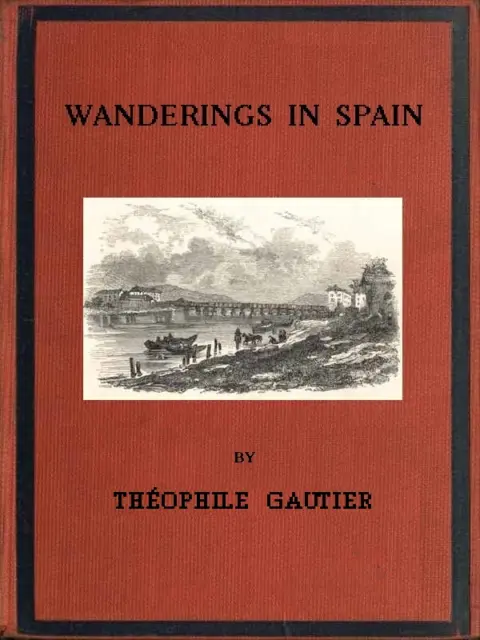
"Wanderings in Spain" by Théophile Gautier is a travelogue written in the mid-19th century. In this work, Gautier recounts his journey through various regions of Spain, capturing the landscapes, cultures, and peculiarities he encounters along the way. The narrative is rich in detail and reflects the author's enthusiasm for observation, as he immerses himself in the sights and experiences of his travels. The opening of the narrative introduces Gautier as he departs from Paris for Spain, pressured by friends to make the journey and embark on an extended adventure. He describes the initial stages of his trip, traveling through France to Bordeaux, where he takes in local sights such as the Subterranean Dwellings and the Cathedral. He vividly depicts the landscapes, towns, and people he encounters, conveying both the charm and challenges of travel during that era. His observations blend humor, curiosity, and a keen eye for detail, setting the tone for his explorations in Spain.
Introduction adapted from the source catalogue; source summaries may be automatically generated.
Free to read · English · 140,309 words · No account needed
MAKE TIME FOR A GOOD BOOK
On by default. Untick to stop anonymous reading totals. Each page counts after 10 seconds in view. How this works.
Anonymous counting is on unless you have switched it off.
Herrera, builder of the Escurial, 105
Homenaga, the tower of, in the Alhambra, 179
Horses of Andalusia, 207
Hospice des Vieillards, at Bordeaux, 10
Hospital, Foundling, at Cordova, 256
Host, unwillingness of the people to worship the, 146
Houses, underground, near Vendôme, 2;
at Toledo, 118;
at Ecija, 243
Iced drinks--bebidas heladas, 81, 82
Illescas, town of, 115;
Moorish remains near, 115
Impartiality of the Spanish public, 226
Inns, Spanish, extortion at, 238
Irun and its bridge, 13
Isle of Pheasants, 13
Jaen, city of, the cathedral, 161-163
Jarras, for cooling water, 87, 88
Jeres, bull-fights, ridiculous and tragical episodes, 284-288
Jewish synagogue at Toledo, 133
Juan, Don, de Marana, founder of an hospital at Seville, 272
Juan Eugenio Hartzembusch, the author, 229
Juliano, count, father of Florinda, 137
Justice, the gate of, in the Alhambra, 178
La Carlotta, road from Ecija to, 243;
the inn, treachery of our hosts, 244, 245
La Guardia, town of, 151
Ladies of Madrid, 75, 76
Lady, our, of Toledo, 129
Landes, the, 4;
desolate appearance of, 11
Lanza the cosario, 208
Legend of our Lady of Toledo, 121, 122;
of Galiana's palace, 135, 136;
of Florinda's bath at Toledo, 137, 138;
of Rodriguez and the Moors, 138-140
Library of the Escurial, 108, 109
Lindaraja, garden of, in the Alhambra, 184
Longa, or Exchange, at Seville, 270
Lope de Vega, the author, 233
Los Perros, Puerto de, 156
Louis, the cicerone of Granada, 164, 165
Lucar, San, on the Guadalquiver, 276
Luna, Don Alvar de, chapel of, at Toledo, 125
Lyceum, the, at Granada, 198
Madrid, 57-102;
approach to the city--arid scenery, 57;
Puerta de Hierro, 58;
Fonda de la Amistad, 58;
bull-fight, description of, 57-73;
the matador or espada, 59;
the Calle de Carretas, 60;
the Calle d'Alcala, 60;
Calesins, 60;
Manolas and Manolos, 60, 77, 78;
the Plaza de Toros and Toril, 60, 61;
chulos, banderilleros, picadores, and aficionados, 61;
interior arrangement of the arena, costume of the actors, &c., 62-65;
Sevilla the picador, 65, 66;
the bull, 67-69;
Juan Pasta, the espada, 69, 70;
the spectators and their excitement, 71-73;
the Prado, 73;
equipages of Madrid, 74;
ladies of Madrid--the mantilla and fan, 75, 76;
the Spanish type, 77;
costume of the men, 79;
trade in water and fire, 79-81;
the Manzanares, 80;
coffee-houses--the Bolsa, the Café Nuevo, Café del Levante, &c., 81,
83;
iced drinks--the bebida de naranja, de limon, de fresa de guindas,
&c., 81, 82;
quesitos, little ices, 82;
newspapers in the coffee-houses, 83;
the Puerta del Sol, 83;
the post-office, 83-85;
cigars, 84;
political conversation, 84;
the houses at Madrid, 85-87;
billiards, 86;
Spanish preserves, 86;
jarras for cooling water, 87;
heat at Madrid, 89;
Bucaros, 89;
parties, or tertulias, 89, 90;
morals, 90, 91;
deference paid to women, 91;
the Teatro del Principe, 91, 92;
Spanish dancers and dancing, 92;
the queen's palace, 92;
the meeting of the Cortes, 93;
monument to the victims of the Dos de Mayo, 93;
the Armeria, 93;
carriages of Joanna of Aragon and of Charles V., 93;
fountains, 94;
bridge of Toledo, 94;
the Buen Retiro and its fantastic gardens, 94;
the museum, 95;
cabinet of Natural History and pictures--Goya and his works, 95-102
Maïquez, funeral column in memory of, 171
Majos, the, 162;
at Granada, 169
Your reading position is saved on this browser. Take it to another device with a library code. Reading pages adapt to text, rather than matching a printed edition.
Théophile Gautier
Théophile Gautier
Théophile Gautier
BEHIND THE BOOK
This eBook is for the use of anyone anywhere in the United States and most other parts of the world at no cost and with almost no restrictions whatsoever. You may copy it, give it away or re-use it under the terms of the Project Gutenberg License included with this eBook or online at www.gutenberg.org. If you are not located in the United States, you will have to check the laws of the country where you are located before using this eBook. Read the source licence.
The original source file, including credits and licence, is retained by this library. Request an original-format copy at no charge. Please include the book title and Project Gutenberg identifier #52763.
KEEP YOUR CURIOSITY GOING
Wilfrid Scawen Blunt
Wilfrid Scawen Blunt

E. W. (Edgar Watson) Howe
Francis Greenleaf Allinson & Anne C. E. (Anne Crosby Emery) Allinson
Cyrenus Cole

John Martineau