THE CLASSIC COLLECTION✦Wild Honey: Stories of South AfricaCLASSIC FREE BOOKS
Wild Honey: Stories of South Africa
Cynthia Stockley
THE CLASSIC COLLECTION · 1913
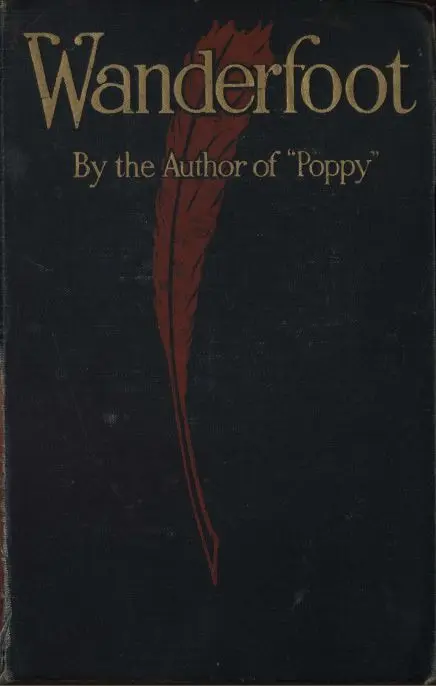
"Wanderfoot (The Dream Ship)" by Cynthia Stockley is a novel written in the early 20th century. The story appears to delve into themes of love and loss, following the protagonist, Garrett Westenra, an Irish surgeon who is grappling with profound loneliness and the shadow of his deceased mother. As he embarks on a journey across the Atlantic, his life takes a turn when he encounters Valentine Valdana, a journalist with a tumultuous past, creating a complex emotional dynamic between them. The opening of the novel introduces Garrett Westenra aboard the ship Bavaric, where he reflects on his grief and isolation after the loss of his mother, feeling a profound connection to a woman he has only seen in his dreams. His loneliness is challenged when he sits beside Valentine Valdana during dinner; he perceives her as a reckless and unconventional woman, which initially frustrates his ideals. However, Valentine reenters his life unexpectedly, prompting Garrett to confront his feelings for her and the essence of love itself. As they navigate their own struggles and the tumultuous sea, they begin to unveil layers of themselves that have long been buried, setting the stage for further exploration of their bond and the shadows of their pasts.
Introduction adapted from the source catalogue; source summaries may be automatically generated.
Free to read · English · 105,465 words · No account needed
MAKE TIME FOR A GOOD BOOK
On by default. Untick to stop anonymous reading totals. Each page counts after 10 seconds in view. How this works.
Anonymous counting is on unless you have switched it off.
Poverty showed its jagged teeth to the beautiful dancer, frightening her back to Europe, where she essayed to gain her living once more with flying seductive feet. But her dancing was not what it had been. Ten years of idle and ideal love on the veldt had spoiled her art, or perhaps the wife and mother had absorbed it. At any rate she was unable to step back into the vacancy created when as Iolita Fitzpatrick she had left the stage for love of Gay Haviland. Other stars had arisen, and the public had forgotten her. Engagements were difficult to find, and when found were at best of the second-rate order. Neither help nor sympathy was forthcoming from the proud English family who, having always detested poor Gay Haviland's mesalliance, absolutely repudiated any connection with the dancer or her child.
Years of arduous struggle followed during which the two trailed from one great continental city to another, often miserably poor and in desperate straits, sometimes perilously near starvation, but thanks to the generous Freemasonry of Art, and grace to their own happy charm in good and evil times, never quite without friends, or some last resource. It may truly be said that Val's education was received in the school of Life, for she never attended any other; but the love of books inculcated by her father stayed with her, and because book lovers will always, whatever their straits, get books, Val was able to educate herself as many another has done, and done well, by reading. Then, too, with the open mind of the untaught she received and retained all the beauty and colour and picturesque event of their wandering Bohemian life, finding even in their grimmest adventure food for thought and amusement.
When she was fourteen, and Iolita still astonishingly beautiful in spite of poverty and defeat, an engagement took them to the Argentine Republic, but ending up disastrously left them stranded and almost penniless at Buenos Aires. Things were at their darkest when good luck dawned once more in the shape of Dick Rowan, an old friend of Haviland's, and who together with the latter had adored the dancer in the days when she was a star. Rowan was a brilliant but eccentric man of letters, afflicted by the wanderlust. His adventurous temperament, irked by life in cities, had driven him forth as a journalist to far lands, where he had become as famous for his war and political correspondence as for his dissipated ways and generous heart. He was an expert on the political situation of various Colonies and smaller Powers, and whenever little wars were on the carpet there also was Rowan. In times when wars were not, he occupied himself with the internal wranglings of Colonial governments. Wherever he could force his way in he made himself felt. It was not for nothing he was known as "Gadfly" Rowan. At the period of his re-meeting with Iolita he was interesting himself in the Transvaal with the affairs of Paul Kruger and the Uitlander, up to his eyes in political intrigue, and editing a Johannesburg journal with Imperialistic leanings. His presence in the Argentine on some business of his own was the veriest accident, but a happy one for Iolita, for, faithful to his early passion, he was overjoyed to find her again, and asked nothing better than to take her burdens upon his shoulders and be a father to Gay Haviland's daughter. Iolita, on her part, had always felt a great affection for the journalist. It seemed a pleasant end of weariness to consign her fate into his eager if improvident hands. So they were married, and the family of three sailed for Africa, where for the next two years they spent a busy, happy, and erratic existence together, surrounded by journalists, politicians, and all the quick wits of the Rand. From the first Val showed a keen liking which Rowan was swift to foster for newspaper writing. He took her as his secretary, and taught her on broad lines all that is most useful for a journalist to know. None knew better than Dick Rowan how to direct a natural talent for journalism, and in Val he recognised splendid material, a born vocabulary, a keen sense of observation, love of phrase, and a knowledge of books and places. Above all, she was full of ardour for the work. Nothing lacked but training to apply her genius, and this Rowan, erratic and irresponsible in all things but his profession, was the best person in the world to give her.
Your reading position is saved on this browser. Take it to another device with a library code. Reading pages adapt to text, rather than matching a printed edition.
Cynthia Stockley
Cynthia Stockley
Cynthia Stockley
Cynthia Stockley
BEHIND THE BOOK
This eBook is for the use of anyone anywhere in the United States and most other parts of the world at no cost and with almost no restrictions whatsoever. You may copy it, give it away or re-use it under the terms of the Project Gutenberg License included with this eBook or online at www.gutenberg.org. If you are not located in the United States, you will have to check the laws of the country where you are located before using this eBook. Read the source licence.
The original source file, including credits and licence, is retained by this library. Request an original-format copy at no charge. Please include the book title and Project Gutenberg identifier #40059.
KEEP YOUR CURIOSITY GOING
Coulson Kernahan

Maurice Baring
Frances Wright
Cécile Tormay

Frederic Jesup Stimson

W. H. P. (William Henry Pope) Jarvis