Memoirs of Arthur Hamilton, B. A. of Trinity College, Cambridge Extracted from His Letters and Diaries, with Reminiscences of His Conversation by His Friend Christopher Carr of the Same College
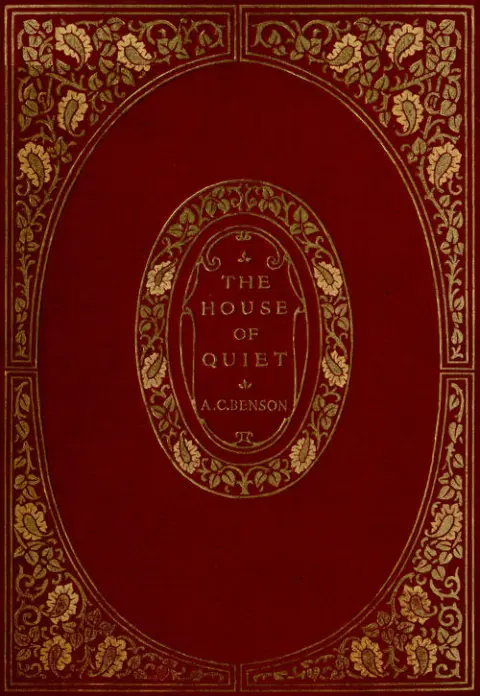
Arthur Christopher Benson
THE CLASSIC COLLECTION · 1906
Walter Pater by Arthur Christopher Benson is a literary biography and critical study written in the early 20th century. It explores the life, temperament, and aesthetic philosophy of the Victorian critic Walter Pater, pairing narrative with close readings of his major works. The emphasis falls on Pater’s Oxford career, his method of “imaginative” criticism, and the cultural ripple of his Renaissance studies. The opening of the book explains the absence of an official life and how the author builds his account from Pater’s sisters, friends, and published sources, then outlines the contents. It traces Pater’s quiet, observant childhood, Canterbury schooldays, and early sensitivity to beauty and ritual, notes Keble’s brief influence, and points to autobiographical threads in The Child in the House and Emerald Uthwart. At Oxford he reads Ruskin and German thinkers, takes a second in Greats, wins a Brasenose fellowship, and—after Italy and Winckelmann—shifts decisively from metaphysics to art. The narrative dwells on his austere rooms, regular habits, gentle but exacting teaching of essays, and a circle that includes Shadwell, Bywater, Pattison, and the Wards. It then surveys the early writings—Diaphaneitè, the Coleridge essay, and especially Studies in the History of the Renaissance—summarizing key essays on Botticelli, Leonardo, Michelangelo, Giorgione, and Du Bellay, and the debated “Conclusion” and its later revisions. The section closes with the reception: the aesthetic movement’s embrace, Mallock’s satirical caricature in The New Republic, and tensions with Jowett that affected Pater’s standing at Oxford.
Introduction adapted from the source catalogue; source summaries may be automatically generated.
Free to read · English · 68,388 words · No account needed
MAKE TIME FOR A GOOD BOOK
On by default. Untick to stop anonymous reading totals. Each page counts after 10 seconds in view. How this works.
Anonymous counting is on unless you have switched it off.
But here, to the true prophet of these mysteries, the thought that must be caught and touched and given shape, is not so much the mystery itself—for that is dark and not to be apprehended—but the thrill which such visions have communicated to the hearts of other pilgrims, who have fared eagerly and sadly through the world before us, and have passed into the darkness, just leaving, in written signs and pictured symbols, the traces of the passion, the desire, the yearning, that such things have brought them. Such a task as this—this piecing together of personality, this testing of recorded impressions, this imbuing of ancient, half-faded dreams with the sanguine vitality, the eager hope, of to-day, needs one who is not less a poet than a critic. The dreamer that comes thus must not be absorbed in his own fruitful visions, but must be able, by an energy of sympathy, a lucid purity of soul, to enter no less eagerly into the dim and far-reaching visions of other inspired spirits.
Ainslie, Mr. Douglas, 21, 136, 185.
America, one of Olney Paters emigrate to, 1.
Amiel’s Journal (trans. Mrs. H. Ward), 199–200.
Appleton, Dr. (editor of Academy), 21.
Appreciations, 12; 1st ed. (1889), 2nd ed. (1890), 33; 119, 122,
147—
“Aesthetic Poetry” (1868), 32, 33;
reappeared (1889 ed.), omitted (1890 ed.), 153.
“Charles Lamb,” 62–4, 78.
Coleridge, S. T., considered as a philosopher, 12–13.
“Feuillet’s La Morte,” 122.
“Love’s Labour’s Lost” (1898), 78, 153.
“Measure for Measure” (1874), 153, 154.
“Romanticism” (1876), 64–6, reappeared as postscript to (1889), 153.
“Shakespeare’s English Kings” (1889), 153,
superficial analysis of, 155–6.
“Sir Thomas Browne” (1886), 119–22.
“Style” (1888), 147–53, 209.
Apuleius, Golden Book of, 92.
Arnold, Miss Mary (Mrs. Humphry Ward), 21.
Art, History of Ancient (Winckelmann), 29.
Athenaeum, 118.
Azay-le-Rideau, 32.
Brasenose College, description of, 15–17.
—— ancient ceremonies preserved at, 85.
“Bruno, Giordano” (Gaston de Latour), 140, 153.
Bussell, Dr. F. W., devoted companion to Pater, 21; memorial sermon on, 24; 180–1, 183, 189.
Bywater, Prof. Ingram, 20, 192.
Your reading position is saved on this browser. Take it to another device with a library code. Reading pages adapt to text, rather than matching a printed edition.
Arthur Christopher Benson

Arthur Christopher Benson
BEHIND THE BOOK
This eBook is for the use of anyone anywhere in the United States and most other parts of the world at no cost and with almost no restrictions whatsoever. You may copy it, give it away or re-use it under the terms of the Project Gutenberg License included with this eBook or online at www.gutenberg.org. If you are not located in the United States, you will have to check the laws of the country where you are located before using this eBook. Read the source licence.
The original source file, including credits and licence, is retained by this library. Request an original-format copy at no charge. Please include the book title and Project Gutenberg identifier #76935.
KEEP YOUR CURIOSITY GOING
Cécile Tormay

Moritz Busch
John L. Ransom
Frances Wright
Cécile Tormay

Mabel Potter Daggett

