THE CLASSIC COLLECTION✦A dead man’s diaryCLASSIC FREE BOOKS
A dead man’s diary
Coulson Kernahan
THE CLASSIC COLLECTION · 1903
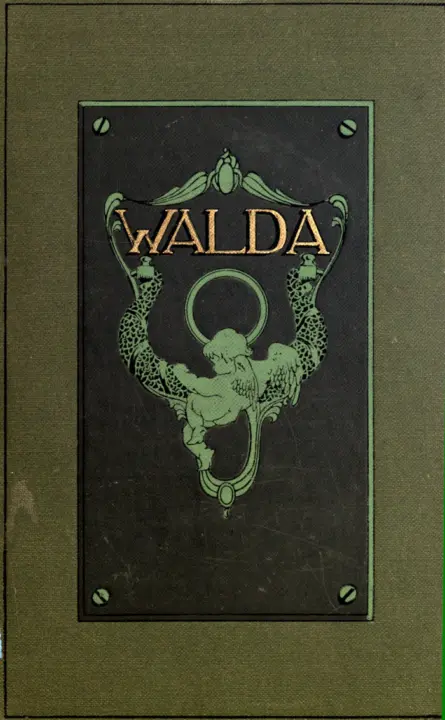
"Walda: A Novel" by Mary Holland Kinkaid is a fictional work written in the early 20th century. The narrative follows a small religious community known as Zanah, exploring its customs, the anticipation of a future prophetess named Walda Kellar, and the challenges faced when outsiders interact with their insular society. The primary characters introduced include the thoughtful yet troubled school-master Gerson Brandt and the noble and beautiful Walda, who is poised to assume a significant role within her community. At the start of the novel, we are introduced to the village of Zanah through the eyes of a stranger named Stephen Everett, who arrives seeking solitude and knowledge. He forms an immediate connection with Hans Peter, the village fool, and begins to learn about the restrictive lifestyle of the villagers that includes strict prohibitions against worldly temptations, particularly love. As he interacts with Gerson Brandt and Walda Kellar, we see the tension between the colony's rigid rules and the natural human emotions that arise, particularly through Walda's impending role as prophetess and the relationships that teeter on the edge of acceptance and rebellion. The opening sets the stage for a rich exploration of faith, love, and the consequences of isolation in a tight-knit community.
Introduction adapted from the source catalogue; source summaries may be automatically generated.
Free to read · English · 70,670 words · No account needed
MAKE TIME FOR A GOOD BOOK
On by default. Untick to stop anonymous reading totals. Each page counts after 10 seconds in view. How this works.
Anonymous counting is on unless you have switched it off.
“I know that it lieth in the earth beneath a great stone. It is safe. Have no fears for it.” Hans Peter balanced himself first on one bare foot, and then on the other, and in his face was such a stupid look that Karl Weisel said:
“Look at the fool! He would shield the school-master, to whom he shows a
dog’s devotion.”
“Dost thou really know where the Bible is, Hans Peter?” asked Walda, laying her hand upon the simple one’s shoulder.
“I have not said I knew. I said I knew I could get it,” answered the
fool.
“Nay, dissemble not,” pleaded Walda. “I know now it was thou that didst hide the Bible from the elders.”
The boy looked down to the floor.
“Yea, I did take the Bible so that the stranger in Zanah could not buy it with his silver. It was for thy sake and for Gerson Brandt’s that I took it.”
“Listen not to the fool,” said Karl Weisel. “I tell thee he would shield
Gerson Brandt.”
“There is a likelihood of truth in his words,” declared the Herr Doktor. Then, in a thundering tone, he commanded: “Bring the Bible to me.”
“It may not be easily found,” Hans Peter answered, still keeping his
eyes on the floor.
“Dare not try to put me off,” thundered Adolph Schneider, shaking his cane at the simple one. “Without more ado, fetch it to me.”
All this time Gerson Brandt had been standing silent and sad. He now waited expectantly for the last answer. He knew that his precious book was, indeed, in jeopardy.
Hans Peter gently took Walda’s hand from his shoulder, and, backing to the door, said, rolling his great head from side to side:
“The fool hath no memory. If he would know the thing that happened yesterday he must mark upon a gourd words that will bring back to his poor mind what is past.”
“Let him not make terms; let him not trade upon his folly,” interposed
Karl Weisel.
“Thou hast not forgotten where the Bible is hidden?” inquired Walda,
very gently.
“I did bury the gourd that told me where the Bible is, and upon another gourd I marked where that gourd was hidden.”
“Quick! We care not about thy lunatic pastimes. Bring the Bible!” shouted the Herr Doktor, overcome with impatience.
“And the second gourd I carried in my pocket until one day, when I was marking on it something the stranger had told me, the Herr Doktor struck it out of my hand with his cane and put his heel upon it. The Bible is safe, but it cannot be found without long search.”
Your reading position is saved on this browser. Take it to another device with a library code. Reading pages adapt to text, rather than matching a printed edition.
BEHIND THE BOOK
This eBook is for the use of anyone anywhere in the United States and most other parts of the world at no cost and with almost no restrictions whatsoever. You may copy it, give it away or re-use it under the terms of the Project Gutenberg License included with this eBook or online at www.gutenberg.org. If you are not located in the United States, you will have to check the laws of the country where you are located before using this eBook. Read the source licence.
The original source file, including credits and licence, is retained by this library. Request an original-format copy at no charge. Please include the book title and Project Gutenberg identifier #63629.
KEEP YOUR CURIOSITY GOING
Coulson Kernahan

Maurice Baring
Frances Wright
Cécile Tormay

Frederic Jesup Stimson

W. H. P. (William Henry Pope) Jarvis