THE CLASSIC COLLECTION✦An ethical problem; or, Sidelights upon scientific experimentation on man and animalsCLASSIC FREE BOOKS
An ethical problem; or, Sidelights upon scientific experimentation on man and animals
Albert Leffingwell
THE CLASSIC COLLECTION · 1884
"Vivisection" by Albert Leffingwell, M.D. is a scientific publication written in the late 19th century. The book discusses the controversial practice of vivisection—performing experiments on live animals—debating its ethical implications and utility in medical education and research. It seeks to address the moral dilemmas associated with such experiments while evaluating the actual benefits they provide to the field of medicine. In the book, Leffingwell presents a critical examination of vivisection, emphasizing the often severe pain inflicted on animals during these procedures. He articulates the argument that many vivisection practices do not yield significant results that justify the suffering caused, pointing out that while some physiological knowledge has been gained, it has not led to substantial advancements in therapeutics or the treatment of human disease. Addressing the opposition between scientific advancement and moral responsibility, Leffingwell advocates for greater oversight and restrictions on vivisection, particularly in educational settings, and calls for a re-evaluation of the practices that may desensitize medical students to suffering. Through a blend of personal observations, statistics, and appeals to ethical considerations, he argues for a more humane approach to scientific experimentation.
Introduction adapted from the source catalogue; source summaries may be automatically generated.
Free to read · English · 15,499 words · No account needed
MAKE TIME FOR A GOOD BOOK
On by default. Untick to stop anonymous reading totals. Each page counts after 10 seconds in view. How this works.
Anonymous counting is on unless you have switched it off.
Of Magendie's cruel disposition there seems only too abundant evidence. Says Doctor Elliotson: "Dr. Magendie, in one of his barbarous experiments, which I am ashamed to say I witnessed, began by coolly cutting out a large round piece from the back of a beautiful little puppy, as he would from an apple dumpling!" "It is not to be doubted that inhumanity may be found in persons of very high position as physiologists. We have seen that it was so in Magendie." This is the language of the report on vivisection, to which is attached the name of Professor Huxley.
But the fact which, in my own mind, constitutes by far the strongest objection to unrestrained experiments in pain, is their questionable utility as regards therapeutics. Probably most readers are aware that physiology is that science which treats of the various functions of life, such as digestion, respiration and the circulation of the blood, while therapeutics is that department of medicine which relates to the discovery and application of remedies for disease. Now I venture to assert that, during the last quarter of a century, infliction of intense torture upon unknown myriads of sentient, living creatures, has not resulted in the discovery of a single remedy of acknowledged and generally accepted value in the cure of disease. This is not known to the general public, but it is a fact essential to any just decision regarding the expediency of unrestrained liberty of vivisection. It is by no means intended to deny the value to therapeutics of well-known physiological facts acquired thus in the past--such, for instance, as the more complete knowledge we possess regarding the circulation of the blood, or the distinction between motor and sensory nerves, nor can original investigation be pronounced absolutely valueless as respects remote possibility of future gain. What the public has a right to ask of those who would indefinitely prolong these experiments without State supervision or control is, "What good have your painful experiments accomplished during the past thirty years--not in ascertaining facts in physiology or causes of rare or incurable complaints, but in the discovery of improved methods for ameliorating human suffering, and for the cure of disease?" If pain could be estimated in money, no corporation ever existed which would be satisfied with such waste of capital in experiments so futile; no mining company would permit a quarter-century of "prospecting" in such barren regions. The usual answer to this inquiry is to bring forward facts in physiology thus acquired in the past, in place of facts in therapeutics. Thus, in a recent article on Magendie to which reference has been made, we are furnished with a long list of such additions to our knowledge. It may be questioned, however, whether the writer is quite scientifically accurate in asserting that, were our past experience in vivisection abolished, "it would blot out all that we know to-day in regard to the circulation of the blood, * * the growth and regeneration of bone, * * * the origin of many parasitic diseases, * * * the communicability of certain contagious and infectious diseases, and, to make the list complete, it would be requisite * * to take a wide range in addition through the domains of pathology and therapeutics." Surely somewhat about these subjects has been acquired otherwise than by experiments upon animals? For example, an inquiring critic might wish to know a few of the "many parasitic diseases" thus discovered; or what contagious and infectious diseases, whose communicability was previously unknown, have had this quality demonstrated solely by experiments on animals? And what, too, prevented that "wide range into therapeutics" necessary to make complete the list of benefits due to vivisection? In urging the utility of a practice so fraught with danger, the utmost precaution against the slightest error of overstatement becomes an imperative duty. Even so distinguished a scientist as Sir John Lubbock once rashly asserted in Parliament that, "without experiments on living animals, we should never have had the use of ether"! Nearly every American school-boy knows that the contrary is true--that the use of ether as an anaesthetic--the grandest discovery of modern times--had no origin in the torture of animals.
Your reading position is saved on this browser. Take it to another device with a library code. Reading pages adapt to text, rather than matching a printed edition.
BEHIND THE BOOK
This eBook is for the use of anyone anywhere in the United States and most other parts of the world at no cost and with almost no restrictions whatsoever. You may copy it, give it away or re-use it under the terms of the Project Gutenberg License included with this eBook or online at www.gutenberg.org. If you are not located in the United States, you will have to check the laws of the country where you are located before using this eBook. Read the source licence.
The original source file, including credits and licence, is retained by this library. Request an original-format copy at no charge. Please include the book title and Project Gutenberg identifier #32033.
KEEP YOUR CURIOSITY GOING

David Patterson (Spirit) Hatch
Coulson Kernahan

Ralph Waldo Emerson
Frances Wright
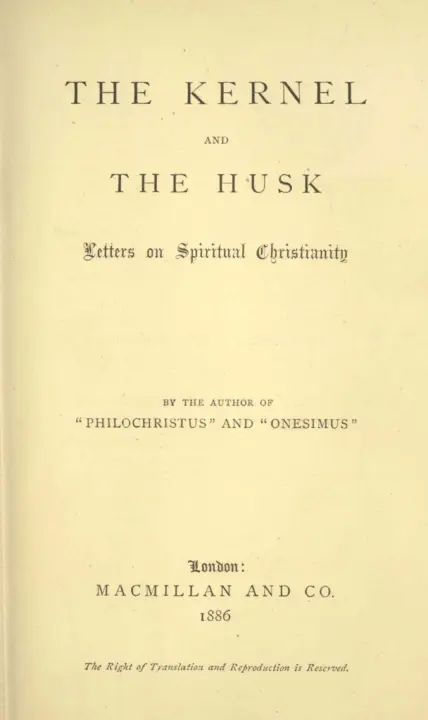
Edwin Abbott Abbott

Joseph Droz