
Barren Ground
Ellen Anderson Gholson Glasgow
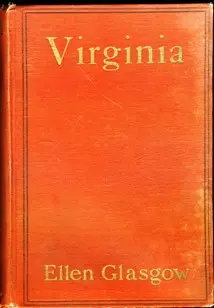
THE CLASSIC COLLECTION · 1913
"Virginia" by Ellen Glasgow is a novel written in the early 20th century. The story is set in the post-Civil War South, focusing on the life of Virginia Pendleton and her experiences as she navigates her way through the challenges of womanhood, societal expectations, and her burgeoning feelings for the returning Oliver Treadwell. The narrative delves into themes of personal growth, societal change, and the conflict between tradition and modernity. At the start of the novel, readers are introduced to the quaint town of Dinwiddie in Virginia during the year 1884. The opening chapter focuses on Miss Priscilla Batte, a teacher at a local academy, and her interactions with two young girls, Virginia Pendleton and Susan Treadwell. The girls exhibit the innocence and excitement of youth as they discuss the return of Oliver, Susan's cousin. Virginia is portrayed as a beautiful and spirited young woman, full of hope and curiosity about the future. During their conversation, Oliver's character is foreshadowed through discussions about his idealism and aspirations as a writer, which sets the stage for Virginia's growing interest in him. The narrative reflects both the external charm of Dinwiddie and the internal struggles of its characters, creating a rich context for the evolution of Virginia's identity against the backdrop of a transforming South.
Introduction adapted from the source catalogue; source summaries may be automatically generated.
Free to read · English · 147,246 words · No account needed
MAKE TIME FOR A GOOD BOOK
On by default. Untick to stop anonymous reading totals. Each page counts after 10 seconds in view. How this works.
Anonymous counting is on unless you have switched it off.
Entering the hall, he hung his hat on the walnut hat-rack in the dark corner behind the door, and followed the worn strip of blue and red oilcloth which ran up the narrow staircase to the floor above. Where the staircase bent sharply in the middle, the old-fashioned mahogany balustrade shone richly in the light of a gas-jet which jutted out on a brass stem from the wall. Although a window on the upper floor was opened wide to the sunset, the interior of the house had a close musty smell, as if it had been shut up, uninhabited, for months. Cyrus had never noticed the smell, for his senses, which were never acute, had been rendered even duller than usual by custom.
At the top of the stairs, a coloured washerwoman, accompanied by a bright mulatto boy, who carried an empty clothes basket on his head, waited humbly in the shadow for the two men to pass. She was a dark glistening creature, with ox-like eyes, and the remains of a handsome figure, now running to fat.
"Howdy, Marster," she murmured under her breath as Cyrus reached her, to which he responded brusquely, "Howdy, Mandy," while he glanced with unseeing eyes at the mulatto boy at her side. Then, as he walked rapidly down the hall, with James at his heels, the woman turned back for a minute and gazed after him with an expression of animal submission and acquiescence. So little personal to Cyrus and so free from individual consciousness was this look, that it seemed less the casual glance from a servant to a master than the intimate aspect of a primitive racial attitude toward life.
At the end of the hall, beyond the open door of the bedroom (which he still occupied with his wife from an ineradicable conviction that all respectable married persons slept together no matter how uncomfortable they might be), Cyrus discerned the untidy figure of Mrs. Treadwell reflected in a mirror before which she stood brushing her back hair straight up from her neck to a small round knot on the top of her head. She was a slender, flat-chested woman, whose clothes, following some natural bent of mind, appeared never to be put on quite straight or properly hooked and buttoned. It was as if she perpetually dressed in a panic, forgetting to fasten her placket, to put on her collar or to mend the frayed edges of her skirt. When she went out, she still made some spasmodic attempts at neatness; but Susan's untiring efforts and remonstrances had never convinced her that it mattered how one looked in the house--except indeed when a formal caller arrived, for whom she hastily tied a scarf at the neck of her dirty basque and flung a purple wool shawl over her shoulders. Her spirit had been too long broken for her to rebel consciously against her daughter's authority; but her mind was so constituted that the sense of order was missing, and the pretty coquetry of youth, which had masqueraded once as the more enduring quality of self-respect, was extinguished in the five and thirty penitential years of her marriage. She had a small vacant face, where the pink and white had run into muddiness, a mouth that sagged at the corners like the mouth of a frightened child, and eyes of a sickly purple, which had been compared by Cyrus to "sweet violets," in the only compliment he ever paid her. Thirty-five years ago, in one of those attacks of indiscretion which overtake the most careful man in the spring, Cyrus had proposed to her; and when she declined him, he had immediately repeated his offer, animated less by any active desire to possess her, than by the dogged male determination to over-ride all obstacles, whether feminine or financial. And pretty Belinda Bolingbroke, being alone and unsupported by other suitors at the instant, had entwined herself instinctively around the nearest male prop that offered. It had been one of those marriages of opposites which people (ignoring the salient fact that love has about as much part in it as it has in the pursuit of a spring chicken by a hawk) speak of with sentiment as "a triumph of love over differences." Even in the first days of their engagement, there could be found no better reason for their marriage than the meeting of Cyrus's stubborn propensity to have his way with the terror of imaginary spinsterhood which had seized Belinda in a temporary lapse of suitors. Having married, they immediately proceeded, as if by mutual consent, to make the worst of it. She, poor fluttering dove-like creature, had lost hope at the first rebuff, and had let go all the harmless little sentiments that had sweetened her life; while he, having married a dove by choice and because of her doveliness, had never forgiven her that she did not develop into a brisk, cackling hen of the barnyard. As usually happens in the cases where "love triumphs over differences," he had come at last to hate her for the very qualities which had first caught his fancy. His ideal woman (though he was perfectly unconscious that she existed) was a managing thrifty soul, in a starched calico dress, with a natural capacity for driving a bargain; and Life, with grim humour, had rewarded this respectable preference by bestowing upon him feeble and insipid Belinda, who spent sleepless nights trying to add three and five together, but who could never, to save her soul, remember to put down the household expenses in the petty cash book. It was a case, he sometimes told himself, of a man, who had resisted temptation all his life, being punished for one instant's folly more harshly than if he were a practised libertine. No libertine, indeed, could have got himself into such a scrape, for none would have surrendered so completely to a single manifestation of the primal force. To play the fool once, he reflected bitterly, when his brief intoxication was over, is after all more costly than to play it habitually. Had he pursued a different pair of violet eyes every evening, he would never have ended by embracing the phantom that was Belinda.
Your reading position is saved on this browser. Take it to another device with a library code. Reading pages adapt to text, rather than matching a printed edition.
Ellen Anderson Gholson Glasgow

Ellen Anderson Gholson Glasgow

Ellen Anderson Gholson Glasgow

Ellen Anderson Gholson Glasgow
BEHIND THE BOOK
This eBook is for the use of anyone anywhere in the United States and most other parts of the world at no cost and with almost no restrictions whatsoever. You may copy it, give it away or re-use it under the terms of the Project Gutenberg License included with this eBook or online at www.gutenberg.org. If you are not located in the United States, you will have to check the laws of the country where you are located before using this eBook. Read the source licence.
The original source file, including credits and licence, is retained by this library. Request an original-format copy at no charge. Please include the book title and Project Gutenberg identifier #26316.
KEEP YOUR CURIOSITY GOING
Coulson Kernahan

Maurice Baring
Frances Wright
Cécile Tormay

Frederic Jesup Stimson

W. H. P. (William Henry Pope) Jarvis