
Barren Ground
Ellen Anderson Gholson Glasgow
THE CLASSIC COLLECTION · 1913
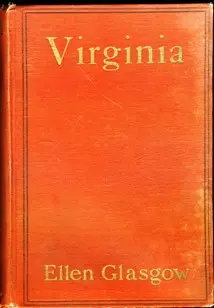
"Virginia" by Ellen Glasgow is a novel written in the early 20th century. The story is set in the post-Civil War South, focusing on the life of Virginia Pendleton and her experiences as she navigates her way through the challenges of womanhood, societal expectations, and her burgeoning feelings for the returning Oliver Treadwell. The narrative delves into themes of personal growth, societal change, and the conflict between tradition and modernity. At the start of the novel, readers are introduced to the quaint town of Dinwiddie in Virginia during the year 1884. The opening chapter focuses on Miss Priscilla Batte, a teacher at a local academy, and her interactions with two young girls, Virginia Pendleton and Susan Treadwell. The girls exhibit the innocence and excitement of youth as they discuss the return of Oliver, Susan's cousin. Virginia is portrayed as a beautiful and spirited young woman, full of hope and curiosity about the future. During their conversation, Oliver's character is foreshadowed through discussions about his idealism and aspirations as a writer, which sets the stage for Virginia's growing interest in him. The narrative reflects both the external charm of Dinwiddie and the internal struggles of its characters, creating a rich context for the evolution of Virginia's identity against the backdrop of a transforming South.
Introduction adapted from the source catalogue; source summaries may be automatically generated.
Free to read · English · 147,246 words · No account needed
MAKE TIME FOR A GOOD BOOK
On by default. Untick to stop anonymous reading totals. Each page counts after 10 seconds in view. How this works.
Anonymous counting is on unless you have switched it off.
Through the night, tired and sore as she was, she hardly closed her eyes, and she was lying wide awake, with her hand on the railing of Jenny's crib, and her gaze on the half-bared bough of the old mulberry tree in the street, when a cry, or less than a cry, a small, choking whimper, from the nursery, caused her to spring out of bed with a start and slip into her wrapper which lay across the edge of the quilt.
"I'm coming, darling," she called softly, and the answer came back in Harry's voice: "Mamma, I'm afraid!"
Without waiting to put on her slippers, for one of them had slid under the bed, she ran across the carpet and through the doorway into the adjoining room.
"What is it, my lamb? Does anything hurt you?" she asked anxiously.
"I'm afraid, mamma."
"What are you afraid of? Mamma is here, precious."
His little hands were hot when she clasped them, and the pathetic wonder in his blue eyes made her heart stand still with a fear greater than Harry's. Ever since the children had come she had lived in terror of a serious illness attacking them.
"Where does it hurt you, darling? Can't you tell me?"
"It feels so funny when I swallow, mamma. It's all full of flannel."
"Will you open your mouth wide, then, and let mamma mop your throat with
turpentine?"
But Harry hated turpentine even more than he hated the sore throat, and he protested with tears while she found the bottle in the bathroom and swathed the end of the wire mop in cotton. When she brought it to his bedside, he fought so strenuously that she was obliged at last to give up. His fever had excited him, and he sobbed violently while she applied the bandages to his throat and chest.
"Is it any better, dear?" she asked desperately at the end of an hour in which he had lain, weeping and angry, in her arms.
"It feels funny. I don't like it," he sobbed, pushing her from him.
"Then I'll send for Doctor Fraser. He'll make you well."
But he didn't want Doctor Fraser, who gave the meanest medicines. He didn't want anybody. He hated everybody. He hated Lucy. He hated Jenny. When at last day came, and Marthy appeared to know what Virginia wanted for breakfast, he was still vowing passionately that he hated them all.
"Marthy, run at once for Doctor Fraser. Harry is quite sick," said
Virginia, pale to the lips.
"But I won't see him, mamma, and I won't take his medicines. They are
the meanest medicines."
Your reading position is saved on this browser. Take it to another device with a library code. Reading pages adapt to text, rather than matching a printed edition.
Ellen Anderson Gholson Glasgow

Ellen Anderson Gholson Glasgow

Ellen Anderson Gholson Glasgow

Ellen Anderson Gholson Glasgow
BEHIND THE BOOK
This eBook is for the use of anyone anywhere in the United States and most other parts of the world at no cost and with almost no restrictions whatsoever. You may copy it, give it away or re-use it under the terms of the Project Gutenberg License included with this eBook or online at www.gutenberg.org. If you are not located in the United States, you will have to check the laws of the country where you are located before using this eBook. Read the source licence.
The original source file, including credits and licence, is retained by this library. Request an original-format copy at no charge. Please include the book title and Project Gutenberg identifier #26316.
KEEP YOUR CURIOSITY GOING
Coulson Kernahan

Maurice Baring
Frances Wright
Cécile Tormay

Frederic Jesup Stimson

W. H. P. (William Henry Pope) Jarvis