
Barren Ground
Ellen Anderson Gholson Glasgow
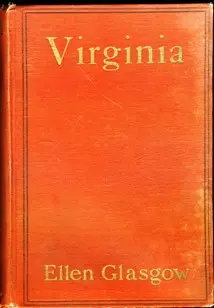
THE CLASSIC COLLECTION · 1913
"Virginia" by Ellen Glasgow is a novel written in the early 20th century. The story is set in the post-Civil War South, focusing on the life of Virginia Pendleton and her experiences as she navigates her way through the challenges of womanhood, societal expectations, and her burgeoning feelings for the returning Oliver Treadwell. The narrative delves into themes of personal growth, societal change, and the conflict between tradition and modernity. At the start of the novel, readers are introduced to the quaint town of Dinwiddie in Virginia during the year 1884. The opening chapter focuses on Miss Priscilla Batte, a teacher at a local academy, and her interactions with two young girls, Virginia Pendleton and Susan Treadwell. The girls exhibit the innocence and excitement of youth as they discuss the return of Oliver, Susan's cousin. Virginia is portrayed as a beautiful and spirited young woman, full of hope and curiosity about the future. During their conversation, Oliver's character is foreshadowed through discussions about his idealism and aspirations as a writer, which sets the stage for Virginia's growing interest in him. The narrative reflects both the external charm of Dinwiddie and the internal struggles of its characters, creating a rich context for the evolution of Virginia's identity against the backdrop of a transforming South.
Introduction adapted from the source catalogue; source summaries may be automatically generated.
Free to read · English · 147,246 words · No account needed
MAKE TIME FOR A GOOD BOOK
On by default. Untick to stop anonymous reading totals. Each page counts after 10 seconds in view. How this works.
Anonymous counting is on unless you have switched it off.
There was a wistful note in the question, and around her gentle blue eyes appeared a group of little lines, brought out by the nervous contraction of her forehead. Was it the wan, smoky light of the dusk?--Susan wondered, or was Virginia really beginning to break so soon?
"Why, I like Abby. I always did," she answered, trying to look as if she did not understand what Virginia had meant. "She's a little bit what John Henry calls 'loud,' but she has a good heart and would do anybody a kindness."
She had evaded answering, just as Virginia had evaded asking, the question which both knew had passed unuttered between them--was Abby to be trusted to keep inviolate the ancient unwritten pledge of honourable womanhood? Her character was being tested by the single decisive virtue exacted of her sex.
"I am glad you feel that way," said Virginia in a relieved manner after a minute, "because I should hate not to believe in Abby, and some people don't understand her manner--mother among them."
"Oh, she's all right. I'm sure of it," answered Susan, with heartiness.
The wistful sound had passed out of Virginia's voice, while the little lines faded as suddenly from the corners of her eyes. She looked better already--only she really ought not to wear such dowdy clothes, even though she was happily married, reflected Susan, as she watched her, a few minutes later, pass over the mulberry leaves, which lay, thick and still, on the sidewalk.
At the corner of Sycamore Street a shopkeeper was putting away his goods for the night, and in the window Virginia saw a length of hyacinth-blue silk, matching her eyes, which she had remotely coveted for weeks--never expecting to possess it, yet never quite reconciling herself to the thought that it might be worn by some other woman. That length of silk had grown gradually to symbolize the last glimmer of girlish vanity which motherhood had not extinguished in her heart; and while she looked at it now, in her new recklessness of mood, a temptation, born of the perversity which rules human fate, came to her to go in and buy it while she was still desperate enough to act foolishly and not be afraid. For the first time in her life that immemorial spirit of adventure which lies buried under the dead leaves of civilization at the bottom of every human heart--with whose re-arisen ghost men have moved mountains and ploughed jungles and charted illimitable seas--this imperishable spirit stirred restlessly in its grave and prompted her for once to be uncalculating and to risk the future. In the flickering motive which guided her as she entered the shop, one would hardly have recognized the lusty impulse which had sent her ancestors on splendid rambles of knight-errantry, yet its hidden source was the same. The simple purchase of twelve yards of blue silk which she had wanted for weeks! To an outsider it would have appeared a small matter, yet in the act there was the intrepid struggle of a personal will to enforce its desire upon destiny. She would win back the romance and the beauty of living at the cost of prudence, at the cost of practical comforts, at the cost, if need be, of those ideals of womanly duty to which the centuries had trained her! For eight years she had hardly thought of herself, for eight years she had worked and saved and planned and worried, for eight years she had given her life utterly and entirely to Oliver and the children--and the result was that he was happier with Abby--with Abby whom he didn't even admire--than he was with the wife whom he both respected and loved! The riddle not only puzzled, it enraged her. Though she was too simple to seek a psychological answer, the very fact that it existed became an immediate power in her life. She forgot the lateness of the evening, she forgot the children who were anxiously watching for her return. The forces of character, which she had always regarded as divinely fixed and established, melted and became suddenly fluid. She wasn't what she had been the minute before--she wasn't even, she began dimly to realize, what she would probably be the minute afterwards. Yet the impulse which governed her now was as despotic as if it had reigned in undisputed authority since the day of her birth. She knew that it was a rebel against the disciplined and moderate rule of her conscience, but this knowledge, which would have horrified her had she been in a normal mood, aroused in her now merely a breathless satisfaction at the spectacle of her own audacity. The natural Virginia had triumphed for an instant over the Virginia whom the ages had bred.
Your reading position is saved on this browser. Take it to another device with a library code. Reading pages adapt to text, rather than matching a printed edition.
Ellen Anderson Gholson Glasgow

Ellen Anderson Gholson Glasgow

Ellen Anderson Gholson Glasgow

Ellen Anderson Gholson Glasgow
BEHIND THE BOOK
This eBook is for the use of anyone anywhere in the United States and most other parts of the world at no cost and with almost no restrictions whatsoever. You may copy it, give it away or re-use it under the terms of the Project Gutenberg License included with this eBook or online at www.gutenberg.org. If you are not located in the United States, you will have to check the laws of the country where you are located before using this eBook. Read the source licence.
The original source file, including credits and licence, is retained by this library. Request an original-format copy at no charge. Please include the book title and Project Gutenberg identifier #26316.
KEEP YOUR CURIOSITY GOING
Coulson Kernahan

Maurice Baring
Frances Wright
Cécile Tormay

Frederic Jesup Stimson

W. H. P. (William Henry Pope) Jarvis