
Barren Ground
Ellen Anderson Gholson Glasgow
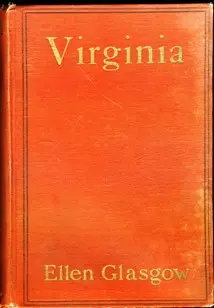
THE CLASSIC COLLECTION · 1913
"Virginia" by Ellen Glasgow is a novel written in the early 20th century. The story is set in the post-Civil War South, focusing on the life of Virginia Pendleton and her experiences as she navigates her way through the challenges of womanhood, societal expectations, and her burgeoning feelings for the returning Oliver Treadwell. The narrative delves into themes of personal growth, societal change, and the conflict between tradition and modernity. At the start of the novel, readers are introduced to the quaint town of Dinwiddie in Virginia during the year 1884. The opening chapter focuses on Miss Priscilla Batte, a teacher at a local academy, and her interactions with two young girls, Virginia Pendleton and Susan Treadwell. The girls exhibit the innocence and excitement of youth as they discuss the return of Oliver, Susan's cousin. Virginia is portrayed as a beautiful and spirited young woman, full of hope and curiosity about the future. During their conversation, Oliver's character is foreshadowed through discussions about his idealism and aspirations as a writer, which sets the stage for Virginia's growing interest in him. The narrative reflects both the external charm of Dinwiddie and the internal struggles of its characters, creating a rich context for the evolution of Virginia's identity against the backdrop of a transforming South.
Introduction adapted from the source catalogue; source summaries may be automatically generated.
Free to read · English · 147,246 words · No account needed
MAKE TIME FOR A GOOD BOOK
On by default. Untick to stop anonymous reading totals. Each page counts after 10 seconds in view. How this works.
Anonymous counting is on unless you have switched it off.
The front door opened and shut; there was a step on the soft grass under the honeysuckle-trellis, and her father came towards her, with his long black coat flapping about him. He always wore clothes several sizes too large for him under the impression that it was a point of economy and that they would last longer if there was no "strain" put upon them. He was a small, wiry man, with an amazing amount of strength for his build, and a keen, humorous face, ornamented by a pointed chin beard which he called his "goatee." His eyes were light grey with a twinkle which rarely left them except at the altar, and the skin of his cheeks had never lost the drawn and parchment-like look acquired during the last years of the war. One of the many martial Christians of the Confederacy, he had laid aside his surplice at the first call for troops to defend the borders, and had resumed it immediately after the surrender at Appomattox. It was still an open question in Dinwiddie whether Gabriel Pendleton, who was admitted to have been born a saint, had achieved greater distinction as a fighter or a clergyman; though he himself had accepted the opposite vocations with equal humility. Only in the dead of sweltering summer nights did he sometimes arouse his wife with a groan and the halting words, "Lucy, I can't sleep for thinking of those men I killed in the war." But with the earliest breeze of dawn, his remorse usually left him, and he would rise and go about his parochial duties with the serene and child-like trust in Providence that had once carried him into battle. A militant idealism had ennobled his fighting as it now exalted his preaching. He had never in his life seen things as they are because he had seen them always by the white flame of a soul on fire with righteousness. To reach his mind, impressions of persons or objects had first to pass through a refining atmosphere in which all baser substances were eliminated, and no fact had ever penetrated this medium except in the flattering disguise of a sentiment. Having married at twenty an idealist only less ignorant of the world than himself, he had, inspired by her example, immediately directed his energies towards the whitewashing of the actuality. Both cherished the naive conviction that to acknowledge an evil is in a manner to countenance its existence, and both clung fervently to the belief that a pretty sham has a more intimate relation to morality than has an ugly truth. Yet so unconscious were they of weaving this elaborate tissue of illusion around the world they inhabited that they called the mental process by which they distorted the reality, "taking a true view of life." To "take a true view" was to believe what was pleasant against what was painful in spite of evidence: to grant honesty to all men (with the possible exception of the Yankee army and a few local scalawags known as Readjusters); to deny virtue to no woman, not even to the New England Abolitionist; to regard the period before the war in Virginia as attained perfection, and the present as falling short of that perfection only inasmuch as it had occurred since the surrender. As life in a small place, among a simple and guileless class of gentlefolk, all passionately cherishing the same opinions, had never shaken these illusions, it was but natural that they should have done their best to hand them down as sacred heirlooms to their only child. Even Gabriel's four years of hard fighting and scant rations were enkindled by so much of the disinterested idealism that had sent his State into the Confederacy, that he had emerged from them with an impoverished body, but an enriched spirit. Combined with his inherent inability to face the facts of life, there was an almost superhuman capacity for cheerful recovery from the shocks of adversity. Since he had married by accident the one woman who was made for him, he had managed to preserve untarnished his innocent assumption that marriages were arranged in Heaven--for the domestic infelicities of many of his parishioners were powerless to affect a belief that was founded upon a solitary personal experience. Unhappy marriages, like all other misfortunes of society, he was inclined to regard as entirely modern and due mainly to the decay of antebellum institutions. "I don't remember that I ever heard of a discontented servant or an unhappy marriage in my boyhood," he would say when he was forced against his will to consider either of these disturbing problems. Not progress, but a return to the "ideals of our ancestors," was his sole hope for the future; and in Virginia's childhood she had grown to regard this phrase as second in reverence only to that other familiar invocation: "If it be the will of God."
Your reading position is saved on this browser. Take it to another device with a library code. Reading pages adapt to text, rather than matching a printed edition.
Ellen Anderson Gholson Glasgow

Ellen Anderson Gholson Glasgow

Ellen Anderson Gholson Glasgow

Ellen Anderson Gholson Glasgow
BEHIND THE BOOK
This eBook is for the use of anyone anywhere in the United States and most other parts of the world at no cost and with almost no restrictions whatsoever. You may copy it, give it away or re-use it under the terms of the Project Gutenberg License included with this eBook or online at www.gutenberg.org. If you are not located in the United States, you will have to check the laws of the country where you are located before using this eBook. Read the source licence.
The original source file, including credits and licence, is retained by this library. Request an original-format copy at no charge. Please include the book title and Project Gutenberg identifier #26316.
KEEP YOUR CURIOSITY GOING
Coulson Kernahan

Maurice Baring
Frances Wright
Cécile Tormay

Frederic Jesup Stimson

W. H. P. (William Henry Pope) Jarvis