
Barren Ground
Ellen Anderson Gholson Glasgow
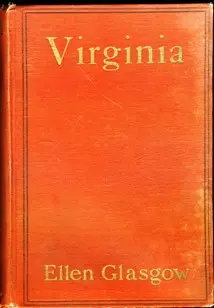
THE CLASSIC COLLECTION · 1913
"Virginia" by Ellen Glasgow is a novel written in the early 20th century. The story is set in the post-Civil War South, focusing on the life of Virginia Pendleton and her experiences as she navigates her way through the challenges of womanhood, societal expectations, and her burgeoning feelings for the returning Oliver Treadwell. The narrative delves into themes of personal growth, societal change, and the conflict between tradition and modernity. At the start of the novel, readers are introduced to the quaint town of Dinwiddie in Virginia during the year 1884. The opening chapter focuses on Miss Priscilla Batte, a teacher at a local academy, and her interactions with two young girls, Virginia Pendleton and Susan Treadwell. The girls exhibit the innocence and excitement of youth as they discuss the return of Oliver, Susan's cousin. Virginia is portrayed as a beautiful and spirited young woman, full of hope and curiosity about the future. During their conversation, Oliver's character is foreshadowed through discussions about his idealism and aspirations as a writer, which sets the stage for Virginia's growing interest in him. The narrative reflects both the external charm of Dinwiddie and the internal struggles of its characters, creating a rich context for the evolution of Virginia's identity against the backdrop of a transforming South.
Introduction adapted from the source catalogue; source summaries may be automatically generated.
Free to read · English · 147,246 words · No account needed
MAKE TIME FOR A GOOD BOOK
On by default. Untick to stop anonymous reading totals. Each page counts after 10 seconds in view. How this works.
Anonymous counting is on unless you have switched it off.
Dearest mother, I must stop now, and write some notes of thanks for my presents. The barrels of china haven't come yet, but the silver box got here almost as soon as we did. Freight takes a long time, Oliver says. It will be such fun unpacking all my presents and putting them away on the shelves. I was so excited those last few days that I hardly paid any attention to the things that came. Now I shall have time really to enjoy them, and to realize how sweet and lovely everybody has been to me. Wasn't it too dear of Miss Priscilla to give me that beautiful tea-set? And I was so touched by poor little Miss Willy spending her hard-earned money on that vase. I wish she hadn't. It makes me feel badly to think of it--but I don't see what I could do about it, do you? I think I'll try to send her a cloak or something at Christmas.
I haven't said half that I want to--but I shall keep the rest for
to-morrow.
With a dozen kisses and my dearest love to father,
Your ever, ever loving and grateful daughter,
VIRGINIA
MATOACA CITY. December 25, 1884.
DEAREST MOTHER:
It almost broke my heart not to be able to go home for Christmas. It doesn't seem like Christmas at all away from you--though, of course, I try not to let Oliver see how I mind it. He has so much to bother him, poor dear, that I keep all of my worries, big and little, in the background. When anything goes wrong in the house I never tell him, because he has so many important things on his mind that I don't think I ought to trouble him about small ones. We have given up going to the boarding-house for our meals, because neither of us could eat a morsel of the food they had there--did you ever hear of such a thing as having pie and preserves for breakfast?--and Oliver says it used to make him sick to see me in the midst of all of those people. They came from all over the country, and hardly anybody could speak a grammatical sentence. The man who sat next to me always said "he don't" and "I ain't feeling good to-day" and once even "I done it"--can you imagine such a thing? Every other word was "guess," and yet they had the impertinence to laugh at me when I said "reckon," which, I am sure father told me was Shakespearian English. Well, we stood it as long as we could, and then we started having our meals here, and it is so much nicer. Oliver says the change from the boarding-house has given him a splendid appetite, and he enjoys everything that I make so much--particularly the waffles by Aunt Ailsey's recipe. Be sure to tell her. At first I had a servant, but she was so dreadful that I let her go at the end of the month, and I really get on ever so much better without her. She hadn't the faintest idea how to cook, and had never made a piece of light bread in her life. Besides, she was too untidy for anything, and actually swept the trash under the bed except once a week when she pretended to give a thorough cleaning. The first time she changed the sheets, I found that she had simply put on one fresh one, and was going to use the bottom one on top. She said she'd never heard of doing it any other way, and I had to laugh when I thought of how your face would have looked if you could have heard her. It really is the greatest relief to get rid of her, and I'd a hundred times rather do the work myself than have another of that kind. At first Oliver hated dreadfully to have me do everything about the house, but he is beginning to get used to it now, because, of course, I never let him see if anything happens to worry me or if I am tired when he comes home. It takes every minute of my time, but, then, there is nothing else here that I care to do, and I never leave the house except to take a little walk with Oliver on Sunday afternoon. Mrs. Midden says that I make a mistake to give a spring cleaning every day, but I love to keep the house looking perfectly spick and span, and I make hot bread twice a day, because Oliver is so fond of it. He is just as sweet and dear as he can be and wants to help about everything, but I hate to see him doing housework. Somehow it doesn't seem to me to look manly. We have had our first quarrel about who is to get up and make the fires in the morning. Oliver insisted that he was to do it, but I wake so much earlier than he does, because I've got the bread on my mind, that I almost always have the wood burning before he gets up. The first few times he was really angry about it, and he didn't seem to understand why I hated so to wake him. He says he hates still worse to see my hands get rough--but I am so thankful that I am not one of those girls (like Abby Goode) who are forever thinking of how they look. But Oliver made such a fuss about the fires that I didn't tell him that I went down to the cellar one morning and brought up a basket of coal. The boy didn't come the day before, so there wasn't any to start the kitchen fire with, and I knew that by the time Oliver got up and dressed it would be too late to have hot rolls for breakfast. By the way, could you have a bushel of cornmeal sent to me from Dinwiddie? The kind they have here isn't the least bit like the water-ground sort we have at home, and most of it is yellow. Nobody ever has batterbread here. All the food is different from ours. I suppose that is because most of the people are from the North and West.
Your reading position is saved on this browser. Take it to another device with a library code. Reading pages adapt to text, rather than matching a printed edition.
Ellen Anderson Gholson Glasgow

Ellen Anderson Gholson Glasgow

Ellen Anderson Gholson Glasgow

Ellen Anderson Gholson Glasgow
BEHIND THE BOOK
This eBook is for the use of anyone anywhere in the United States and most other parts of the world at no cost and with almost no restrictions whatsoever. You may copy it, give it away or re-use it under the terms of the Project Gutenberg License included with this eBook or online at www.gutenberg.org. If you are not located in the United States, you will have to check the laws of the country where you are located before using this eBook. Read the source licence.
The original source file, including credits and licence, is retained by this library. Request an original-format copy at no charge. Please include the book title and Project Gutenberg identifier #26316.
KEEP YOUR CURIOSITY GOING
Coulson Kernahan

Maurice Baring
Frances Wright
Cécile Tormay

Frederic Jesup Stimson

W. H. P. (William Henry Pope) Jarvis