Playwrights on playmaking
Brander Matthews
THE CLASSIC COLLECTION · 1894
"Vignettes of Manhattan; Outlines in Local Color" by Brander Matthews is a collection of urban sketches and character portraits written in the late 19th century. This work aims to capture the essence and diverse life of New York City through a series of vignettes that reflect various aspects of its society and environment, showcasing the interactions of different types of people in the metropolis. Each vignette serves as a snapshot, introducing readers to the unique characters and happenings that define the city's lifestyle during that era. At the start of the book, Matthews sets the tone with a reflective letter addressed to Theodore Roosevelt, explaining his affection for New York. He presents the city not just as a backdrop but as a character in its own right, filled with life and variation. The opening portion includes a poignant depiction of a funeral in a small church, highlighting the lives of actors and sympathetic characters who gather for a young man's burial. This setting serves as a stage for exploring themes of ambition, loss, and the fleeting nature of life, inviting readers to delve deeper into the multifaceted world of Manhattan as portrayed throughout the collection.
Introduction adapted from the source catalogue; source summaries may be automatically generated.
Free to read · English · 89,595 words · No account needed
MAKE TIME FOR A GOOD BOOK
On by default. Untick to stop anonymous reading totals. Each page counts after 10 seconds in view. How this works.
Anonymous counting is on unless you have switched it off.
"Then they are not what you and I would call ladies, my child," returned
Miss Marlenspuyk.
The face of the Southern girl flushed suddenly, and she bit her lip in embarrassment. Then she mustered up courage to ask, "I suppose you do not read the Daily Dial, Miss Marlenspuyk?"
"I tried it for a fortnight once," the old maid answered. "They told me it had the most news, and all that. But I had to give it up. Nobody that I knew ever died in the Dial. My friends all died in the Gotham Gazette."
"The Gazette has a larger family circulation," admitted the younger
woman.
"Besides," Miss Marlenspuyk continued, "I could not stand the vulgarity of the Dial. I'm an old woman now, and I've seen a great deal of the world, but the Dial was too much for me. It seemed to be written down to the taste of the half-naked inhabitants of an African kraal."
"Oh," protested the other, "do you really think it is as bad as that?"
"Indeed I do," the old maid affirmed. "It's worse than that, because the poor negroes wouldn't know better. And what was most offensive, perhaps, in the Dial was the unwholesome knowingness of it."
"I see what you mean," said Miss Peters, and again the color rose in her
cheeks.
"There was that Lightfoot divorce case," Miss Marlenspuyk went on. "The way the Dial dwelt on that was unspeakable. I'm willing to allow that Mrs. Lightfoot was not exactly a nice person; I'll admit that she may have been divorced more times than she had been married--"
"That's admitting a good deal!" said the young woman, as the elder
paused.
"But it is going altogether too far to say that, like Cleopatra, she had the manners of a kitten and the morals of a cat--isn't it?"
Miss Peters made no response. Her eyes were fixed on the carpet, and her face was redder than ever.
"Of course it isn't likely you saw the article I mean," the old maid
continued.
"Yes," the younger responded, "I saw it."
"I'm sorry for that," said Miss Marlenspuyk. "I may be old-fashioned--I suppose I must be at my age--but I don't think that is the kind of thing a nice girl like you should read."
Again Miss Peters made no response.
"I happen to remember that phrase," Miss Marlenspuyk continued, "because the article was signed 'Polly Perkins.' Very likely it was a man who wrote it, after all, but it may have been a woman. And if it was I felt ashamed for her as I read it. How could one woman write of another in that way?"
Your reading position is saved on this browser. Take it to another device with a library code. Reading pages adapt to text, rather than matching a printed edition.
Brander Matthews
Brander Matthews
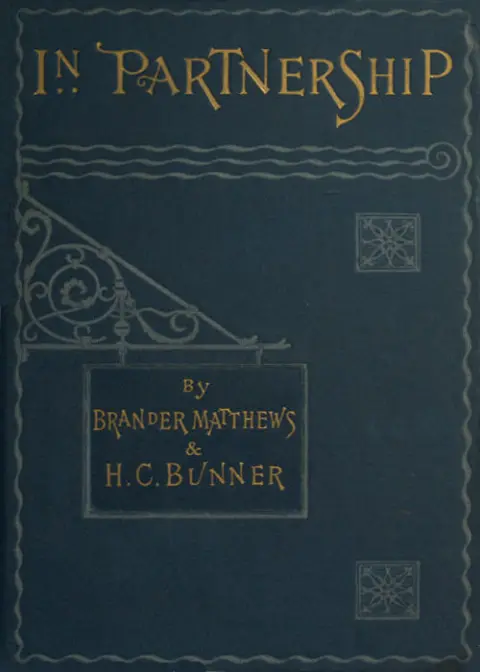
Brander Matthews & H. C. (Henry Cuyler) Bunner
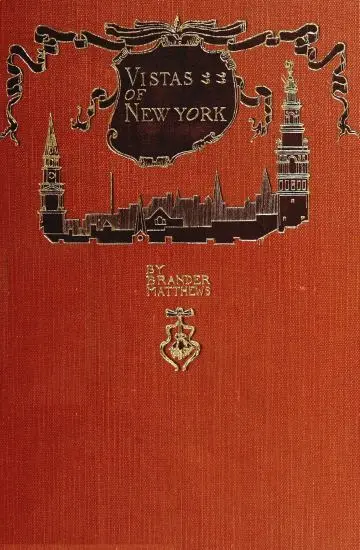
Brander Matthews
BEHIND THE BOOK
This eBook is for the use of anyone anywhere in the United States and most other parts of the world at no cost and with almost no restrictions whatsoever. You may copy it, give it away or re-use it under the terms of the Project Gutenberg License included with this eBook or online at www.gutenberg.org. If you are not located in the United States, you will have to check the laws of the country where you are located before using this eBook. Read the source licence.
The original source file, including credits and licence, is retained by this library. Request an original-format copy at no charge. Please include the book title and Project Gutenberg identifier #38918.
KEEP YOUR CURIOSITY GOING
Coulson Kernahan

Maurice Baring
Frances Wright
Cécile Tormay

Frederic Jesup Stimson

W. H. P. (William Henry Pope) Jarvis