THE CLASSIC COLLECTION✦Immortal MemoriesCLASSIC FREE BOOKS
Immortal Memories
Clement King Shorter
THE CLASSIC COLLECTION · 1897
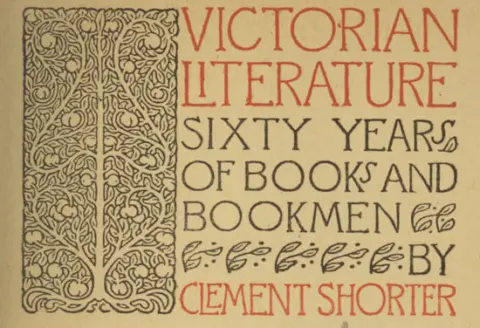
"Victorian Literature: Sixty Years of Books and Bookmen" by Clement King Shorter is a historical account written in the late 19th century. This work provides insights and reflections on various literary figures, movements, and significant works from the Victorian era, encapsulating the literature and cultural context of that time. It explores the evolution of literary tastes and critical opinion across generations, drawing connections between past authors and their enduring impacts on society. The opening of the book introduces the author’s ambition to provide a bibliographical perspective on Victorian literature within the context of Queen Victoria's reign. Shorter discusses the fluctuating status of poets and novelists, emphasizing how certain works and authors have faded from public memory while others have endured. He reflects on the critical reception of poets like Wordsworth and Tennyson and highlights the varying fortunes of novelists such as Dickens and Thackeray. The chapter sets the stage for a broader exploration of literature and its relationship with social and historical changes, showcasing the dynamic nature of literary appreciation over time.
Introduction adapted from the source catalogue; source summaries may be automatically generated.
Free to read · English · 55,974 words · No account needed
MAKE TIME FOR A GOOD BOOK
On by default. Untick to stop anonymous reading totals. Each page counts after 10 seconds in view. How this works.
Anonymous counting is on unless you have switched it off.
Bronte, Anne. 'Poems'; 'Agnes Grey,' 47;
'The Tenant of Wildfell Hall,' 48.
Bronte, Charlotte. Early years, 46;
Brussels; 'Poems'; 'The Professor'; 'Jane Eyre'; 'Shirley';
'Villette'; marriage and death, 47;
Mrs Gaskell's 'Life,' 71.
Bronte, Emily. 'Poems'; 'Wuthering Heights'; 'Last Lines'; 'The Old Stoic,' 47; Swinburne's criticism of 'Wuthering Heights,' 48.
Brooke, Stopford Augustus. Secession from the Church of England; 'Primer of English Literature,' 'History of Early English Poetry,' 'Theology in the English Poets,' and 'Life of Milton,' 166.
Broughton, Miss Rhoda, 74.
Browne, Hablot, 45.
Browning, Elizabeth Barrett, 13; not in the least incomprehensible; 'Cry of the Children'; 'Cowper's Grave'; 'Aurora Leigh'; 'Sonnets from the Portuguese'; her opinion of 'Aurora Leigh'; 'Casa Guidi Windows'; death, 14.
Browning, Robert. Friendship with Tennyson; social traits, 11; superb characterisation; charge of obscurity; half his work not obscure; 'The Ring and the Book'; 'Men and Women'; and 'Dramatic Idyls' are exciting stories; 'Luria'; 'In a Balcony'; and 'A Blot in the 'Scutcheon' as readable as railway novels; his small audience, 12; 'Pauline'; hard fight for recognition; Elizabeth Barrett's appreciation; marriage, 13-14.
Bryce, James. 'The Holy Roman Empire'; parliamentary life, 104.
Buckland, Frank. Author of books on 'Natural History,' 153.
Buckland, William. Author of 'Geology and Mineralogy considered with reference to Natural Theology,' 153.
Buckle, Henry Thomas. 'History of Civilization in England';
defects of, 103.
Burney, Fanny, 49.
Burton, John Hill. 'History of Scotland,' 96.
'By Proxy,' 189.
Byron, death of, 5;
attitude towards Wordsworth, 8.
Caird, Edward. 'Philosophy of Kant'; 'Essays on Literature and Philosophy'; 'The Evolution of Religion,' 170.
Cairnes, John Elliott, 143.
'Calendar of Letters and Papers of the Reign of Henry VIII.,
A,' 88.
'Calendar of Spanish State Papers of Elizabeth,' 89.
'Called to be Saints,' 22.
'Callista,' 111.
Calverley, Charles Stuart. One of the most famous successors of Hood and Barham; wrote 'Fly Leaves' and 'Verses and Translations,' 30.
Campbell, James Dykes. Biographer of Coleridge, 178.
Campbell, Lewis, 163.
Carleton, William. 'Traits and Stories of the Irish Peasantry'; 'Tales of Ireland'; 'Fardorougha the Miser'; 'Black Prophet,' 66.
Carlyle, Thomas. Birth; education; his father's influence, 112; as tutor; biographer; Madame de Stael's influence, 113; veneration for Goethe, 113-114, 120-121; 'Wilhelm Meister'; 'Life of Schiller,' 113; marriage; Richter's influence, 114; personal character, 115-120; domestic relations, 115-120; Froude's 'Letters' and Reminiscences, 115-116; his influence, 118-119, 128; intentions respecting 'Reminiscences,' 119-120; 'Sartor Resartus'; Fraser's Magazine, 121; influence of his teaching on younger minds, 122-123; 'Past and Present'; 'Latter-day Pamphlets'; John Stuart Mill; Governor Eyre and Jamaica riots, 123; 'Heroes and Hero-Worship'; 'French Revolution'; 'Cromwell'; 'Frederick II. of Prussia'; his place in literature; 'Schiller' criticised; 'Life of John Sterling,' 124; Mill on the 'French Revolution,' 125; Carlyle's judgments endorsed by John Morley; his 'Cromwell'; his 'Frederick II.,' 126-7; his enormous personality, 127-8; Edinburgh Cyclopaedia, 150; contempt for Darwinian hypothesis, 156.
Your reading position is saved on this browser. Take it to another device with a library code. Reading pages adapt to text, rather than matching a printed edition.
BEHIND THE BOOK
This eBook is for the use of anyone anywhere in the United States and most other parts of the world at no cost and with almost no restrictions whatsoever. You may copy it, give it away or re-use it under the terms of the Project Gutenberg License included with this eBook or online at www.gutenberg.org. If you are not located in the United States, you will have to check the laws of the country where you are located before using this eBook. Read the source licence.
The original source file, including credits and licence, is retained by this library. Request an original-format copy at no charge. Please include the book title and Project Gutenberg identifier #39851.
KEEP YOUR CURIOSITY GOING
Cécile Tormay

Moritz Busch
John L. Ransom
Frances Wright
Cécile Tormay

Mabel Potter Daggett