THE CLASSIC COLLECTION✦Immortal MemoriesCLASSIC FREE BOOKS
Immortal Memories
Clement King Shorter
THE CLASSIC COLLECTION · 1897
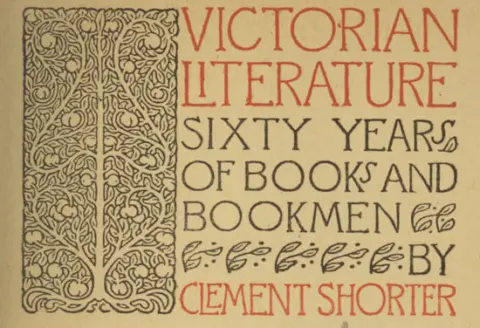
"Victorian Literature: Sixty Years of Books and Bookmen" by Clement King Shorter is a historical account written in the late 19th century. This work provides insights and reflections on various literary figures, movements, and significant works from the Victorian era, encapsulating the literature and cultural context of that time. It explores the evolution of literary tastes and critical opinion across generations, drawing connections between past authors and their enduring impacts on society. The opening of the book introduces the author’s ambition to provide a bibliographical perspective on Victorian literature within the context of Queen Victoria's reign. Shorter discusses the fluctuating status of poets and novelists, emphasizing how certain works and authors have faded from public memory while others have endured. He reflects on the critical reception of poets like Wordsworth and Tennyson and highlights the varying fortunes of novelists such as Dickens and Thackeray. The chapter sets the stage for a broader exploration of literature and its relationship with social and historical changes, showcasing the dynamic nature of literary appreciation over time.
Introduction adapted from the source catalogue; source summaries may be automatically generated.
Free to read · English · 55,974 words · No account needed
MAKE TIME FOR A GOOD BOOK
On by default. Untick to stop anonymous reading totals. Each page counts after 10 seconds in view. How this works.
Anonymous counting is on unless you have switched it off.
"For fifty years he listened at the door, And heard some scandal, but invented more. This he wrote down; and statesmen, queens, and kings, Appear before us quite as common things. Most now are dead; yet some few still remain To whom these 'Memoirs' give a needless pain; For though they laugh, and say ''Tis only Greville,' They wish him and his 'Memoirs' at the D--l."
Abbott, Edwin. Distinguished member of Broad Church party; 'Philochristus' and 'Onesimus'; his 'Through Nature to Christ' perhaps the best evidence of the development of his party, 165.
Abbott, Evelyn, 163.
'Adam Bede,' 49;
Reade on, 50.
'Addresses and Reviews,' 158.
'Admiral's Daughter, The,' 71.
'Adventures of Harry Richmond, The,' 61.
'Agnes Grey,' 47, 48.
'Agriculture and Prices, History of,' 144.
'A Hard Struggle,' 38.
Ainsworth, W. H. 'Old St Paul's,' 'The Tower of London,' and 'Rookwood' his best novels, 67.
'Alec Forbes of Howglen,' 63.
Alexander, Mrs (Mrs Hector), 74.
'Alexander the Great,' 33.
'Alice's Adventures in Wonderland,' 64.
Allen, Grant. 'Anglo-Saxon Britain,' 99.
'All in All,' 39.
'All Sorts and Conditions of Men,' 65.
Allingham, William. Writer of Celtic and Irish poems and ballads; edited Fraser's Magazine, 173.
All the Year Round, 69.
A.L.O.E. (Miss Charlotte Maria Tucker). Most popular stories, 'Pride and his Pursuers,' 'Exiles in Babylon,' 'House Beautiful,' and 'Cyril Ashley,' 73.
'Alton Locke,' 53.
'America Revisited,' 188.
'Amiel's Journal,' 189.
'And Shall Trelawney Die,' 38.
'Angel in the House, The,' 31.
'Anglo-Saxon Britain,' 99.
'Animal Intelligence,' 157.
'Ann Sherwood,' 72.
'Annals of the Parish,' 63.
'Anthony Hope,' 63.
'Anthropology' (Tylor's), 99.
'Antiquity of Man, The,' 153.
Anti-theological books. The three most notable, 170.
'Apologia pro Vita Sua,' 110.
'Appreciations,' 171.
Archer, William, 175.
Aristotle's 'Politics,' Jowett's translation, 163.
Arnold, Dr. 'History of Rome,' 102. (Vide infra.)
Arnold, Matthew, and Wordsworth, 8;
his poetic gifts first recognised by Swinburne, 17;
'Literature and Dogma'; 'God and the Bible'; influence on
contemporary religious thought, 18;
Professor of Poetry; 'Essays in Criticism'; definition of
criticism;
educational work, 19;
best known by his poetry, 19, 20, 171;
'Empedocles on Etna'; 'The Strayed Reveller'; 'Poems,' 20;
'Thyrsis,' 21;
admiration for Emily Bronte, 47.
Arnold, Sir Edwin. 'Light of Asia' and 'Light of the World,' 26;
on Henry Kingsley, 56.
Arnold, Thomas. At Rugby; Dr Hawkins' recommendation; his methods; 'Thucydides'; 'History of Rome'; a purifying influence, 160; at first unpopular; reaction in his favour; his best known pupils, 161. (Vide supra.)
Ashley, Professor W. J. 'Economic History and Theory,' 144.
Athenaeum The, and Tupper's 'Proverbial Philosophy,' 27.
Aunt Judy's Magazine, 73.
'Aurora Leigh,' 14.
Austin, Alfred. Laureate, 39; 'The Golden Age'; 'Savonarola'; 'English Lyrics,' etc., 40.
'Autobiography of W. B. Scott,' 173.
'Autobiography' (Mill), 138, 142.
'Autobiography' (Yates), 188.
'Ave atque Vale,' 17.
'Ayrshire Legatees,' 63.
Aytoun, Professor, 191.
Your reading position is saved on this browser. Take it to another device with a library code. Reading pages adapt to text, rather than matching a printed edition.
BEHIND THE BOOK
This eBook is for the use of anyone anywhere in the United States and most other parts of the world at no cost and with almost no restrictions whatsoever. You may copy it, give it away or re-use it under the terms of the Project Gutenberg License included with this eBook or online at www.gutenberg.org. If you are not located in the United States, you will have to check the laws of the country where you are located before using this eBook. Read the source licence.
The original source file, including credits and licence, is retained by this library. Request an original-format copy at no charge. Please include the book title and Project Gutenberg identifier #39851.
KEEP YOUR CURIOSITY GOING
Cécile Tormay

Moritz Busch
John L. Ransom
Frances Wright
Cécile Tormay

Mabel Potter Daggett