THE CLASSIC COLLECTION✦Immortal MemoriesCLASSIC FREE BOOKS
Immortal Memories
Clement King Shorter
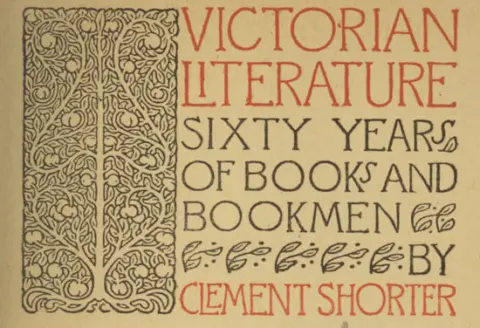
THE CLASSIC COLLECTION · 1897
"Victorian Literature: Sixty Years of Books and Bookmen" by Clement King Shorter is a historical account written in the late 19th century. This work provides insights and reflections on various literary figures, movements, and significant works from the Victorian era, encapsulating the literature and cultural context of that time. It explores the evolution of literary tastes and critical opinion across generations, drawing connections between past authors and their enduring impacts on society. The opening of the book introduces the author’s ambition to provide a bibliographical perspective on Victorian literature within the context of Queen Victoria's reign. Shorter discusses the fluctuating status of poets and novelists, emphasizing how certain works and authors have faded from public memory while others have endured. He reflects on the critical reception of poets like Wordsworth and Tennyson and highlights the varying fortunes of novelists such as Dickens and Thackeray. The chapter sets the stage for a broader exploration of literature and its relationship with social and historical changes, showcasing the dynamic nature of literary appreciation over time.
Introduction adapted from the source catalogue; source summaries may be automatically generated.
Free to read · English · 55,974 words · No account needed
MAKE TIME FOR A GOOD BOOK
On by default. Untick to stop anonymous reading totals. Each page counts after 10 seconds in view. How this works.
Anonymous counting is on unless you have switched it off.
The most famous traveller of the reign and one of our greatest men of letters was =George Borrow (1803-1881)=, who went to Spain as an agent of the British and Foreign Bible Society. Hence his "Bible in Spain," which has become one of the most popular books in our language as it is one of the most fascinating. It was first published in 1843 under the title "The Bible in Spain, or Journeys, Adventures, and Imprisonments of an Englishman in an attempt to circulate the Scriptures in the Peninsula." "Lavengro" (1851) and "The Romany Rye" (1857) have enjoyed almost an equal popularity with "The Bible in Spain."
Herman Melville (1819-1891) was an American citizen, and his work, therefore, does not come within the scope of this volume. I am the more sorry for this, that I consider Melville's name is entitled to rank with that of George Borrow as one of the two travellers during the epoch whose books make literature. It is small disparagement to the majority of our great travellers that they have not been men of letters, that their books, although serviceable to their generation, are of little moment considered from the standpoint of art. Although Mr H. M. Stanley, Dr Nansen, and other adventurous spirits of our time, may be quite as important in the general drift of the world's doings as any of the literary men whose names are contained in this volume, their books have no place whatever in literature. It is noteworthy, however, that books written by travellers have been, during the past ten years or more, by far the most popular form of reading, apart from fiction. Interest in historical study and speculative writing seems to have declined; interest in travel is as marked as ever.
The journalism of the reign has been so intimately associated with literature that were my space more ample I should have chosen to devote a chapter to that subject alone. Many of the men I have mentioned, perhaps most of them, have at one time or another contributed to the journals or magazines of the day. Even the novelists have a peculiar interest in journalism, because of late years as large a proportion of their pecuniary reward has come from what is called serial publication in this or that magazine or newspaper as from book publication. Apart from fiction, access to magazines and newspapers has become, if it has not always been, an easy and pleasant way of making oneself heard upon the subject nearest to one's heart. Literary journalists, who have afterwards republished their contributions in volume form include Sydney Smith and John Wilson at the beginning of the reign; as also Douglas Jerrold, Mark Lemon, Edmund Yates, Charles Mackay, and George Augustus Sala. =Sydney Smith (1771-1845)= left nothing that we can read to-day. He lives as a pleasant memory. We know that he must have been a liberal-minded, as he was certainly a very witty clergyman. He wrote on "The Ballot" in 1837 and on "The Church Bills" in 1838, and he went on writing zealously until his death. "The Wit and Wisdom of Sydney Smith" was published in 1861. =John Wilson (1785-1854)= has a more purely literary record. As editor of Blackwood's Magazine, he made that publication a power in the land. His "Recreations of Christopher North" appeared in 1842. Many of his essays and sketches may still be read with real pleasure, and indeed his influence will be very much alive for many a year to come. =Douglas Jerrold (1803-1857)= is also well known to-day by his "Black-eyed Susan" and "Mrs Caudle's Curtain Lectures." His son, Blanchard Jerrold (1826-1884), wrote his life. =Mark Lemon (1809-1870)= was one of the first editors of Punch newspaper. His hundreds of articles and many novels are all well nigh forgotten, but his name will always receive honourable mention in the history of journalism. =Edmund Yates (1831-1894)=, who founded The World newspaper in 1874, will be remembered by his well written "Autobiography"--one of the best books of the kind ever issued. Yates wrote many novels, but they have all passed out of memory. =Charles Mackay (1814-1889)= was an active journalist for a number of years. He wrote novels, poems, and criticisms, and an entertaining autobiography entitled "Forty Years' Recollections of Life, Literature, and Public Affairs." Dr Mackay was father of Eric Mackay, author of "Love Letters of a Violinist," and stepfather of Miss Marie Corelli the novelist. =George Augustus Sala (1828-1895)=, who wrote so continuously for the Daily Telegraph and other journals, was also author of many books as well as the inevitable autobiography. "The Land of the Golden Fleece," "America Revisited," and "Living London" are well known. =Richard Jefferies (1848-1887)= published his "Gamekeeper at Home" in the Pall Mall Gazette. "Wood Magic" (1881), "Bevis" (1882), and "The Story of My Heart" (1883), are his best books.
Your reading position is saved on this browser. Take it to another device with a library code. Reading pages adapt to text, rather than matching a printed edition.
BEHIND THE BOOK
This eBook is for the use of anyone anywhere in the United States and most other parts of the world at no cost and with almost no restrictions whatsoever. You may copy it, give it away or re-use it under the terms of the Project Gutenberg License included with this eBook or online at www.gutenberg.org. If you are not located in the United States, you will have to check the laws of the country where you are located before using this eBook. Read the source licence.
The original source file, including credits and licence, is retained by this library. Request an original-format copy at no charge. Please include the book title and Project Gutenberg identifier #39851.
KEEP YOUR CURIOSITY GOING
Cécile Tormay

Moritz Busch
John L. Ransom
Frances Wright
Cécile Tormay

Mabel Potter Daggett