THE CLASSIC COLLECTION✦Immortal MemoriesCLASSIC FREE BOOKS
Immortal Memories
Clement King Shorter
THE CLASSIC COLLECTION · 1897
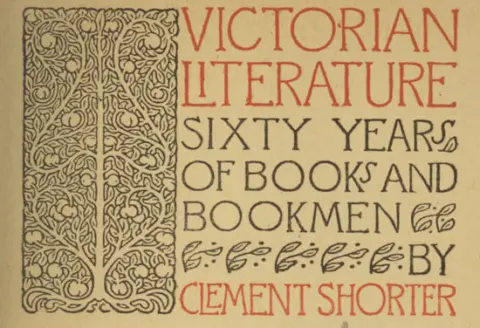
"Victorian Literature: Sixty Years of Books and Bookmen" by Clement King Shorter is a historical account written in the late 19th century. This work provides insights and reflections on various literary figures, movements, and significant works from the Victorian era, encapsulating the literature and cultural context of that time. It explores the evolution of literary tastes and critical opinion across generations, drawing connections between past authors and their enduring impacts on society. The opening of the book introduces the author’s ambition to provide a bibliographical perspective on Victorian literature within the context of Queen Victoria's reign. Shorter discusses the fluctuating status of poets and novelists, emphasizing how certain works and authors have faded from public memory while others have endured. He reflects on the critical reception of poets like Wordsworth and Tennyson and highlights the varying fortunes of novelists such as Dickens and Thackeray. The chapter sets the stage for a broader exploration of literature and its relationship with social and historical changes, showcasing the dynamic nature of literary appreciation over time.
Introduction adapted from the source catalogue; source summaries may be automatically generated.
Free to read · English · 55,974 words · No account needed
MAKE TIME FOR A GOOD BOOK
On by default. Untick to stop anonymous reading totals. Each page counts after 10 seconds in view. How this works.
Anonymous counting is on unless you have switched it off.
=William Ewart Gladstone (1809- )=, the son of a Lancashire merchant, was born at Liverpool. Into his political career it is not my province to enter. His first literary work, "The State in its Relations with the Church," was made famous through a review by Macaulay. Later in life he indulged in theological controversy, publishing an "Essay on Ritualism" and "The Vatican Decrees." Mr Gladstone's chief work is, however, his "Studies in Homer," in which he argues for the unity of the poem, for the foundation in fact of its main incidents, and for the definite personality of the author. His contributions to periodical literature have been innumerable, and only a few--and those non-controversial and non-classical--have been republished in his five volumes of "Gleanings." Mr Gladstone's chief opponent in theological controversy, Cardinal Newman, has profoundly influenced his religious views. "In my opinion," wrote Mr Gladstone many years after Newman had become a Roman Catholic, "his secession from the Church of England has never yet been estimated among us at anything like the full amount of its calamitous importance. It has been said that the world does not know its greatest men; neither, I will add, is it aware of the power and weight carried by the words and the acts of those among its greatest men whom it does know. The ecclesiastical historian will perhaps hereafter judge that this secession was a much greater event even than the partial secession of John Wesley, the only case of personal loss suffered by the Church of England since the Reformation which can be at all compared with it in magnitude."
=John Henry Newman (1801-1890)= was born in London, and educated at a private school at Ealing and at Trinity College, Oxford. Inclined at first to the liberal Christianity which men like Whately and Milman were furthering among churchmen, he was, he says, "rudely awakened by two great blows--illness and bereavement"; and he devoted himself to a life-long opposition to what he has called "the great apostasy--liberalism in religion." "My battle," he writes, "was with liberalism; by liberalism I mean the anti-dogmatic principle and its developments." From 1828 to 1843 he held the incumbency of St Mary's Church, Oxford, and the influence which he then exerted was of the deepest moment for the future of religious life in England. "Who," says Matthew Arnold, himself, like his father before him, one of the leaders of the movement which Newman has hated so intensely, "who could resist the charm of that spiritual apparition, gliding in the dim afternoon light through the aisles of St Mary's, rising into the pulpit, and then, in the most entrancing of voices, breaking the silence with words and thoughts which were a religious music--subtle, sweet, mournful? I seem to hear him still, saying: 'After the fever of life, after wearinesses and sicknesses, fightings and despondings, languor and fretfulness, struggling and succeeding; after all the changes and chances of this troubled, unhealthy state,--at length comes death, at length the white throne of God, at length the beatific vision.'" During these years at St Mary's what is called the Tractarian movement sprang to life--a movement, as we have said, against Broad-Churchism. It was at the beginning of the movement, on his way home from Sicily in 1833, whilst pondering over the difficulties of the task he had undertaken, that Newman wrote the hymn "Lead, kindly Light," which is now as popular in the most advanced and liberalized churches as it can be in those nearest to its author's religious standpoint. The "Tracts for the Times," whence Tractarians derived their name, were written by Newman, Hurrell Froude, Pusey, and others. Bishop Bloomfield said that the whole movement was nothing but Newmania. The writers argued now in short papers, now in elaborate treatises, for the Divine mission of the Anglican Church. Not till "Tract XC." was reached did the alarm of the Protestant party manifest itself in any practical form. In that Tract Newman declared that subscription to the Thirty-nine Articles was not inconsistent with the acceptance of Roman Catholic teaching on purgatory, on the invocation of saints, and on the mass. The Hebdomadal Council of the University condemned the Tract. Two years later Newman resigned his position at St Mary's, and in 1845 formally joined the Church of Rome. According to Disraeli, Anglicanism "reeled under the shock," and Dean Stanley remarked to a friend that the fortunes of the English Church might have been very different "had Newman been able to read German."[13]
Your reading position is saved on this browser. Take it to another device with a library code. Reading pages adapt to text, rather than matching a printed edition.
BEHIND THE BOOK
This eBook is for the use of anyone anywhere in the United States and most other parts of the world at no cost and with almost no restrictions whatsoever. You may copy it, give it away or re-use it under the terms of the Project Gutenberg License included with this eBook or online at www.gutenberg.org. If you are not located in the United States, you will have to check the laws of the country where you are located before using this eBook. Read the source licence.
The original source file, including credits and licence, is retained by this library. Request an original-format copy at no charge. Please include the book title and Project Gutenberg identifier #39851.
KEEP YOUR CURIOSITY GOING
Cécile Tormay

Moritz Busch
John L. Ransom
Frances Wright
Cécile Tormay

Mabel Potter Daggett