THE CLASSIC COLLECTION✦Immortal MemoriesCLASSIC FREE BOOKS
Immortal Memories
Clement King Shorter
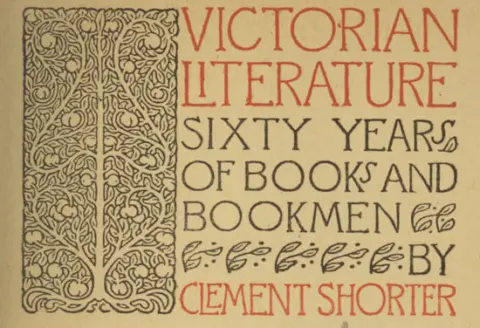
THE CLASSIC COLLECTION · 1897
"Victorian Literature: Sixty Years of Books and Bookmen" by Clement King Shorter is a historical account written in the late 19th century. This work provides insights and reflections on various literary figures, movements, and significant works from the Victorian era, encapsulating the literature and cultural context of that time. It explores the evolution of literary tastes and critical opinion across generations, drawing connections between past authors and their enduring impacts on society. The opening of the book introduces the author’s ambition to provide a bibliographical perspective on Victorian literature within the context of Queen Victoria's reign. Shorter discusses the fluctuating status of poets and novelists, emphasizing how certain works and authors have faded from public memory while others have endured. He reflects on the critical reception of poets like Wordsworth and Tennyson and highlights the varying fortunes of novelists such as Dickens and Thackeray. The chapter sets the stage for a broader exploration of literature and its relationship with social and historical changes, showcasing the dynamic nature of literary appreciation over time.
Introduction adapted from the source catalogue; source summaries may be automatically generated.
Free to read · English · 55,974 words · No account needed
MAKE TIME FOR A GOOD BOOK
On by default. Untick to stop anonymous reading totals. Each page counts after 10 seconds in view. How this works.
Anonymous counting is on unless you have switched it off.
Smith, Sydney. 'The Ballot'; 'The Church Bills'; 'The Wit and Wisdom of Sydney Smith,' 187.
'Social Statics,' 145.
'Soldiers Three,' 40.
'Some Aspects of Robert Burns,' 60.
'Song of the Shirt,' 29.
'Song of the Sword,' 172.
'Song of the Western Men,' 38.
'Songs of Two Worlds,' 26.
'Song Tide and other Poems,' 39.
'Sonnets from the Portuguese,' 14.
'Sonnets on the War,' 31.
'Soul, The,' 170.
Southey, 5-7, 15.
'Spanish Gypsy,' 50.
Spedding, James. 'Letters and Life of Francis Bacon,' 184.
'Speeches and Addresses of the late Prince Consort,' 192.
Spencer, Herbert. The most characteristic philosopher of the century; 'On the Proper Sphere of Government'; Nonconformist; Westminster Review; 'Social Statics'; 'Principles of Psychology'; 'Education'; 'First Principles,' 145; 'Descriptive Sociology'; universality of his knowledge; his 'Study of Sociology' and 'Education' books which all who read must enjoy, 146.
'Spencer, Mr Herbert, and Mr G. H. Lewes: their Application of the Doctrine of Evolution to Thought,' 147.
'Spirit's Trials, The,' 84.
Spurgeon, Charles Haddon. Most distinguished Nonconformist minister of the period; 'John Ploughman's Talk,' 168.
Standard, The. Austin's connection with, 40.
Stanley, Arthur Penrhyn. 'Life of Dr Arnold'; 'Memorials of Canterbury'; 'Sinai and Palestine,' 161; 'Lectures on the Eastern Church'; 'Lectures on the Jewish Church'; leader of the Broad Church movement; proposed the suppression of the Athanasian creed in church services; his 'Life,' written by Dean Bradley, 162.
Stanley, H. M., 186.
Stanhope, Earl (Lord Mahon). 'History of the Reign of Queen Anne,' and 'History of England from 1713-1783,' 95.
'State in its Relations with the Church, The,' 106.
'Statesmen of the Commonwealth,' 179.
'Stein, Life and Times of,' 104.
Stephen, Leslie. A critic of remarkable learning; 'Hours in a Library'; 'History of English Thought in the Eighteenth Century,' 175; first editor of the Dictionary of National Biography, 176.
Stephen, Leslie, and Macaulay, 93.
Stevenson, Robert Louis. One of the most picturesque figures in literature; 'With a Donkey in the Cevennes,' 59; his plays; 'Beau Austin,' probably the greatest contribution to the drama of the era; 'Virginibus Puerisque'; 'Some Aspects of Robert Burns'; 'A Child's Garden of Verse'; 'Underwoods'; his place as a novelist; 'Treasure Island'; 'The New Arabian Nights'; 'The Master of Ballantrae'; 'Prince Otto'; 'St Ives'; 'Dr Jekyll and Mr Hyde,' 60; his admiration of 'The Egoist,' 61; his influence on the modern historical romance, 63.
Stewart, Balfour, 151.
'Stones of Venice,' 132.
'Story of My Heart, The,' 188.
'Stuart of Dunleath,' 72.
Stubbs, William. Librarian at Lambeth Palace; edited mediaeval chronicles, 78; Regius Professor of History at Oxford; 'Select Charters'; 'Constitutional History'; profoundly scientific, but not dry-as-dust, 79.
'Student's Elements of Geology,' 152.
'Studies in Art and Poetry,' 171.
'Studies in Homer,' 106.
'Studies in Literature,' 173.
'Studies in Sensation and Event,' 37.
Your reading position is saved on this browser. Take it to another device with a library code. Reading pages adapt to text, rather than matching a printed edition.
BEHIND THE BOOK
This eBook is for the use of anyone anywhere in the United States and most other parts of the world at no cost and with almost no restrictions whatsoever. You may copy it, give it away or re-use it under the terms of the Project Gutenberg License included with this eBook or online at www.gutenberg.org. If you are not located in the United States, you will have to check the laws of the country where you are located before using this eBook. Read the source licence.
The original source file, including credits and licence, is retained by this library. Request an original-format copy at no charge. Please include the book title and Project Gutenberg identifier #39851.
KEEP YOUR CURIOSITY GOING
Cécile Tormay

Moritz Busch
John L. Ransom
Frances Wright
Cécile Tormay

Mabel Potter Daggett