THE CLASSIC COLLECTION✦Immortal MemoriesCLASSIC FREE BOOKS
Immortal Memories
Clement King Shorter
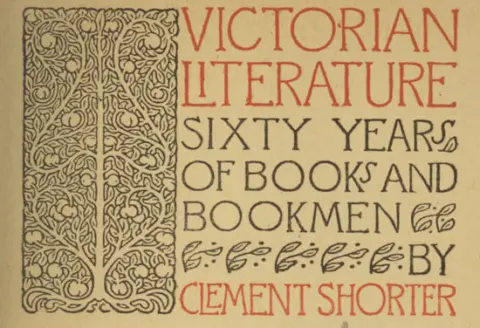
THE CLASSIC COLLECTION · 1897
"Victorian Literature: Sixty Years of Books and Bookmen" by Clement King Shorter is a historical account written in the late 19th century. This work provides insights and reflections on various literary figures, movements, and significant works from the Victorian era, encapsulating the literature and cultural context of that time. It explores the evolution of literary tastes and critical opinion across generations, drawing connections between past authors and their enduring impacts on society. The opening of the book introduces the author’s ambition to provide a bibliographical perspective on Victorian literature within the context of Queen Victoria's reign. Shorter discusses the fluctuating status of poets and novelists, emphasizing how certain works and authors have faded from public memory while others have endured. He reflects on the critical reception of poets like Wordsworth and Tennyson and highlights the varying fortunes of novelists such as Dickens and Thackeray. The chapter sets the stage for a broader exploration of literature and its relationship with social and historical changes, showcasing the dynamic nature of literary appreciation over time.
Introduction adapted from the source catalogue; source summaries may be automatically generated.
Free to read · English · 55,974 words · No account needed
MAKE TIME FOR A GOOD BOOK
On by default. Untick to stop anonymous reading totals. Each page counts after 10 seconds in view. How this works.
Anonymous counting is on unless you have switched it off.
Martineau, Harriet. 'History of the Peace,' 95; Abridgment of Comte; influence upon her own generation; very versatile writer; her 'Biographical Sketches' originally published in Daily News, 180; her historical work mere compilation; 'Deerbrook'; 'The Hour and the Man'; 'Letters on the Laws of Man's Nature and Development,' 181.
Martineau, James. Early career, 166; from Bentham to Kant; 'Endeavour after the Christian Life'; 'Hours of Thought on Sacred Things'; 'Study of Spinoza'; 'Types of Ethical Theory,' 167.
'Martyrs of Science,' 150.
'Mary Barton,' 71.
'Mary Tudor,' 33.
'Masks and Faces,' 58.
Massey, Gerald. Chartist poet. Wrote 'Poems and Charms' and 'Voices of Freedom and Lyrics of Love,' &c., 37.
Massey, William Nathaniel. 'History of England under George III.'
95
Masson, David. 'Life of Milton'; 'British Novelists and their Styles'; 'Drummond of Hawthornden,' 177.
'Master of Ballantrae, The,' 60.
'Maud,' 10.
'Maude,' 22.
Maurice, John Frederick Denison. Editor of the Athenaeum; joined the Anglican Church, 163; 'Subscription no Bondage'; 'Kingdom of Christ' tracts; 'Politics for the People'; organised the Christian socialist and co-operative movement, 164.
Maxse, Admiral, 62.
May, Sir Thomas Erskine. Continued the work of Hallam and Stubbs,
79;
'Democracy in Europe'; 'Constitutional History,' 80.
Melbourne, Lord, and Macaulay, 91.
'Melincourt,' 62.
Melville, George John Whyte. The novelist of the hunting field; 'Katerfelto'; 'Black but Comely'; 'The Queen's Maries'; 'The Gladiators,' 59.
'Memoirs of Barry Lyndon,' 45.
'Memoir of Principal Tulloch,' 74.
'Memorials of Canterbury,' 161.
'Men and Women,' 12.
'Mental and Moral Science,' 147.
'Mental Evolution in Animals,' 157.
Meredith, George. 'Love in a Valley,' 60; The Browning of Novelists; 'The Shaving of Shagpat'; 'Farina'; 'The Ordeal of Richard Feverel' considered his best novel; 'Evan Harrington'; 'Rhoda Fleming'; 'The Adventures of Harry Richmond'; 'Beauchamp's Career'; 'The Egoist'; 'The Tragic Comedians'; 'Diana of the Crossways'; Stevenson's admiration for 'The Egoist,' 61; 'Sandra Belloni,' 62.
Meredith, George, and Rossetti, 24.
Merivale, Charles. 'History of the Romans under the Empire,' 102.
'Metaphysics, or the Philosophy of Consciousness, Phenomenal and
Real,' 169.
Methodism and Carlyle, 51.
'Methods of Ethics,' 143.
Metropolitan Magazine, The, 67.
'Middle Ages' (Hallam's), 77.
'Middlemarch,' 50.
Mill, James. 'History of India'; 'Analysis of the Human Mind,' 137.
Mill, John Stuart. Ruskin's scorn of; education, 137; influence of Wordsworth; the India House; Westminster Review; Carlyle's 'French Revolution,' 138; 'Political Economy'; 'Liberty'; 'Subjection of Women'; contemporary opinion of Mrs Mill, 139; 'Logic'; 'Essays on Unsettled Questions in Political Economy'; 'Principles of Political Economy'; 'Liberty'; 'Sir William Hamilton's Philosophy'; 'Dissertations and Discussions'; 'Considerations on Representative Government'; a stimulator of public opinion, 140; his philosophical weaknesses, 141-42; abandonment of early positions; 'Autobiography'; a socialist at the last, 142.
Miller, Hugh, 151. Journalist; The Witness; 'Old Red Sandstone'; 'Footprints of the Creator'; 'The Testimony of the Rocks,' 152.
'Mill on the Floss, The,' 50.
Millais, Sir John, and the pre-Raphaelite movement, 23.
Your reading position is saved on this browser. Take it to another device with a library code. Reading pages adapt to text, rather than matching a printed edition.
BEHIND THE BOOK
This eBook is for the use of anyone anywhere in the United States and most other parts of the world at no cost and with almost no restrictions whatsoever. You may copy it, give it away or re-use it under the terms of the Project Gutenberg License included with this eBook or online at www.gutenberg.org. If you are not located in the United States, you will have to check the laws of the country where you are located before using this eBook. Read the source licence.
The original source file, including credits and licence, is retained by this library. Request an original-format copy at no charge. Please include the book title and Project Gutenberg identifier #39851.
KEEP YOUR CURIOSITY GOING
Cécile Tormay

Moritz Busch
John L. Ransom
Frances Wright
Cécile Tormay

Mabel Potter Daggett