THE CLASSIC COLLECTION✦Edward BurtonCLASSIC FREE BOOKS
Edward Burton
Henry Wood
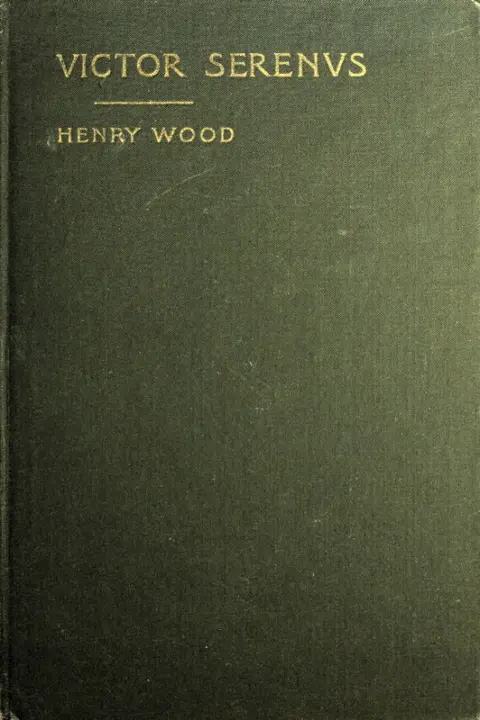
THE CLASSIC COLLECTION · 1898
"Victor Serenus: A Story of the Pauline Era" by Henry Wood is a historical novel written in the late 19th century. The narrative is set during the early years of the Christian era and focuses on the character of Saulus Paulus (later known as Paul the Apostle), exploring his upbringing in Tarsus amidst a rich tapestry of cultural and religious conflict. The author aims to blend historical fact with fictional elements, illuminating the spiritual and societal dynamics of the time. At the start of the story, we are introduced to a solemn religious procession in Tarsus, where a group of Hebrew priests leads a ceremonial event. The infant, Saulus Paulus, is presented in a synagogue ritual that underscores his significance within the Jewish community. The tale unfolds against the backdrop of Tarsus, a bustling hub of commerce and culture, characterized by both Hellenistic and Roman influences. As the narrative progresses, it touches on the tensions between the Jewish tradition and the broader pagan society, with predictions about Saulus's future painted vividly through prophetic blessings and hints of his eventual role in the rise of Christianity. This opening segment sets a rich scene, hinting at the larger themes of faith, destiny, and societal conflict that will likely unfold throughout the novel.
Introduction adapted from the source catalogue; source summaries may be automatically generated.
Free to read · English · 125,559 words · No account needed
MAKE TIME FOR A GOOD BOOK
On by default. Untick to stop anonymous reading totals. Each page counts after 10 seconds in view. How this works.
Anonymous counting is on unless you have switched it off.
“But at least they may be sketched in outline, if not shared. Wilt thou not interpret for me the brightest vision that comes to thee?”
“How can I?”
“Peradventure I can divine it.”
“Peradventure thou canst not.”
“Knowest thou not, Cassia, that there are some who say they can read the thoughts of their neighbor, much as they would an unrolled parchment?”
“Claimest thou such power for thyself?”
“I answer thee not as to my claim. But wilt thou that I try to be thy
interpreter?”
Cassia cast a curious but shy glance at her companion, who seemed much absorbed in the distant mountain slopes.
“Yea; if thou wilt essay to play the part of a seer, and prophesy of my future, I will listen. I would try thy powers.”
“It is not so much thy future, as thy thought of thy future, that I would divine just now,” said Barnabas, with a half‐hidden smile. “Wilt thou tell me if I interpret rightly?”
She again turned a searching glance toward his face, but his gaze was still fastened upon the mountain landscape.
“Peradventure yea, and peradventure nay,” she replied, with a light flush; “but please proceed.”
Barnabas bade adieu to the distant mountain, and with some vigor of manner turned his face toward the maiden as if to read her thoughts.
“Almon, thy father, hath told me that Saulus is soon to return for a season to the Holy City, and will sojourn at the inn of the Sheepmarket. Nay, more! that he may arrive at any hour. Behold thy bright vision!”
The figure just beyond the hedge gave such a start that only the vital interest of the twain in the topic of their conversation prevented a discovery.
Little Cassia, who was not greatly disconcerted, pouted her lips a bit, toyed with her fan, and took her turn in gazing at the mountain.
“O Barnabas! I would counsel thee, that thou set not up for an interpreter. Seership is not befitting to thee.”
“Thou dost say neither yea nor nay.”
“I say that thou hast altogether missed thy calling.”
“It seemeth strange; but verily, I find much contentment in my error, if my interpretation be not true.”
“It hath been told me by my father that Saulus is to return to Jerusalem, in order that he may vex the new pestilent sect of heretics, which is said to be gathering strength. I wot not more of his sojourn or plans.”
“I say unto thee again, that it rejoiceth me that my seership be at
fault.”
“True prophets are not usually so fickle.”
Your reading position is saved on this browser. Take it to another device with a library code. Reading pages adapt to text, rather than matching a printed edition.
BEHIND THE BOOK
This eBook is for the use of anyone anywhere in the United States and most other parts of the world at no cost and with almost no restrictions whatsoever. You may copy it, give it away or re-use it under the terms of the Project Gutenberg License included with this eBook or online at www.gutenberg.org. If you are not located in the United States, you will have to check the laws of the country where you are located before using this eBook. Read the source licence.
The original source file, including credits and licence, is retained by this library. Request an original-format copy at no charge. Please include the book title and Project Gutenberg identifier #55225.
KEEP YOUR CURIOSITY GOING
Cécile Tormay

Moritz Busch
Coulson Kernahan
John L. Ransom

Maurice Baring
Frances Wright