THE CLASSIC COLLECTION✦Edward BurtonCLASSIC FREE BOOKS
Edward Burton
Henry Wood
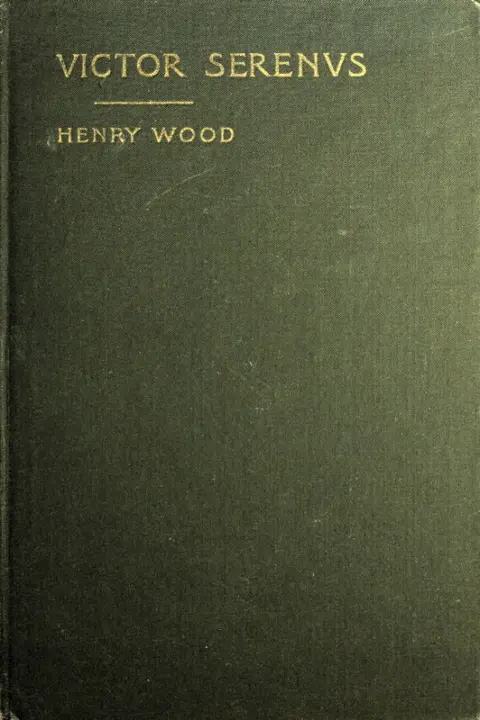
THE CLASSIC COLLECTION · 1898
"Victor Serenus: A Story of the Pauline Era" by Henry Wood is a historical novel written in the late 19th century. The narrative is set during the early years of the Christian era and focuses on the character of Saulus Paulus (later known as Paul the Apostle), exploring his upbringing in Tarsus amidst a rich tapestry of cultural and religious conflict. The author aims to blend historical fact with fictional elements, illuminating the spiritual and societal dynamics of the time. At the start of the story, we are introduced to a solemn religious procession in Tarsus, where a group of Hebrew priests leads a ceremonial event. The infant, Saulus Paulus, is presented in a synagogue ritual that underscores his significance within the Jewish community. The tale unfolds against the backdrop of Tarsus, a bustling hub of commerce and culture, characterized by both Hellenistic and Roman influences. As the narrative progresses, it touches on the tensions between the Jewish tradition and the broader pagan society, with predictions about Saulus's future painted vividly through prophetic blessings and hints of his eventual role in the rise of Christianity. This opening segment sets a rich scene, hinting at the larger themes of faith, destiny, and societal conflict that will likely unfold throughout the novel.
Introduction adapted from the source catalogue; source summaries may be automatically generated.
Free to read · English · 125,559 words · No account needed
MAKE TIME FOR A GOOD BOOK
On by default. Untick to stop anonymous reading totals. Each page counts after 10 seconds in view. How this works.
Anonymous counting is on unless you have switched it off.
Everything beautiful in nature,—its flowers, trees, birds, air, and sunshine, lent their charm for the enrichment of the service to the Tarsian gods, and the honor of their temple. The chariots of Marcius and Leander were prominent in the procession, side by side.
“Shades of Daphne! Marcius, I saw old Chloe, and a beautiful young Jewess with her, in the rabble just past.”
“Ah! I have seen the features of that charmer before! Mine eyes deceive me not! Dost thou recall the storm, the lightning, the crash, and thine own discomfiture? Methinks thou wert dreaming at that particular moment.”
“By Pallas! I am not unmindful that the gods kept us from a threatened descent to the shades of Pluto.”
“Ah, my gallant! But with that I cannot forget that the cage was rent, and the bird flew out.”
“Send regrets to the breezes, stern Roman! The Muse whispers that we may
yet,—
‘Wreathe then the roses, wreathe,
The Beautiful still is ours;
While the stream shall flow, and the sky shall glow,
The Beautiful still is ours.’”
“A truce to thine overflowing poetic sentiment, Leander; but to return to events. Dost thou think that old Chloe recognized us?”
“Peradventure not, though her eyes are sharp; but what recks it? Doubtless she thinks we perished in the ruin, else she would have returned. The dead has buried its dead.”
“But the dead sometimes rise, my effeminate Greek.”
“Dost thou believe in spirits?”
“Too well I know them. They are more in number than the gods.”
“What of signs, omens, and dreams?”
“I believe the most impossible dreams may become true.”
“Dost thou think there are life and feeling and motion beyond the Styx,
Marcius?”
“Shades of Hades! I do. But I would rather be a slave beneath the sun than a king in the Cimmerian regions of the under‐world.”
“I believe nothing, Marcius. Thou art superstitious. Show me a shade from the under‐world, and I will give him a hearty greeting.
‘Away with your stories of Hades,
Which the Flamen has forged to affright us.
We laugh at your three Maiden Ladies,
Your Fates—and your sullen Cocytus.’”
“A graceful turn to a shady subject, and quite worthy of thine ever ready Muse. But, nevertheless, shades there are, my poet, and perchance they may yet give thee an unwelcome greeting.”
“Black or white, I invite them!
‘Oh! blest be the bright Epicurus,
Who taught us to laugh at such fables;
On Hades they wanted to moor us,
But his hand cut the terrible cables.’”
Your reading position is saved on this browser. Take it to another device with a library code. Reading pages adapt to text, rather than matching a printed edition.
BEHIND THE BOOK
This eBook is for the use of anyone anywhere in the United States and most other parts of the world at no cost and with almost no restrictions whatsoever. You may copy it, give it away or re-use it under the terms of the Project Gutenberg License included with this eBook or online at www.gutenberg.org. If you are not located in the United States, you will have to check the laws of the country where you are located before using this eBook. Read the source licence.
The original source file, including credits and licence, is retained by this library. Request an original-format copy at no charge. Please include the book title and Project Gutenberg identifier #55225.
KEEP YOUR CURIOSITY GOING
Cécile Tormay

Moritz Busch
Coulson Kernahan
John L. Ransom

Maurice Baring
Frances Wright