THE CLASSIC COLLECTION✦Edward BurtonCLASSIC FREE BOOKS
Edward Burton
Henry Wood
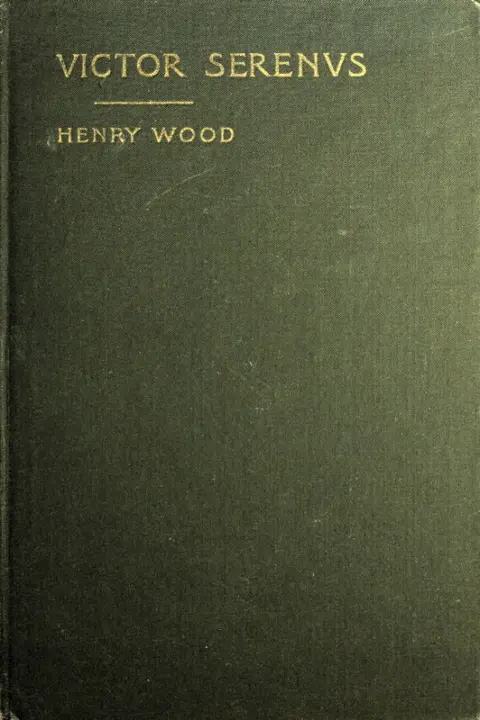
THE CLASSIC COLLECTION · 1898
"Victor Serenus: A Story of the Pauline Era" by Henry Wood is a historical novel written in the late 19th century. The narrative is set during the early years of the Christian era and focuses on the character of Saulus Paulus (later known as Paul the Apostle), exploring his upbringing in Tarsus amidst a rich tapestry of cultural and religious conflict. The author aims to blend historical fact with fictional elements, illuminating the spiritual and societal dynamics of the time. At the start of the story, we are introduced to a solemn religious procession in Tarsus, where a group of Hebrew priests leads a ceremonial event. The infant, Saulus Paulus, is presented in a synagogue ritual that underscores his significance within the Jewish community. The tale unfolds against the backdrop of Tarsus, a bustling hub of commerce and culture, characterized by both Hellenistic and Roman influences. As the narrative progresses, it touches on the tensions between the Jewish tradition and the broader pagan society, with predictions about Saulus's future painted vividly through prophetic blessings and hints of his eventual role in the rise of Christianity. This opening segment sets a rich scene, hinting at the larger themes of faith, destiny, and societal conflict that will likely unfold throughout the novel.
Introduction adapted from the source catalogue; source summaries may be automatically generated.
Free to read · English · 125,559 words · No account needed
MAKE TIME FOR A GOOD BOOK
On by default. Untick to stop anonymous reading totals. Each page counts after 10 seconds in view. How this works.
Anonymous counting is on unless you have switched it off.
What a contrast with the desert and cave! What a great network, and even tangle, of disagreeing interests, systems, opinions, and religions! How sorely the world needed the resolving and transforming power of the new life, and a knowledge of the higher law! Selfishness, prejudice, sensuality, and devotion to the seen and temporal, everywhere dominant! What a change in himself, and in his interpretation of life!
As these reflections coursed through his mind, he found himself at the entrance of one of the public gardens which skirted the slope of Mount Moriah. The spicy odor of plant and blossom lent a charm to the place, and being in a meditative mood, he entered and seated himself in a retired corner of one of the bowers. Groups of people were all around, some seated and others promenading, seeking the enjoyment of social converse and recreation. Occasional peals of laughter and snatches of song gave evidence of the light‐heartedness of the children of the Orient.
But Saulus was wrapped in a more profound revery. With a heart full of love he had come to bear a great blessing to the Holy City, but none would receive it. To his old friends he was now a renegade and traitor, while to his new brethren he was a terror and a cause of offence. O ungrateful world! With head bowed between his hands, the hot tears could not be held back.
A young man and woman from among the promenaders sat down near him. Although they were hard by, a partial partition of vines intervened, effectually secluding him. He started to arise, but could not retreat without passing directly before them in the full moonlight to the entrance of the bower. Moreover, the conversation could not concern him, so he kept his seat.
“Thou seemest sad, and not like thyself to‐night, my Cassia!”
Saulus was thunderstruck. But to fly would be to reveal his identity.
There was no response. The voice continued,—
“The last full moon witnessed our marriage feast, and behold the light of this revealeth thy sadness!”
“Peradventure thou judgest not rightly, Ezra!”
“Why, then, hast thou become silent? I hear no more thy wonted cheerful converse! thou art downcast!”
“To‐night I am given to meditation!”
“Have I given thee offence?”
“I have made no complaint!”
“But why so unhappy, Cassia? Dost thou not love thy husband?”
“Oh, question me not! I feel strangely to‐night!” she exclaimed rather
petulantly.
“Have I done aught to offend thee?”
“I have no condemnation!”
“As thy husband, I rightfully claim to know why thou art disquieted.”
“I cannot reveal my thoughts! Let me be silent!”
Your reading position is saved on this browser. Take it to another device with a library code. Reading pages adapt to text, rather than matching a printed edition.
BEHIND THE BOOK
This eBook is for the use of anyone anywhere in the United States and most other parts of the world at no cost and with almost no restrictions whatsoever. You may copy it, give it away or re-use it under the terms of the Project Gutenberg License included with this eBook or online at www.gutenberg.org. If you are not located in the United States, you will have to check the laws of the country where you are located before using this eBook. Read the source licence.
The original source file, including credits and licence, is retained by this library. Request an original-format copy at no charge. Please include the book title and Project Gutenberg identifier #55225.
KEEP YOUR CURIOSITY GOING
Cécile Tormay

Moritz Busch
Coulson Kernahan
John L. Ransom

Maurice Baring
Frances Wright